

Peace bond in Ontario matters often sound straightforward at first, but the legal reality is more nuanced. A peace bond can sometimes help resolve a criminal case without a guilty plea, yet it can also come with strict terms that affect where you go, who you contact, and how you manage everyday life for months.
If you have been charged after an argument, domestic dispute, neighbour complaint, workplace conflict, or repeated-communication allegation, you may hear the Crown or police mention a peace bond as a possible outcome. Before you agree to anything, it is important to understand what a peace bond actually is, what it is not, and how it may affect your future.
This guide breaks down the basics in plain language. It also explains why a criminal defence lawyer should review the details of your case before you sign any recognizance or accept any long-term condition.
What Is a Peace Bond in Ontario?
A peace bond in Ontario is a court order that requires a person to keep the peace and follow certain conditions for a set period, often up to 12 months. You will also hear it described as a section 810 peace bond. In practical terms, it is a legally enforceable promise to follow rules set by the court.
Those rules can be narrow or strict depending on the situation. They may include no contact with a complainant, staying away from a home or workplace, not possessing weapons, or following other conduct-based conditions. A breach can lead to a new criminal charge, which is why the wording matters so much.
Many people assume a peace bond is the same as pleading guilty. It is not. That is one reason peace bonds are often discussed in cases involving criminal harassment and threats, assault allegations, or other interpersonal complaints where the Crown may be open to a negotiated resolution.
For a government overview, readers can review the Department of Justice peace bond fact sheet and the Ontario Court of Justice guide for applying for a peace bond.
Why Does a Peace Bond Come Up in Criminal Cases?
A peace bond in Ontario usually comes up when the court or Crown sees ongoing concern about conflict, safety, communication, or future contact, but the case may still be capable of resolution without a trial. It is especially common in fact patterns involving former partners, family members, neighbours, or repeated messages that later become part of a criminal harassment allegation.
Here is a simple example. Imagine someone is charged after an argument outside a condo building. The evidence is mixed, the complainant mainly wants distance, and both sides want to avoid a long court process. In the right circumstances, a peace bond may be discussed instead of pushing the matter toward trial.
 Another example is a breakup where one person continues sending messages after being told to stop. Even when there is no physical violence, the situation can escalate quickly. A peace bond may be proposed to create enforceable no-contact terms while avoiding the uncertainty of a contested hearing.
That does not mean a peace bond is automatically the best option. Sometimes the facts support fighting the charge. Sometimes the proposed terms are too broad. Sometimes the case should be addressed through a different strategy, especially if bail conditions, digital evidence, or a disputed search also matter. In those situations, pages on bail hearings and search warrants may also be relevant to the overall defence plan.
Is a Peace Bond the Same as a Restraining Order?
No. This is one of the most common points of confusion.
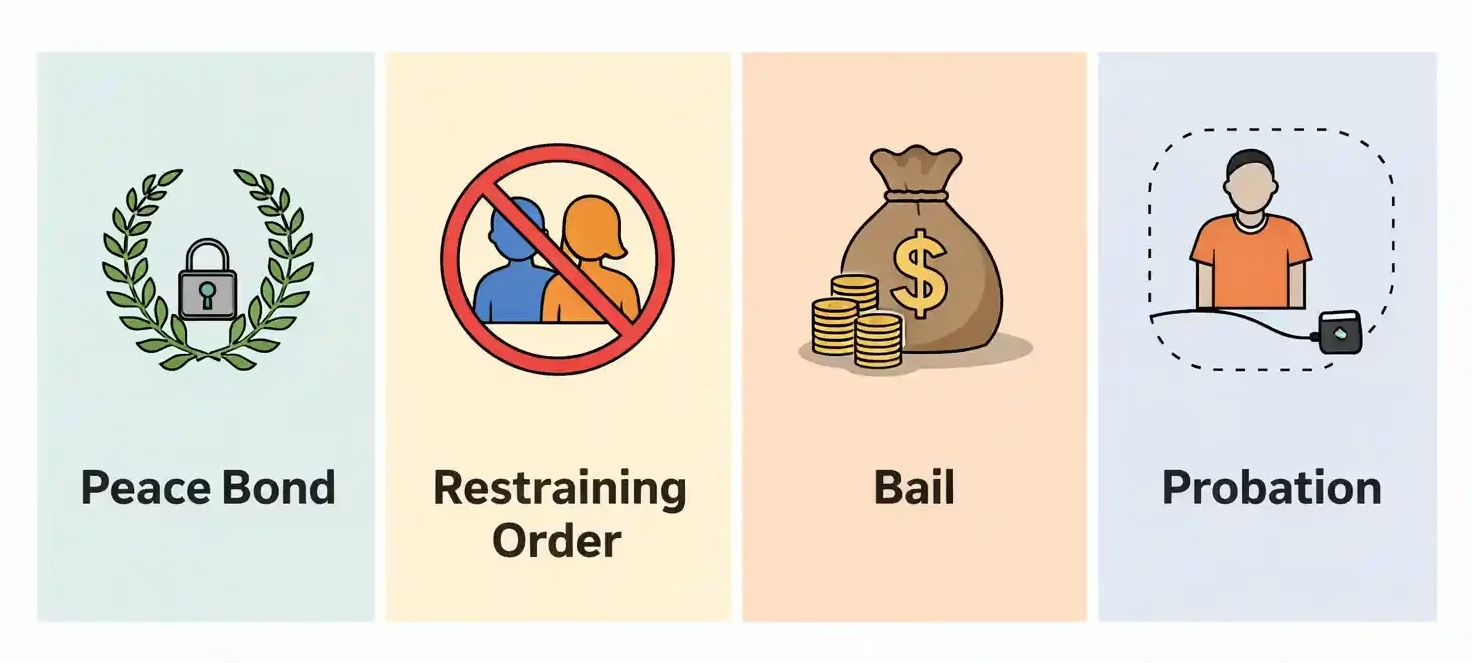
A peace bond in Ontario is a criminal-court tool. A restraining order usually comes from family court. Bail is a release order while a case is still active. Probation is a sentence that follows a conviction. Those differences matter because they affect your rights, your risk, and what happens if terms are broken.
| Order | Where It Comes From | When It Applies | Main Purpose |
|---|---|---|---|
| Peace bond | Criminal court | Usually as a preventive or negotiated resolution tool | Set conditions to prevent future harm or conflict |
| Restraining order | Family court | Family or relationship-related proceedings | Protect a person from contact or proximity |
| Bail conditions | Criminal court | After arrest and before trial | Control release while charges are ongoing |
| Probation | Criminal court | After a conviction and sentence | Supervise conduct after sentencing |
If you are unsure which order you are dealing with, do not guess. Read the wording carefully and have counsel explain it. The legal label changes everything.
Does a Peace Bond in Ontario Create a Criminal Record?
This is usually the first question people ask, and for good reason.
In general, entering into a peace bond in Ontario is not the same as receiving a criminal conviction. That is one of the main reasons peace bonds are sometimes offered as a negotiated outcome. If your alternative is a guilty plea with a conviction, a peace bond may appear more attractive.
But that does not mean it is consequence-free. A peace bond can still affect your life in practical ways. The conditions may limit travel, communication, where you live, how you see family, or whether you can possess weapons. There may also be record-related consequences in police databases or screening contexts that need to be discussed carefully before you agree.
That is why the right question is not only, “Will I have a criminal record?” The better question is, “What happens after I sign, what databases may reflect it, and what restrictions am I accepting for the next year?”
If your larger concern is whether a peace bond might be used to resolve active charges, it may also help to read Kisel Law’s article on having charges withdrawn in Canada. A peace bond is not identical to a withdrawal, but the two issues are often discussed together in resolution negotiations.
Common Conditions in a Peace Bond in Ontario
The exact terms depend on the case, but several conditions appear frequently.
A peace bond in Ontario may require you to have no direct or indirect contact with a named person. That means more than “do not call.” It can include texts, emails, social media messages, third-party messages, and even casual contact through mutual friends. If a condition is broad, everyday communication mistakes can become serious problems.
You may also be ordered to stay away from certain places. That can include a complainant’s home, workplace, school, gym, or neighbourhood. On paper, that sounds simple. In real life, it can affect housing, parenting routines, work travel, and access to shared spaces.
Weapons prohibitions are also common. So are conditions tied to alcohol or drugs in cases where the allegations involved substance use. In some matters, there may be distance-based rules, such as staying at least a certain number of metres away from a person or location.
This is why wording matters. A condition that seems minor in court can become difficult to follow in real life. Before accepting a peace bond in Ontario, ask practical questions:
- Can you still go to work?
- Can you retrieve property from a shared home?
- How will the order affect parenting exchanges?
- What happens if the other person contacts you first?
- Is the distance requirement realistic in a dense Toronto neighbourhood?
The clearer the answers are before you sign, the safer your position will be afterward.
How Long Does a Peace Bond in Ontario Last?
Most people are told a peace bond lasts up to 12 months, and that is usually the practical time frame people encounter. During that period, every condition remains binding. You do not get to relax the terms because the parties later calm down, reconcile, or stop complaining.
That point catches many people off guard. Months after court, someone receives a text from the complainant, assumes the situation has changed, replies casually, and then ends up dealing with a breach allegation. A peace bond in Ontario should always be treated as active until it clearly ends or is formally varied through the proper process.
What Happens If You Refuse or Breach a Peace Bond?

If you refuse to agree to a proposed peace bond, the matter does not simply disappear. The case may continue, negotiations may change, or a hearing may be required. In some situations, refusing is the right move because the allegations are weak or the conditions are unreasonable. In other cases, refusal may expose you to more litigation risk than you want.
If you breach a peace bond, the consequences can be much more immediate. A breach can lead to a new criminal charge. That means your original problem may become more complicated, not less. Even a contact that felt harmless can become central evidence if the order clearly prohibited it.
This is one reason people dealing with bail terms should also read Kisel Law’s article on preparing for a successful bail hearing. Court-imposed conditions, whether on bail or in a peace bond, must be understood literally and followed carefully.
Is Accepting a Peace Bond in Ontario Ever a Good Idea?
Sometimes, yes. Sometimes, absolutely not.
A peace bond in Ontario may be useful when the evidence is uncertain, the proposed terms are manageable, and the alternative would involve a long, expensive, and stressful court process with more serious downside. It can also be attractive when protecting against a conviction is the top priority.
But there are real tradeoffs. You may be accepting terms that interfere with family, work, or daily life. You may also be giving up the chance to fully fight allegations that should not succeed. In some cases, a peace bond is a smart compromise. In others, it is a shortcut that creates new problems.
The decision should never be based on fear alone. It should be based on evidence, risk, and the actual wording of the proposed recognizance.
What Should You Do Before Agreeing to a Peace Bond?
First, review the facts, not just the label. Ask what the Crown is offering, what happens to the charge, how long the conditions last, and what the consequences will be if a term is accidentally broken.
Second, think beyond court day. A peace bond in Ontario should be evaluated in the context of your life. If you work in a shared building with the complainant, travel frequently, co-parent, or need to access a shared residence, broad language can set you up for problems later.
Third, consider the strength of the prosecution case. If there are credibility issues, missing evidence, weak identification, or possible Charter concerns, a defence strategy may be stronger than you think. That is especially true if the allegations overlap with harassment, assault, or communication-based complaints already discussed on Kisel Law’s pages for criminal harassment and assault defence.
Fourth, get case-specific legal advice before you sign. The Ontario government’s peace bond overview and the Ontario Court of Justice guide are useful for background information, but they do not replace a defence analysis tailored to your facts.
Why This Matters if You Are Facing Charges in Toronto or the GTA
Peace bond decisions are rarely just paperwork. They can shape how your case ends, what conditions you live under, and whether a manageable problem turns into a more serious one. That is why early legal advice matters.
Kisel Law represents people facing criminal allegations across Toronto and the GTA, including those searching for a criminal lawyer in Toronto, a criminal lawyer in Mississauga, or a criminal lawyer in Vaughan. If your case involves assault allegations, harassment, bail issues, or negotiated resolutions, reviewing a proposed peace bond with experienced counsel can help you avoid terms that are broader than necessary.
To learn more about the firm’s approach, you can review the profile for Nicole Kiselyov, visit the contact page, or book a free consultation. If you are being asked to sign a peace bond in Ontario, getting advice before you agree can make a meaningful difference to the outcome.