

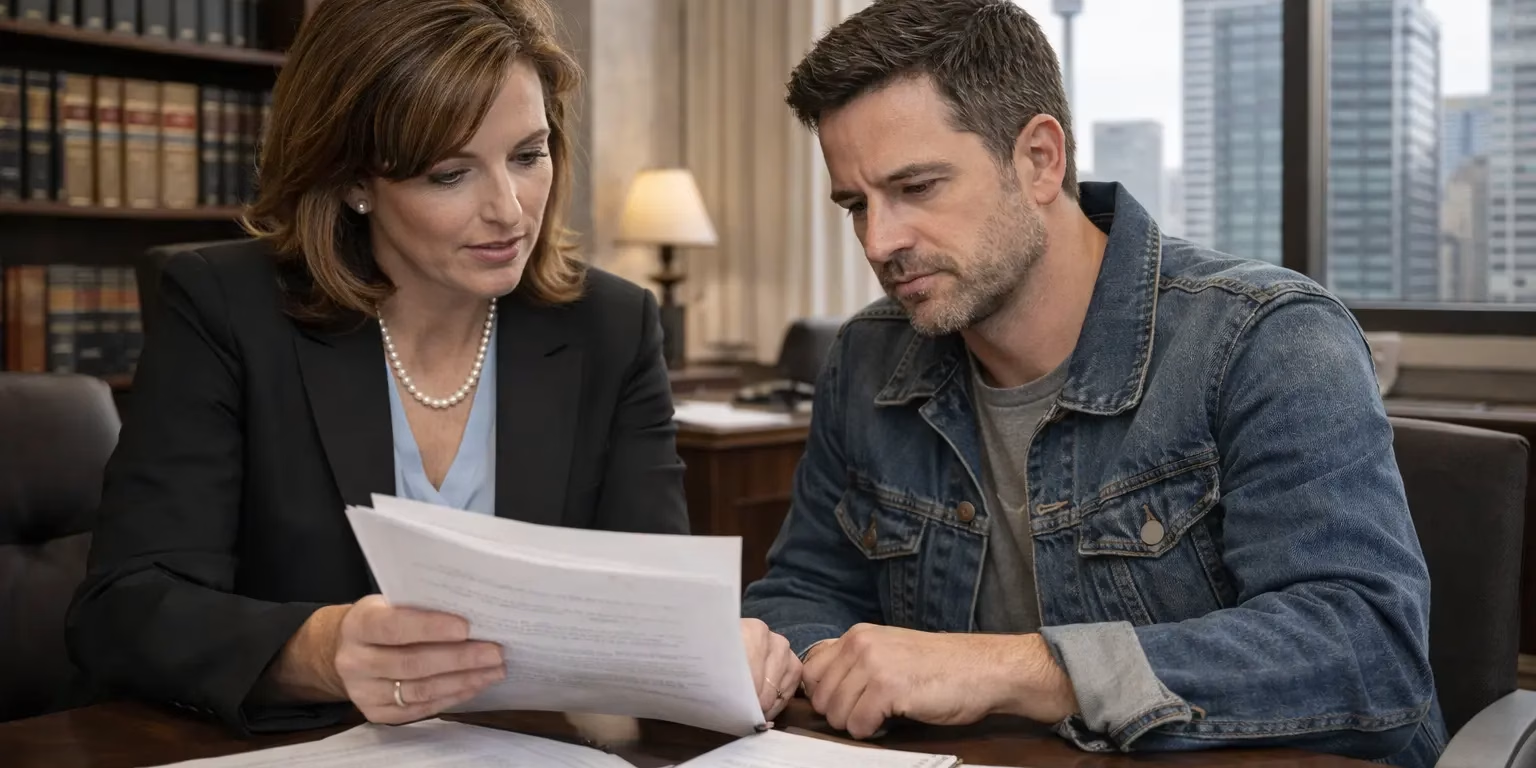
Judicial pre-trial in Ontario is one of the most misunderstood stages of a criminal case. Many people hear the term for the first time and assume it is either a mini-trial, a guilty plea date, or just another routine appearance that does not matter very much. In reality, none of those assumptions are quite right.
A judicial pre-trial can shape how a case moves forward. It can narrow issues, improve trial planning, identify disclosure problems, and sometimes open the door to meaningful resolution discussions. It is not the stage where guilt or innocence is decided, but it is often the stage where the future direction of the case becomes much clearer.
If you have already read Kisel Law’s guide to first court appearance in Ontario, this article picks up where that process often starts to become more strategic. If you are newer to the criminal process, reviewing Kisel Law’s practice areas can also help you understand how different charges and procedural issues fit together.
Why a judicial pre-trial in Ontario matters
A judicial pre-trial in Ontario is designed to move a criminal case toward trial or resolution in a realistic, organized way. It is not just a date to “show up and see what happens.” It is a focused discussion about where the case stands, what issues still need to be addressed, and whether the matter is genuinely ready for the next stage.
That matters because criminal cases can become inefficient very quickly when the parties have not reviewed disclosure properly, have not identified Charter issues early enough, or have not given the court a realistic time estimate for the trial. A judicial pre-trial helps reduce that kind of confusion.
It can also be one of the first stages where the strengths and weaknesses of a case become easier to assess. If there are witness problems, unresolved disclosure issues, application timelines, or realistic resolution possibilities, they often become clearer here than they were at an earlier administrative appearance.
What happens at a judicial pre-trial in Ontario?
A judicial pre-trial in Ontario is usually a focused case-management discussion involving the judge, the Crown, and either defence counsel or an unrepresented accused person. It is typically more private and more practical than an open-court appearance where many matters are being called in sequence.
The discussion may cover disclosure, anticipated applications, legal issues, witness estimates, admissions that might shorten the trial, and the amount of court time realistically needed. In some cases, the discussion also touches on whether the matter might resolve short of trial.
That does not mean the judge is there to decide whether you are guilty. The point is to organize the case, not to hear evidence and deliver a verdict.
Is a judicial pre-trial in Ontario the same as a trial?
No. A judicial pre-trial in Ontario is not a trial.
Witnesses are not normally being called to testify. Evidence is not being fully argued the way it would be at trial. The judge is not deciding the facts of the case after hearing full testimony. Instead, the focus is on trial readiness, procedural issues, and case management.
This is one reason people charged with offences involving search warrants, possible Charter applications, or allegations that depend heavily on digital evidence should take this stage seriously. If those issues are not identified properly before trial, the entire defence plan can become harder to manage later.
Can a judicial pre-trial in Ontario resolve a case?
Sometimes, yes.
A judicial pre-trial in Ontario can help the parties have more realistic discussions about whether a case is likely to resolve. That may mean a withdrawal discussion, a guilty plea on agreed terms, a peace bond discussion in the right case, or a clearer decision that the matter should proceed to trial.
If you want background on how non-trial outcomes sometimes work, Kisel Law’s posts on having charges withdrawn in Canada and peace bond in Ontario provide useful context. A judicial pre-trial is not the same as either of those outcomes, but it can be a stage where those paths are discussed more seriously.
When is a judicial pre-trial in Ontario usually scheduled?
Not every case automatically gets a judicial pre-trial in Ontario at the same point or for the same reason. In practice, these pre-trials are especially important in more complex matters, in cases with longer trial estimates, in sexual-offence matters, in cases involving self-represented accused persons going to trial, or when the court directs that one is needed.
There is also often a difference between a routine appearance and a true pre-trial stage. Earlier court dates may focus on disclosure and representation. A judicial pre-trial in Ontario usually comes later, when the file is closer to being meaningfully discussed in terms of readiness, issues, and next steps.
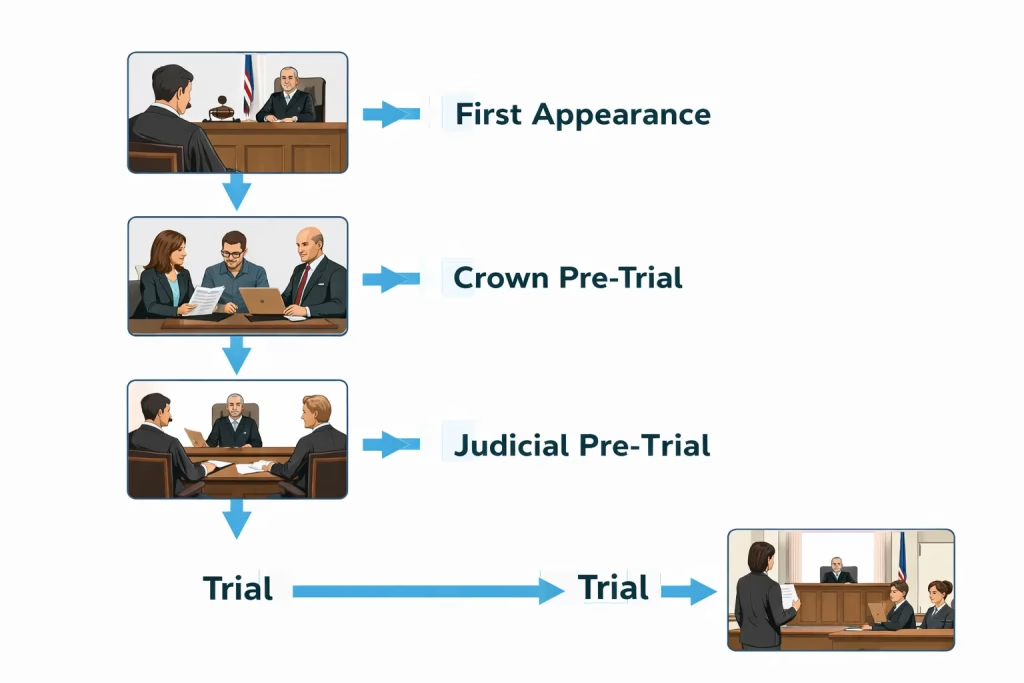
That is why it helps to think of the criminal process as a sequence rather than a single hearing. A file may move from arrest, release, or bail hearing, to first appearance, to disclosure review, to Crown discussions, and then into a judicial pre-trial or trial-setting stage.
Judicial pre-trial in Ontario vs. Crown pre-trial vs. trial
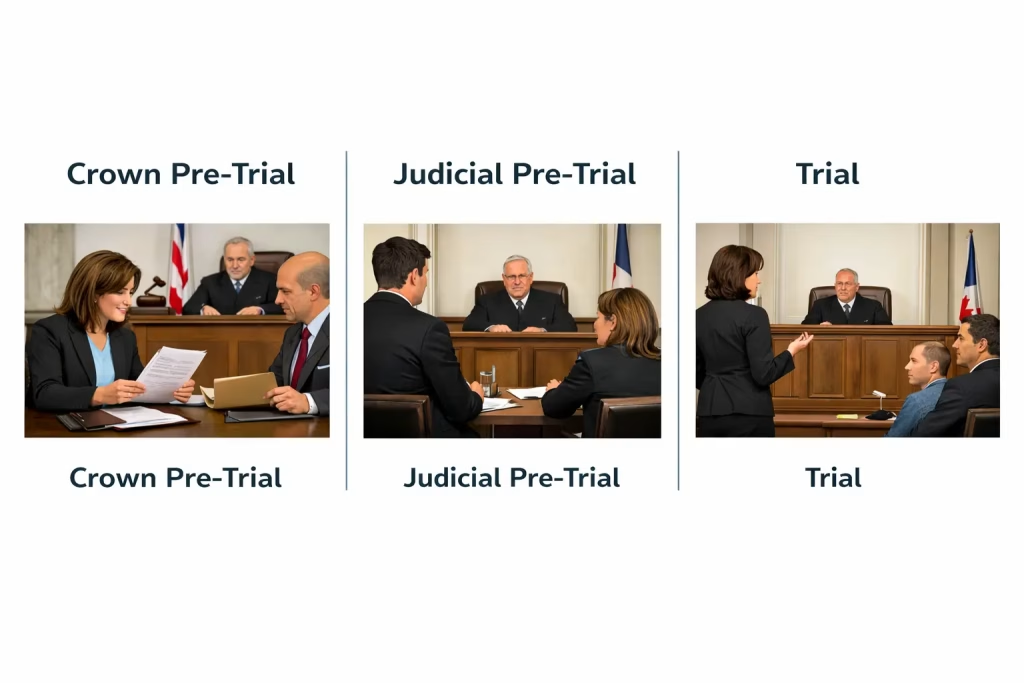
One of the easiest ways to understand this stage is to compare it with the two steps people most often confuse it with.
| Stage | Main purpose | Who is involved | What usually gets discussed |
|---|---|---|---|
| Crown pre-trial | Early discussion between Crown and defence before a judge becomes involved | Crown and defence counsel, or sometimes self-represented accused in limited contexts | Disclosure issues, possible resolution, trial estimate, obvious procedural issues |
| Judicial pre-trial | Judge-led case management before trial or resolution | Judge, Crown, defence counsel, or self-represented accused | Applications, witnesses, admissions, legal issues, readiness, timelines, resolution possibilities |
| Trial | Decision on guilt or innocence | Judge, Crown, defence, witnesses, and sometimes jury in higher court matters | Evidence, testimony, cross-examination, legal arguments, verdict |
This comparison matters because many accused persons think a judicial pre-trial in Ontario is just another ordinary date or, on the other extreme, that it is basically the trial itself. It is neither. It is a bridge between preparation and adjudication.
What should you prepare for a judicial pre-trial in Ontario?
Preparation matters a great deal at this stage.
If you are represented, your lawyer will usually need to understand the disclosure, identify any issues requiring applications, know how many witnesses may be called, estimate the time required, and assess whether there is any realistic room for resolution. If you are self-represented, a judicial pre-trial in Ontario can still be important, but it becomes even more important to be organized and realistic about what you know and what you do not.
Here are some practical areas that often matter before the pre-trial:
Disclosure review. Has all disclosure been received? Is anything missing? Does the file contain video, texts, surveillance, forensic evidence, or police notes that still need closer review?
Legal issues. Are there possible search issues, statement issues, delay issues, identification problems, or Charter concerns?
Witnesses and timing. How many witnesses does each side expect? Is the trial estimate realistic, or is it being guessed at?
Admissions. Can some facts be agreed to so that the trial is shorter and more focused?
Resolution options. Is the matter truly a trial case, or is there room for a practical outcome without losing sight of the defence position?
For self-represented accused persons, Legal Aid Ontario’s criminal charge process guide is a useful public resource. For procedural expectations, the Criminal Rules of the Ontario Court of Justice and the court’s Judicial Criminal Pre-trial Best Practices are important external references.

Do you personally attend a judicial pre-trial in Ontario?
Sometimes yes, sometimes no, depending on how the matter is being handled and whether you are represented.
In represented cases, counsel often takes the lead. In self-represented cases, the accused may attend directly because the court still needs meaningful discussion about the file. Either way, a judicial pre-trial in Ontario is not the kind of date you should treat casually or attend without understanding what the court expects.
Common mistakes before a judicial pre-trial in Ontario
One of the biggest mistakes is assuming the date is only administrative and nothing important can happen. That mindset often leads people to underprepare.
Another mistake is attending without a clear understanding of the issues in the case. If disclosure has not been reviewed properly, if the trial estimate is unrealistic, or if potential applications have not even been considered, a judicial pre-trial in Ontario becomes far less useful.
People also make avoidable mistakes by talking too loosely about the facts before they understand the legal significance of what they are saying. A strategic discussion about admissions or resolution is not the same thing as casually explaining away the allegation.
Other common problems include:
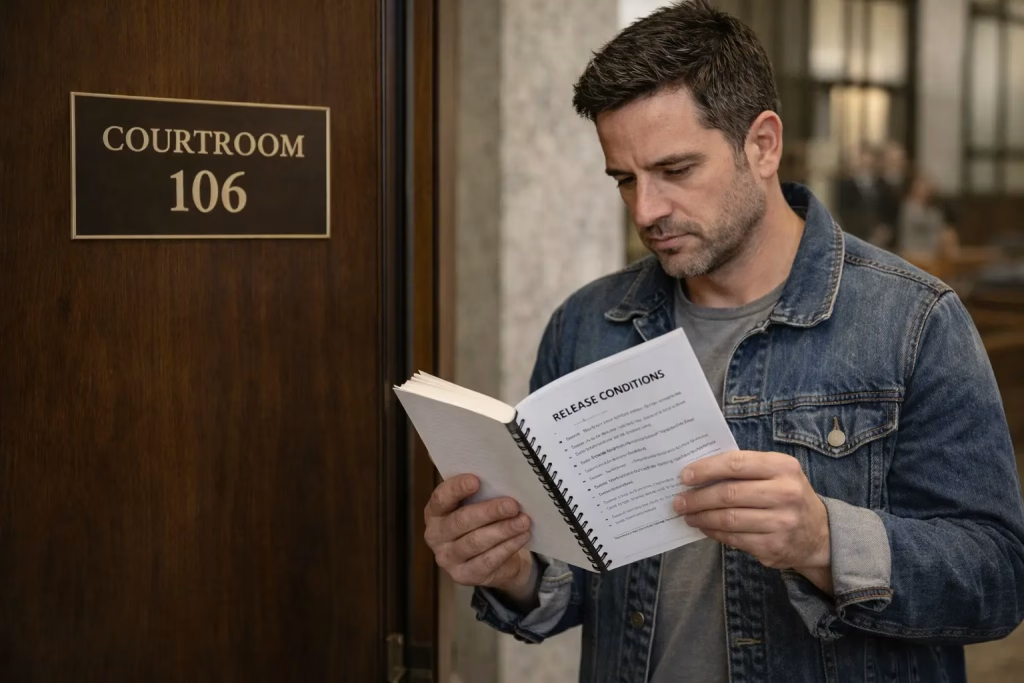
Waiting too long to get legal advice. Failing to identify release-condition problems. Ignoring related risks under breaching court orders. Underestimating how much digital evidence or police procedure may matter. Assuming the complainant alone can control whether the case proceeds. Treating serious allegations as if the case will “sort itself out.”
Those mistakes are especially risky in interpersonal allegations, including matters that overlap with peace bond discussions, ongoing no-contact issues, or possible witness-management concerns.
Do you need a lawyer for a judicial pre-trial in Ontario?
You are not automatically barred from dealing with a judicial pre-trial in Ontario without a lawyer, but many people benefit from legal advice before this stage for one simple reason: the discussion is only as useful as the preparation behind it.
A lawyer can often spot issues that an accused person may not realize are important. For example, a case may look like a credibility dispute on the surface, but in reality it may turn on a disclosure gap, a problematic search, the wording of a court order, or the practical weakness of a key witness. Those details affect whether the right next step is negotiation, further disclosure follow-up, an application, or trial.
If the case is fresh or urgent, Kisel Law’s article on 24 hour legal advice explains why early guidance can matter before the file becomes harder to control.
What comes after a judicial pre-trial in Ontario?
After a judicial pre-trial in Ontario, the matter may move in several different directions.
In some cases, timelines are set for disclosure or applications. In others, the case is scheduled for trial with a more realistic estimate and clearer list of issues. In some matters, the discussion helps push the file toward a negotiated outcome. In others, it makes it obvious that the case should be contested fully.
This is why a judicial pre-trial in Ontario is best understood as a strategic checkpoint. It is where the court expects the parties to be more informed, more realistic, and more prepared than they were at the start of the case.
For some accused persons, that stage is the first time the case begins to feel concrete. It stops being just “a charge” and starts becoming a case with defined issues, deadlines, risks, and choices.

How Kisel Law helps before a judicial pre-trial in Ontario
A judicial pre-trial in Ontario is often where preparation begins to matter just as much as the facts themselves. That is why it helps to have a defence strategy that is grounded in disclosure review, realistic trial planning, and a clear understanding of whether the matter is moving toward resolution or litigation.
Kisel Law’s work already connects directly to the issues that often become central at this stage. Clients can review the firm’s criminal defence practice areas, learn more about the firm on the home page, or get location-specific help through pages for a criminal lawyer in Toronto, a criminal lawyer in Vaughan, or a criminal lawyer in Mississauga.
If your case may involve search issues, applications, or complex pre-trial planning, the firm’s pages on search warrants and Charter applications are also directly relevant. And if your main concern is simply understanding what happens next, the Kisel Law blog and the guide to first court appearance in Ontario provide a useful starting point.
If you have a court date approaching and want advice before the case reaches a more serious turning point, you can contact Kisel Law or book a free consultation. A judicial pre-trial in Ontario is not the end of a case, but it is often where smart preparation starts to pay off.