
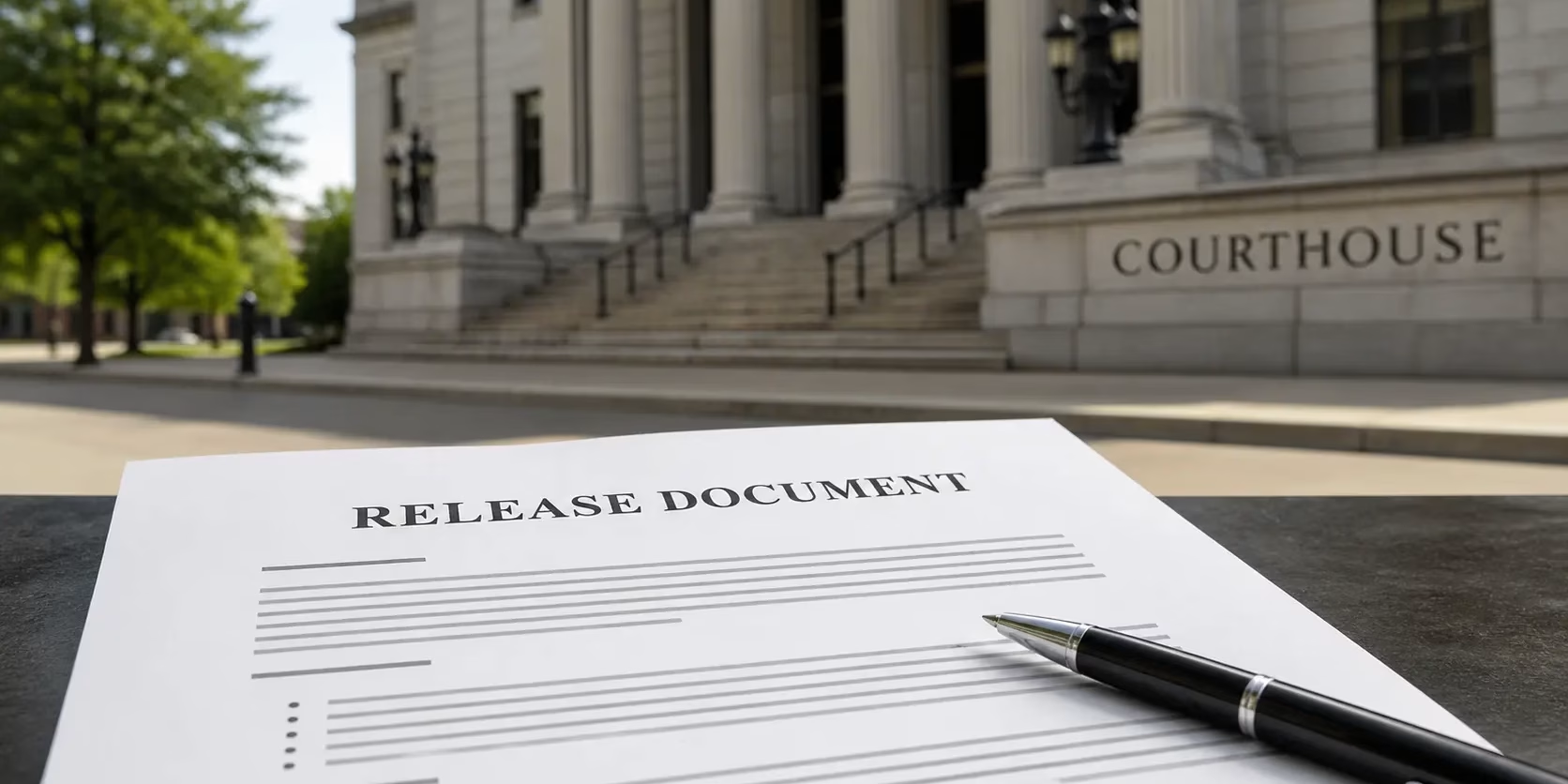
Undertaking in Ontario is a phrase many people hear for the first time after an arrest. The paperwork can look simple, but it can control where you go, who you speak to, when you must attend court, and what happens if you miss a condition.
If police release you from the station instead of holding you for a bail hearing, you may be handed an undertaking with a court date and a list of rules. Some people treat it like a reminder sheet. Others panic because they think it means they have already been found guilty. Neither reaction is helpful.
An undertaking is a serious release document, but it is also part of the early criminal court process. This undertaking in Ontario guide can help you understand the basics. Understanding it can help you avoid accidental breaches, prepare for your first appearance, and know when to ask for legal help. For broader context on criminal defence services, you can review Kisel Law’s practice areas before making decisions about your case.
Undertaking in Ontario: What Does It Mean?
An undertaking in Ontario is a written promise connected to your release after an arrest. In practical terms, it tells you what you must do while your case is moving through court. The main purpose of an undertaking in Ontario is controlled release while the case continues. At minimum, it will require you to attend court on the date, time, and location listed on the document.
Depending on the allegation, the undertaking may also include conditions. These can be very specific. You may be told not to contact a person, not to go to a particular address, to report to police, to remain in a geographic area, to live at a certain place, or to avoid possessing weapons.
The key point is this: an undertaking is not a casual request. Once it applies, you must follow it unless it is cancelled or changed through the proper process. If you are unsure whether a condition applies to texting, social media, work, school, shared parenting, or accidental contact, assume the wording matters and get advice before acting.

Undertaking in Ontario vs. Bail: What Is the Difference?
Not exactly. An undertaking is usually connected to release by police. Bail is usually connected to release by a court after a bail hearing. Both can allow you to remain in the community while your case continues, and both can include strict conditions.
The difference matters because the process for changing the terms may not be identical. If you were held for a bail hearing, Kisel Law’s bail hearings page explains why release planning and conditions can affect your freedom from the start. You may also find the firm’s article on successful bail hearing preparation useful if a loved one is still in custody.
| Document or Order | Usually Comes From | Main Purpose | Why It Matters |
|---|---|---|---|
| Undertaking | Police release | Release with court attendance and possible conditions | Breaking a condition can create a new criminal problem |
| Appearance notice | Police | Tells you when and where to attend court | Missing court can lead to serious consequences |
| Bail order | Court | Release after a bail hearing, often with conditions | Conditions may involve a surety, reporting, residence, or no-contact rules |
| Peace bond | Court | A promise to keep the peace and follow terms | It may resolve some cases but can still carry strict restrictions |

This comparison helps because an undertaking in Ontario often appears before the case reaches deeper court discussions. If your case involves a possible negotiated outcome later, Kisel Law’s article on a peace bond in Ontario can help you understand how court-imposed conditions may affect daily life even when there is no guilty plea.
Undertaking in Ontario Conditions: What Can Be Included?
An undertaking in Ontario can include conditions designed to make sure you attend court, protect a complainant or witness, prevent the alleged offence from continuing, or reduce the risk of another offence. The exact terms depend on the case. The most important thing about an undertaking in Ontario is that the written wording controls your day-to-day obligations.
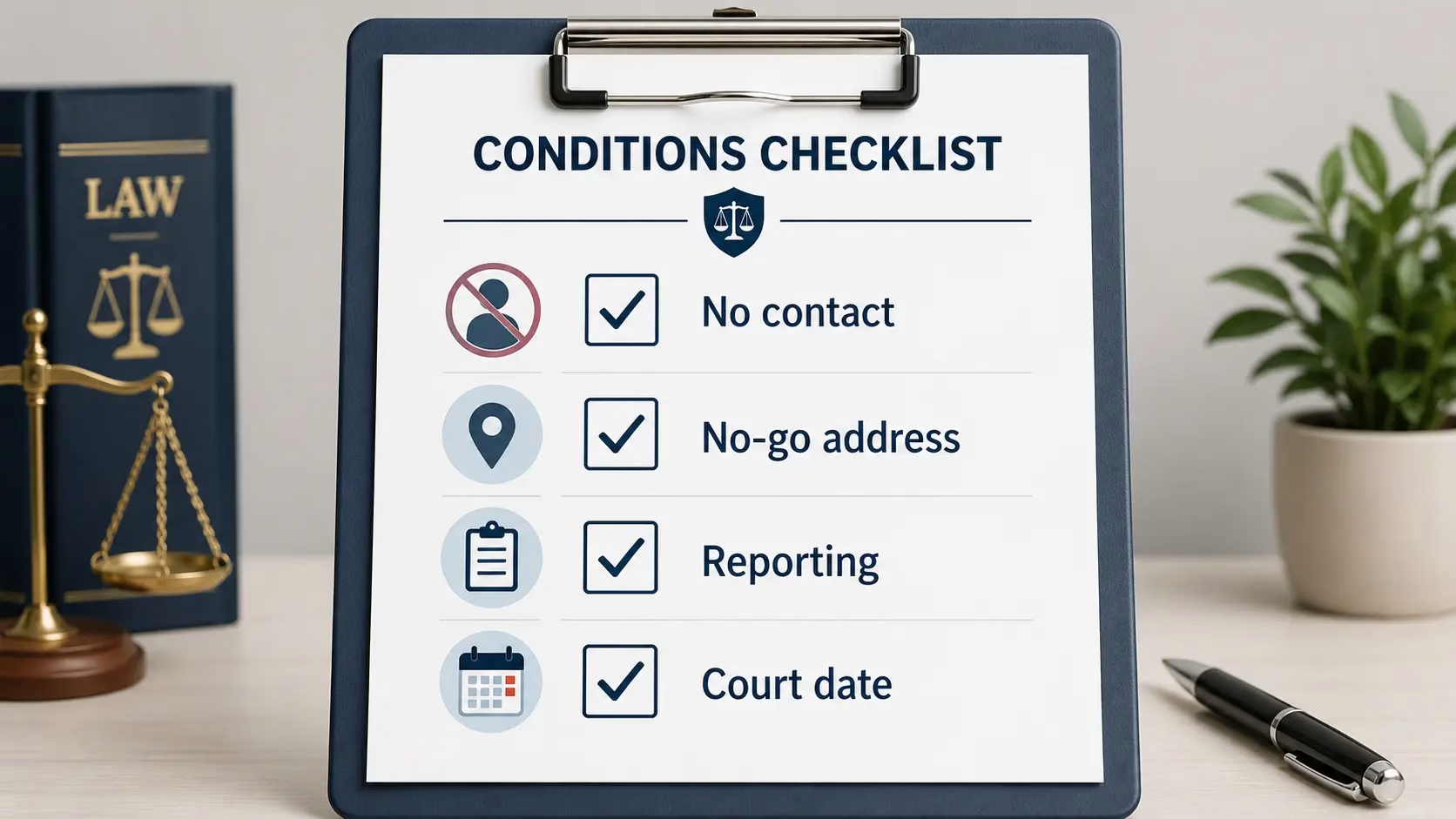
Common conditions include no-contact terms. These are especially common in allegations involving domestic assault, criminal harassment, threats, workplace conflict, neighbour disputes, or relationship breakdowns. A no-contact term may prohibit direct and indirect communication. That can include calls, texts, emails, social media messages, shared accounts, messages through friends, or contact through family members.
A no-go condition is also common. It may stop you from attending a home, school, workplace, apartment building, gym, neighbourhood, or other location. This can be disruptive if you share property, work near the restricted area, or need to arrange childcare. Before you take matters into your own hands, read the document carefully and ask whether a formal variation is needed.
Some undertakings include reporting obligations, passport conditions, residence terms, curfews, geographic limits, weapon restrictions, or promises to pay money if you fail to comply. In cases involving allegations of domestic violence, the conditions can affect where you live and how you communicate with family. Kisel Law’s domestic assault page explains why these cases often move differently from other assault allegations.
Undertaking in Ontario Before Your First Court Date
An undertaking in Ontario is not just about getting out of the police station. The paperwork for an undertaking in Ontario also sets the rules for the period before your first appearance. That early period is when people often make avoidable mistakes.
Your first court date is usually not your trial. It is often about getting organized, dealing with disclosure, confirming whether you have counsel, and deciding what the next step should be. Kisel Law’s guide to a first court appearance in Ontario explains this stage in more detail.
The undertaking should tell you where and when to attend. If your attendance is virtual, treat it as seriously as an in-person court date. If it is in person, plan ahead for travel, security screening, parking, and finding the correct courtroom. Bring your release paperwork with you. Missing the date or misunderstanding the location can make a manageable case much worse.
Can You Contact the Complainant If They Contact You First?
This is one of the most common and dangerous misunderstandings. If your undertaking in Ontario says no contact, the other person’s decision to contact you does not automatically give you permission to reply.
For example, imagine you are released with a condition not to communicate with a former partner. Two weeks later, they text you about clothing, rent, a pet, or an apology. You may feel it is harmless to answer. But if the condition says no direct or indirect contact, your reply may still be treated as a breach.
There may be lawful ways to deal with property, parenting, work issues, or necessary communication, but they should be handled carefully. Sometimes the condition itself contains an exception. Sometimes lawyers can help arrange communication through counsel. Sometimes a variation is needed. The risky option is guessing.
Can an Undertaking in Ontario Be Changed?
Sometimes an undertaking in Ontario is workable on paper but difficult in real life. A no-go area may include your workplace. A no-contact term may affect parenting exchanges. A residence condition may not reflect where you can actually live. A reporting condition may conflict with work hours or school.
If the conditions are genuinely unmanageable, do not simply ignore them. Ontario has procedures for changing certain release conditions with the proper consent and approval. You can also read the Ontario Court of Justice information on consent variation procedures for release orders and police undertakings for a general overview of how formal changes may be handled.
Until a change is approved, the existing conditions still matter. When an undertaking in Ontario creates work, housing, parenting, or safety concerns, legal advice is especially useful. A lawyer can help identify whether the requested change is realistic, how to explain the reason, and whether the Crown may object. If the issue is tied to a broader defence strategy, it may also connect to discussions at later stages, including a judicial pre-trial in Ontario.
Breach of an Undertaking in Ontario: What Happens?
Breaching an undertaking in Ontario can lead to a new charge. That means the release document meant to manage the first allegation can become the source of a second legal problem.
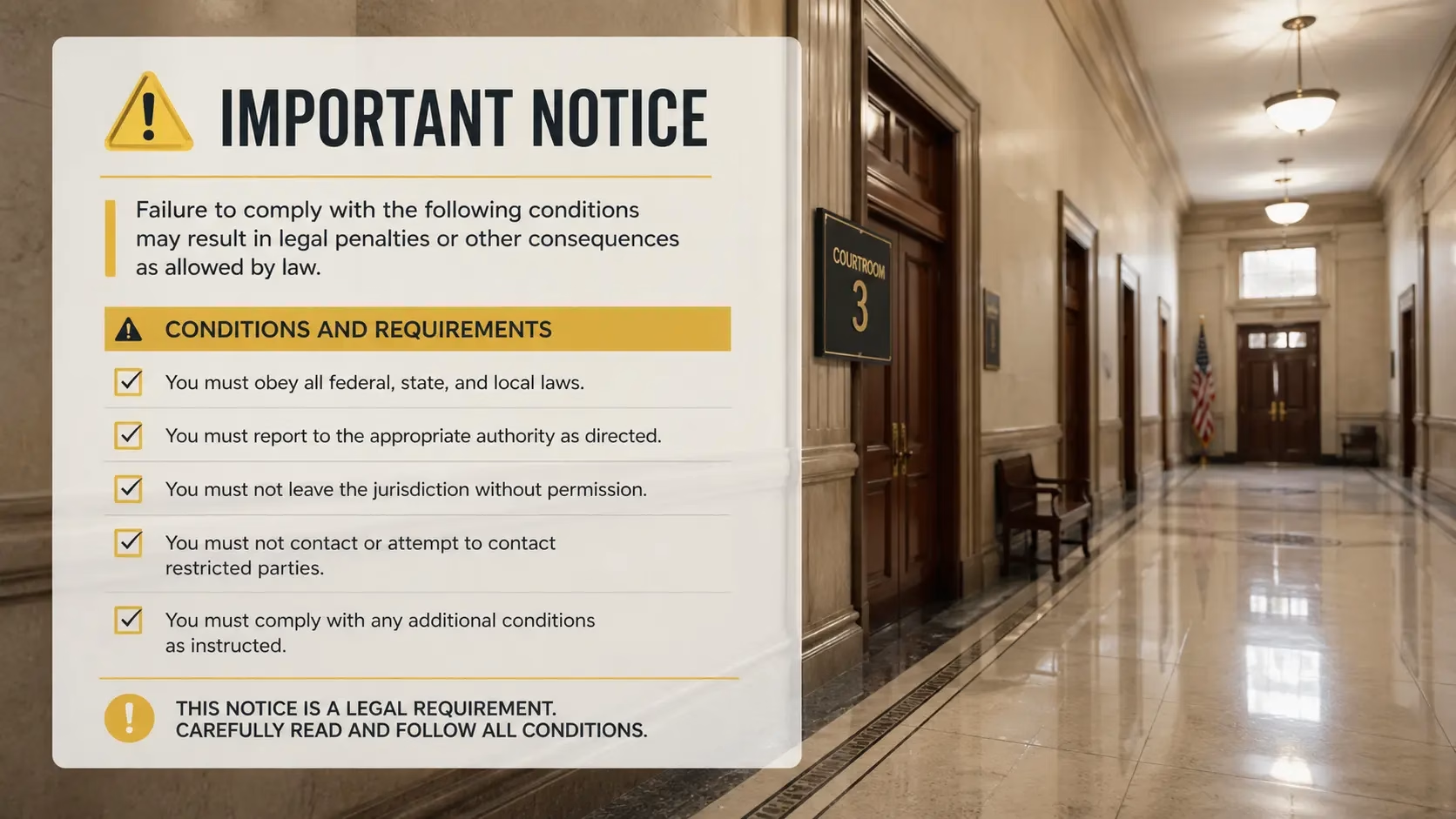
A breach of an undertaking in Ontario can happen in several ways. You might miss court, fail to report, enter a prohibited area, contact someone you were ordered not to contact, possess something you were told to surrender, or fail to follow another checked condition.
Not every allegation of breach is straightforward. Sometimes the wording is unclear. Sometimes contact was accidental. Sometimes a person had a lawful excuse. Sometimes the police or Crown misunderstand the sequence of events. Still, breach allegations are serious because they can make future release harder and may cause the court to view you as someone who does not follow orders.
Kisel Law’s breaching court orders page discusses the risks of failing to comply with court-related conditions. Even though an undertaking may begin with police release, the consequences can still be significant.
How to Read an Undertaking in Ontario Without Missing Key Details
When you receive an undertaking in Ontario, read it slowly. Do not focus only on the court date. Look for every box that is checked, every handwritten note, every address, every named person, and every exception.
A practical way to review it is to separate the document into four categories:
- Attendance rules: when and where you must attend court, and whether you must attend for fingerprints or photographs.
- Communication rules: who you cannot contact, whether indirect contact is included, and whether any exceptions are written in.
- Location rules: places, addresses, workplaces, schools, or areas you must avoid.
- Behaviour rules: reporting, weapons, residence, curfew, travel, passport, or other restrictions.
If you are confused by an undertaking in Ontario, do not rely on memory or verbal comments from the station. The written words matter. For general public information about criminal charge stages, Legal Aid Ontario’s criminal charge process overview can help you understand how release, bail, first appearance, and later court steps fit together.
Examples of Undertaking in Ontario Problems That Come Up Often
An undertaking in Ontario can cause unexpected issues because real life is messy. A few examples show why careful planning matters.
Example 1: Shared housing. A person is released with a no-go condition for the family home. They assume they can return quickly to pick up medication and work clothes. If the condition does not allow that, going back alone can create a breach risk. A safer plan may involve counsel, police guidance, or a formal variation.
Example 2: Social media contact. A person is told not to contact a complainant. They do not call or text, but they like a post, view a story, or send a message through a mutual friend. Depending on the wording, that may still be treated as indirect communication.
Example 3: Workplace overlap. Two people work in the same building. The undertaking says one person cannot attend the other person’s workplace. The accused assumes they can keep working different shifts. That may be wrong unless the condition or a later variation clearly allows it.
Example 4: New allegations while released. If someone is accused of a new offence while already on release terms, the situation can become more serious quickly. In cases involving search issues, digital evidence, or police entry into a home, Kisel Law’s pages on search warrants and Charter applications may also become relevant.
Should You Sign an Undertaking in Ontario?
If police offer release on an undertaking, it usually means you are being given a path out of custody without waiting for a bail hearing. That can be very important. However, signing also means you are agreeing to follow the conditions listed.
The form may indicate that you do not have to accept the conditions and that you can be brought before a justice for a bail hearing if you do not accept them. That does not mean refusing is always smart. It also does not mean accepting every condition without understanding it is risk-free.
In the moment, people often want to leave the station as quickly as possible. That is understandable. But once you are out, your next priority should be understanding exactly what you signed. If the terms interfere with your home, work, children, travel, immigration concerns, licensing, or professional obligations, get advice early.
How an Undertaking Can Affect Defence Strategy
An undertaking in Ontario is separate from the question of guilt or innocence, but it can still affect defence strategy. Conditions can control where you live, who you can speak with, and how easily you can gather information that may help your case.
For example, if you cannot contact a potential witness because that person is named in the undertaking, you should not try to work around the order yourself. If you cannot retrieve documents from a shared residence, you should not violate a no-go term to collect them. If your case involves electronic messages, surveillance, or police notes, disclosure review may be more important than any informal attempt to explain your side.
This is why an undertaking in Ontario should be reviewed early, and why legal advice can be useful even before the case reaches a major courtroom stage. A lawyer can help you understand the conditions, request disclosure, identify missing evidence, and decide whether the matter calls for negotiation, a variation, a Charter issue, or trial preparation.
What to Do After Receiving an Undertaking in Ontario
After receiving an undertaking in Ontario, start with the basics. Keep the document somewhere safe. Take photos of every page. Calendar the court date, arrival time, and any fingerprint date. Write down the conditions in plain language so you can follow them daily.
Next, avoid contact or locations that may create risk. Do not ask friends to pass messages. Do not assume a complainant can cancel the conditions. Do not rely on informal permission. Do not wait until the morning of court to figure out whether the appearance is virtual or in person.
Then, speak with a criminal defence lawyer. The faster an undertaking in Ontario is understood, the easier it is to avoid accidental non-compliance. Speak with counsel if the conditions are confusing, strict, or connected to serious allegations. This is especially important if the charge involves domestic allegations, threats, firearms, drugs, fraud, robbery, or any situation where a breach could increase the pressure on your case.
Getting Help With an Undertaking in Ontario

An undertaking in Ontario is meant to manage release, but it can quickly become stressful when the wording affects your home, family, job, travel, or ability to prepare for court. The safest approach is to treat the document seriously from day one.
Kisel Law helps individuals facing criminal charges understand release conditions, bail issues, breach allegations, first appearances, and the steps that follow. If your undertaking is tied to charges in Toronto or nearby communities, you can review services for a criminal lawyer in Toronto, criminal lawyer in Brampton, criminal lawyer in Mississauga, criminal lawyer in North York, criminal lawyer in Scarborough, or criminal lawyer in Markham.
For immediate next steps, you can book a free consultation or contact Kisel Law to discuss your release document, your conditions, and how to protect your position before your next court date.