

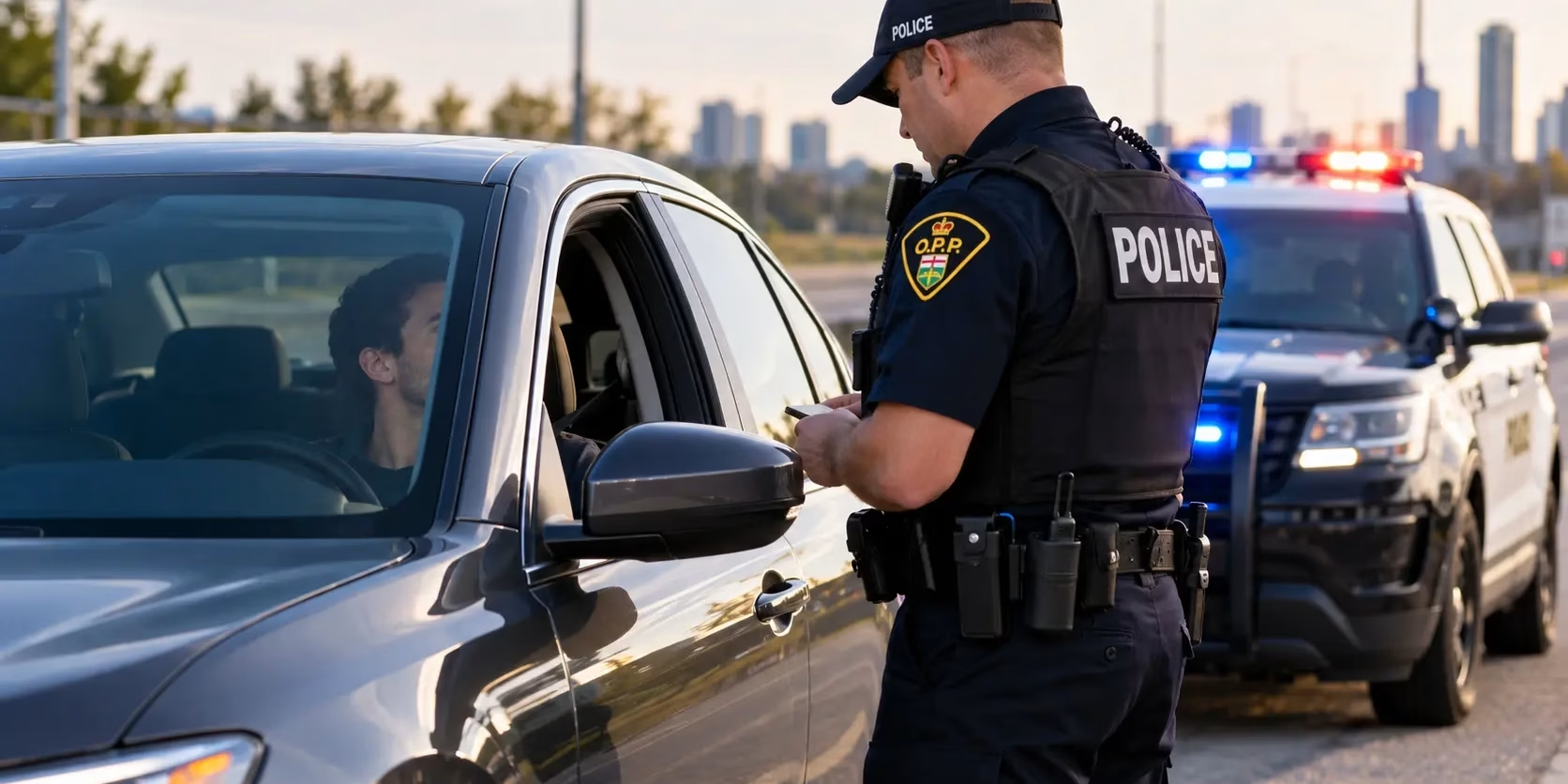
Can police search your car in Ontario? Sometimes, but a routine traffic stop does not automatically give police unlimited authority to open your doors, glove box, console, bags, or trunk. The legality of a vehicle search depends on why police stopped you, whether they have a warrant or another lawful power, whether you consented, and how far the search went.
The first step is to separate the power to stop a vehicle from the power to search it. Kisel Law’s search warrants page explains the broader rules around judicial authorization, while this guide focuses on the roadside question many Ontario drivers ask: can police search your car in Ontario?
This guide provides general legal information, not legal advice about a specific case.
Can Police Search Your Car in Ontario During a Routine Traffic Stop?
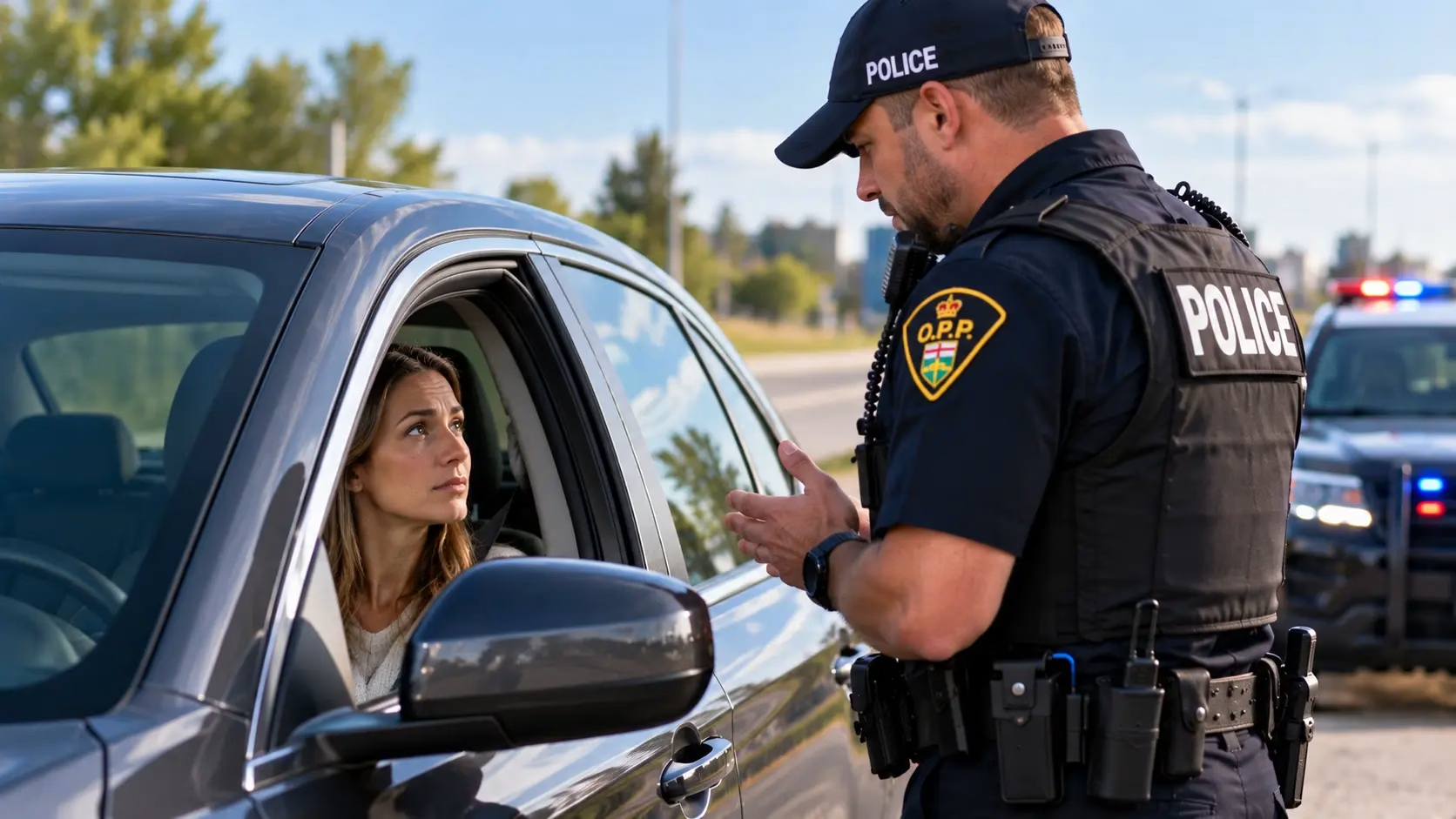
Can police search your car in Ontario simply because an officer pulled you over for speeding, a licence check, or another traffic issue? Not as a general rule. Police can stop vehicles for highway-safety and enforcement purposes, but a lawful stop does not create an unrestricted power to search for evidence of unrelated crimes.
During a lawful stop, an officer may require documents and make observations from a place where the officer is legally entitled to be. What an officer sees, hears, or smells can affect what happens next, but observing the interior is different from physically searching compartments or containers.
Section 8 of the Canadian Charter of Rights and Freedoms protects against unreasonable search and seizure. A vehicle usually carries a lower expectation of privacy than a home, but it is not a privacy-free zone.
Does a lawful traffic stop automatically allow a vehicle search?
No. A lawful stop and a lawful search are separate legal questions. When someone asks can police search your car in Ontario after being pulled over, the answer depends on whether police can point to lawful authority for the search itself.
A stop to check a driver’s licence does not automatically justify opening a backpack in the back seat. If the situation changes — through a lawful arrest, valid warrant, informed consent, or a specific statutory power — the analysis can change too.
7 Situations That Can Affect Whether a Vehicle Search Is Lawful
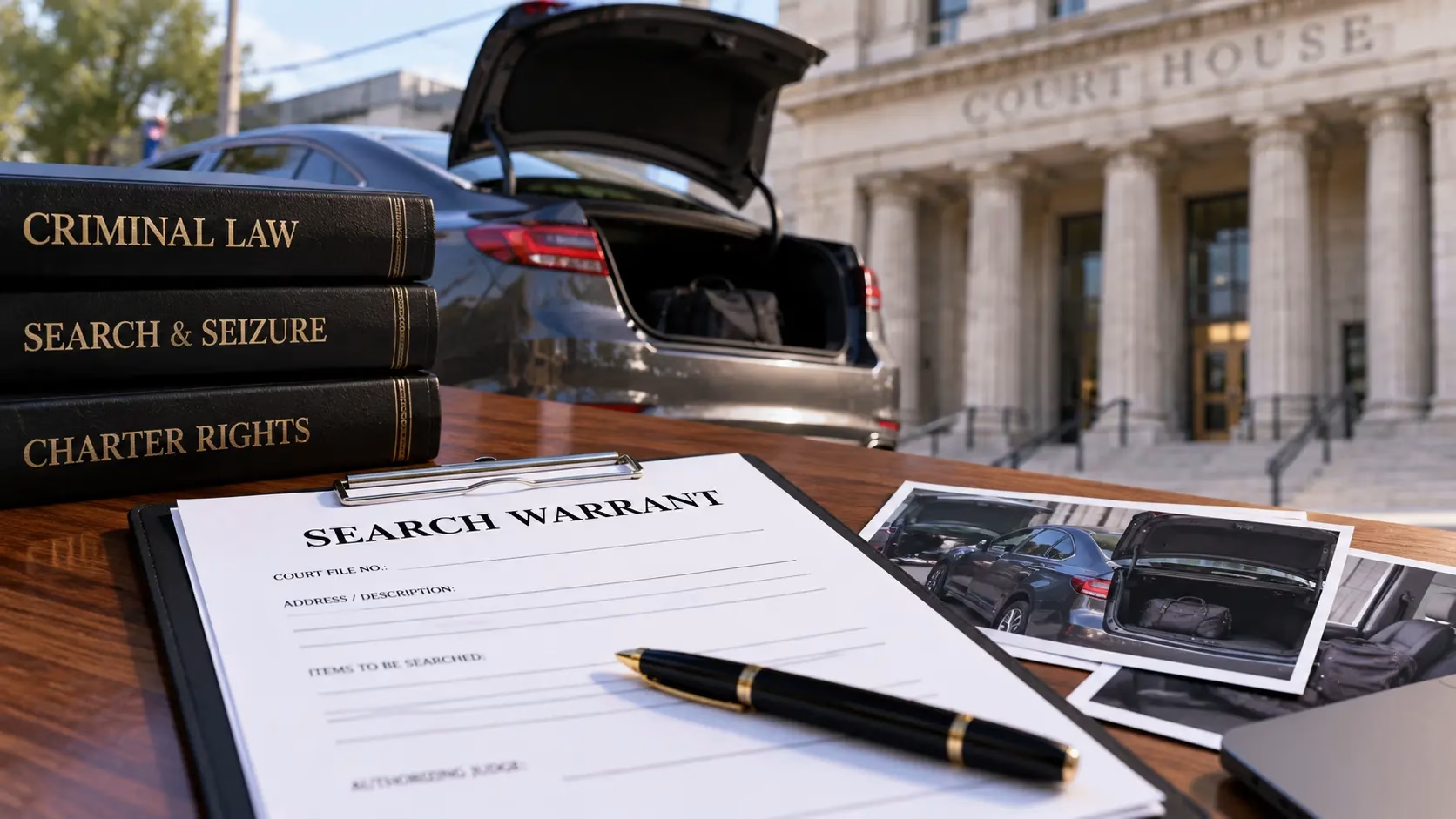
The safest way to understand can police search your car in Ontario is to identify the legal basis police may rely on. Vehicle searches are highly fact-specific.
1. Police have a valid search warrant
A search warrant can authorize police to search a vehicle for specified evidence. Section 487 of the Criminal Code provides a general framework for search warrants, including reasonable grounds and judicial authorization.
The wording matters. A warrant can identify the place to be searched and the things police may look for and seize. It is not a blank cheque to search for anything, anywhere, for any reason.
If your vehicle was searched under a warrant, preserve the paperwork. In other words, can police search your car in Ontario with a warrant? Yes, if the warrant authorizes the search and police stay within its lawful scope. A lawyer may review the grounds, scope, and how officers executed it.
2. You gave consent to the search
Police can ask for permission to search. If you voluntarily and validly consent, that can provide authority for a search that might otherwise require another legal basis.
This is why can police search your car in Ontario can become confusing during a stressful roadside encounter. Someone may say “okay” because they believe they have no choice even though the officer was asking rather than ordering.
So, can police search your car in Ontario if you say yes? Potentially, if the consent is legally valid. If police ask for consent, you can calmly ask whether you are required to agree.
Do not lie, physically interfere, or hide or destroy evidence. If you do not want to consent, you can state that clearly.
3. The search is truly incident to a lawful arrest
Canadian law recognizes a common-law power to search incident to arrest. The arrest must be lawful, and the search must be genuinely connected to a valid purpose related to that arrest.
The Supreme Court of Canada’s R. v. Caslake decision explains that the search must be truly incidental to the arrest. Recognized purposes can include protecting police or the arrested person, preserving evidence, or discovering evidence related to the offence.
So, can police search your car in Ontario after an arrest? Potentially, but an arrest does not automatically turn every part of the car into an unlimited search zone.
The reason for the arrest, purpose of the search, relationship between the vehicle and arrest, and scope of the search can all matter.
For example, an arrest for one offence does not necessarily provide unlimited authority to search the vehicle for completely unrelated evidence.
4. Police rely on urgent or exigent circumstances
Police may argue that immediate action was necessary and waiting for a warrant was impracticable. Canadian law recognizes limited warrantless search powers where genuine urgency exists.
The key is urgency, not convenience. Exigent circumstances can involve situations where evidence could imminently be lost, removed, destroyed, or disappear, or where immediate action is required because of a safety concern.
When asking can police search your car in Ontario in an emergency, remember that a vehicle’s mobility can be relevant, but it does not create a blanket rule allowing every car to be searched without a warrant.
The facts still matter. Police may eventually have to explain the legal basis for acting without prior judicial authorization.
5. Ontario law creates a specific vehicle-search power
Some provincial laws create targeted vehicle-search powers. One example is Ontario’s Cannabis Control Act, 2017, which regulates how cannabis may be transported in vehicles and provides police with particular powers where the required legal grounds exist.
Can police search your car in Ontario under a provincial statute? Sometimes. The answer cannot be based only on whether police had a Criminal Code warrant.
A provincial statute may provide separate authority, but the legal conditions attached to that power still matter.
This is particularly important during roadside encounters involving cannabis, alcohol, highway-safety issues, or other regulated activities. A specific statutory search power is different from a general assumption that police can search any vehicle they stop.
6. Police see something from a lawful vantage point
Police do not necessarily conduct a search merely by looking through a vehicle window from a place they are lawfully entitled to stand.
If they see something apparently connected to an offence, that observation may contribute to further investigative steps or legal grounds.
“Plain view,” however, should not be treated as a magic phrase that automatically authorizes a limitless search.
The officer’s lawful position, what was visible, what the object appeared to be, and what police did next can all matter.
If you are asking can police search your car in Ontario because an officer said something was in plain view, write down what was visible and where the officer was standing.
Those details may become important when disclosure and police notes are reviewed.
7. The vehicle is on private property
Where the vehicle is located can affect the privacy analysis.
In the 2026 Supreme Court of Canada decision R. v. Singer, police approached a truck in a residential driveway while investigating an impaired-driving complaint.
The Supreme Court held that police could approach and knock in the circumstances of that case, but opening the truck door amounted to a search and breached section 8 because that additional step was not legally authorized.
Singer is a reminder that can police search your car in Ontario is not only about roads and conventional traffic stops.
A vehicle parked at a home can raise overlapping privacy questions involving the vehicle, the property surrounding the home, and the specific action taken by police.
What Should You Do If Police Ask to Search Your Car?
If an officer asks to search, stay calm. Arguing at the roadside rarely resolves the underlying legal issue, and physically resisting can create additional risk.
A practical response is to clarify what is happening:
- Ask whether you are being detained or arrested.
- Ask whether the officer has a warrant.
- Ask whether the officer is requesting consent or asserting legal authority.
- If you do not consent, say so clearly and calmly.
- Do not physically interfere if police proceed.
- If detained or arrested, ask to speak with a lawyer.
- Record the time, location, what was said, what areas were searched, and what was seized as soon as you can.
People often ask can police search your car in Ontario hoping for a phrase that will stop the search immediately. In reality, legality is often reviewed later, after police notes, video, warrant materials, grounds for arrest, and applicable statutes are available.
If the encounter also involved a phone, Kisel Law’s guide to police searches of phones in Canada explains why digital evidence can raise additional section 8 issues.
That is another reason can police search your car in Ontario should be analyzed separately from whether police can search a device found inside it.
Should you unlock the trunk or open a bag if police ask?
First determine whether the officer is asking for consent or asserting legal authority.
If it is a request and you do not want to consent, you can say that you do not consent to the search.
If police say they have legal authority and proceed, do not physically resist. Whether their authority actually permitted the search can be challenged later.
A calm refusal to consent can also help distinguish between a search police say was consensual and one they say was authorized on some other basis.
Can refusing consent be used as proof that you are guilty?
Refusing a voluntary request to search is not the same as admitting guilt. It is an assertion that you are not granting permission.
That does not prevent police from searching if they already have an independent lawful power.
This is why can police search your car in Ontario should be split into two questions: did you consent, and if not, what other legal authority did police rely on?
What Happens If the Vehicle Search Was Unreasonable?
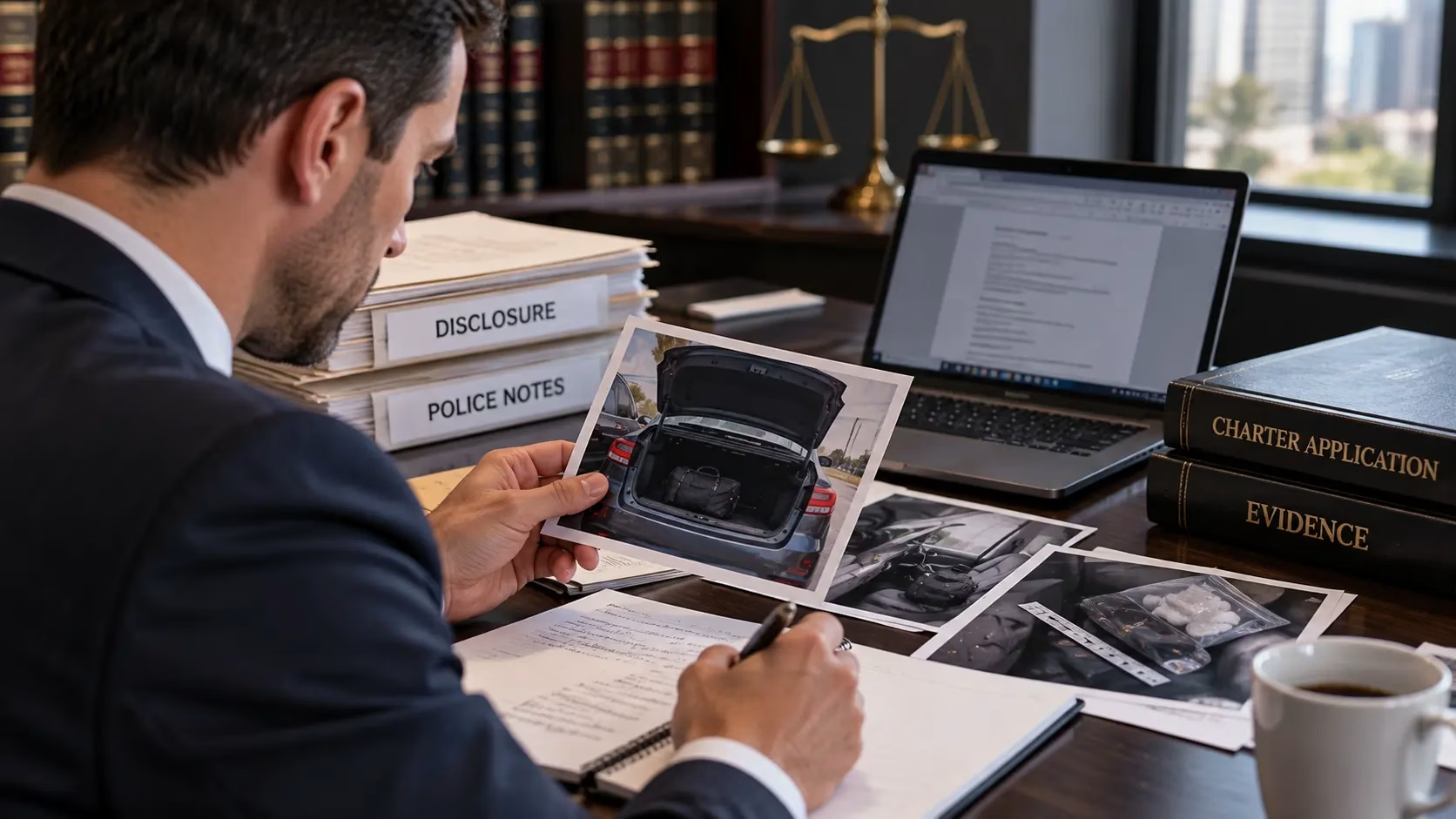
Can police search your car in Ontario unlawfully and still have the evidence considered by a court? Possibly. An unlawful search does not automatically end a criminal case.
The first issue is whether section 8 of the Charter was breached. If it was, the defence may seek a remedy.
A Charter application can ask for evidence to be excluded under section 24(2). Courts consider matters including the seriousness of the Charter-infringing conduct, the effect of the breach on the accused person’s protected interests, and society’s interest in deciding the case on its merits.
That is why can police search your car in Ontario can affect much more than the roadside encounter itself.
If police found drugs, a firearm, stolen property, documents, or other evidence, the legality of the search may become central to whether that evidence can ultimately be used.
Kisel Law’s Charter applications service explains how alleged unlawful searches can become part of a criminal defence strategy.
If the vehicle search arose from an alcohol or drug investigation, the firm’s impaired-driving defence information may also be relevant.
Vehicle Search vs. Vehicle Stop: A Quick Comparison
| Situation | What police may be doing | Key legal question |
|---|---|---|
| Routine traffic stop | Checking licence, insurance, sobriety, or traffic compliance | Did police have separate authority to search? |
| Consent request | Asking for permission to look in the vehicle | Was consent voluntary and legally valid? |
| Search after arrest | Looking for safety concerns or relevant evidence | Was the arrest lawful and the search truly incidental? |
| Warrant search | Executing judicial authorization | Did police stay within the warrant’s scope? |
| Cannabis-related search | Using a specific provincial statutory power | Were the statutory grounds actually present? |
| Vehicle on private property | Investigating near a home or driveway | Did police intrude on a reasonable expectation of privacy? |
If you compare a vehicle stop with a vehicle search, can police search your car in Ontario still rarely has a one-word answer.
The same physical act — opening a door, console, bag, or trunk — can be lawful in one factual setting and unlawful in another.
That is why the specific sequence of events is so important.
Common Mistakes After a Police Vehicle Search
One mistake is assuming that because police found evidence, the search must have been legal. Discovery of evidence does not retroactively create lawful authority.
Another is assuming every warrantless search is automatically invalid. Canadian law recognizes exceptions, but those exceptions have limits.
A third mistake is debating the entire case in detail at the roadside. You may not know what information police already have, what other evidence exists, or which legal power they are relying on.
A fourth mistake is failing to preserve details.
Useful information may include:
- dashcam footage;
- passenger observations;
- photographs or video;
- tow or impound documents;
- search-warrant paperwork;
- police receipts for seized property;
- disclosure;
- the location of the vehicle; and
- the exact sequence of events.
If you are still asking can police search your car in Ontario after being charged, gather the documents and facts before drawing conclusions.
A legal review is more useful when it is based on the actual timeline rather than a general description of what happened.
Speak With Kisel Law About a Vehicle Search in Ontario
Can police search your car in Ontario? Sometimes — but police must still act under lawful authority and within the limits of that authority.
A traffic stop, arrest, warrant, consent, provincial statute, or vehicle parked on private property can each produce a different legal analysis.
If a vehicle search led to criminal charges, the next step is to review why police searched, what they searched, what they seized, and whether the search respected your Charter rights.
Kisel Law represents clients in Toronto and across the GTA in matters involving search warrants, Charter applications, impaired driving, drug allegations, firearms allegations, and other criminal charges.
You can review Kisel Law’s Toronto criminal lawyer services or contact Kisel Law to discuss the facts of your case.
Bring any search warrant, release paperwork, disclosure, photographs, video, and notes you have. The clearer the factual record, the easier it is to assess what happened and whether the search raises a viable Charter issue.