
Crown pre-trial in Ontario is an important stage in many criminal cases because it is often the first focused discussion about where the case is going. By this point, the defence should have enough information to discuss disclosure, the Crown’s position, possible resolution, trial issues, and next steps.
The meeting is not a trial and no judge decides guilt. Before it happens, it helps to understand the evidence. Kisel Law’s guide to criminal disclosure in Ontario explains why reviewing the Crown’s case material should come before major strategic decisions. If your case is earlier in the process, the article on a first court appearance in Ontario explains how disclosure and scheduling fit together before a Crown pre-trial in Ontario becomes meaningful.
What Is a Crown Pre-Trial in Ontario?
A Crown pre-trial in Ontario is a meeting or discussion with the Crown Attorney about a criminal case before trial. If you have a lawyer, your lawyer normally handles the discussion. If you are self-represented, you may be able to speak with the Crown directly, depending on local procedure, or receive help from duty counsel.
The Ontario Court of Justice step-by-step guide explains that a Crown pre-trial can address the Crown’s position on resolution and sentence, disclosure, and whether the case is expected to proceed to trial. It may take place in person, by telephone, or by email.
A Crown pre-trial in Ontario may influence whether more disclosure is requested, whether a negotiated resolution is explored, whether a judicial pre-trial is needed, and how the defence prepares for trial.
Is a Crown pre-trial the same as a trial?
No. A Crown pre-trial in Ontario is not a trial, and a judge is not deciding whether the accused is guilty or not guilty.
Witnesses do not normally testify and there is no verdict. The focus is on disclosure, the prosecution’s position, possible resolution, and trial planning. It is not simply a chance to “tell your side” and expect the charge to disappear.
What Happens at a Crown Pre-Trial in Ontario?
What happens depends on the charge, the disclosure, and whether the defence is considering resolution or trial. A useful Crown pre-trial in Ontario usually addresses practical questions such as:
- whether the defence has sufficient disclosure;
- whether important videos, statements, reports, or digital records are missing;
- the Crown’s screening or sentencing position;
- whether withdrawal, diversion, a peace bond, or another resolution is realistically available;
- whether a judicial pre-trial should be scheduled;
- which legal or evidentiary issues may need attention before trial;
- how many witnesses may be required; and
- how much court time a trial may take.
The Crown’s initial position may already appear on a screening document. Kisel Law’s guide to the Crown Screening Form in Ontario explains what that document can show and why it should not be mistaken for a final outcome.
A Crown pre-trial in Ontario lets the defence discuss that position against the actual evidence. The disclosure may reveal missing material, a possible Charter issue, factual weaknesses, or information that supports a different resolution position.
Do you have to personally attend the Crown pre-trial?
Not always. If you have retained a lawyer, your lawyer will generally conduct the discussion on your behalf after reviewing the file and getting instructions from you.
If you do not have a lawyer, local Crown office procedures can differ. The Ontario Court of Justice advises self-represented accused people to contact the prosecuting Crown office to determine whether they can have a Crown pre-trial without a legal representative.
If you qualify, Legal Aid Ontario duty counsel may be able to provide advice or help with a resolution meeting. That matters because the Crown Attorney prosecutes the case and is not the accused person’s legal adviser.
When Should a Crown Pre-Trial in Ontario Happen?

A Crown pre-trial in Ontario is most useful once there is enough disclosure to have an informed conversation. Trying to negotiate or estimate a trial before reviewing the core evidence can lead to poor decisions and repeated court dates.
In many cases, the sequence is first appearance, disclosure, defence review, Crown pre-trial, and then either resolution planning, a judicial pre-trial, or trial scheduling. The exact sequence can vary by courthouse and case.
The Ontario Court of Justice’s 12-week adjournment practice direction expects counsel in covered matters to address disclosure and conduct a meaningful Crown pre-trial before the standardized return date, unless the case requires a different path.
Can a Crown pre-trial happen if disclosure is incomplete?
Yes, but the discussion may be limited if important material is missing. A Crown pre-trial in Ontario does not require every possible document to be final, but the defence should usually have enough of the case to identify what matters.
A missing administrative document may not stop useful discussions. Missing surveillance video, a complainant statement, search-warrant materials, forensic evidence, or a major police recording may be different.
If missing material could affect a constitutional issue, Kisel Law’s Charter applications page explains how search, detention, statement, or other rights issues can become part of defence strategy.
Crown Pre-Trial vs. Judicial Pre-Trial vs. Trial
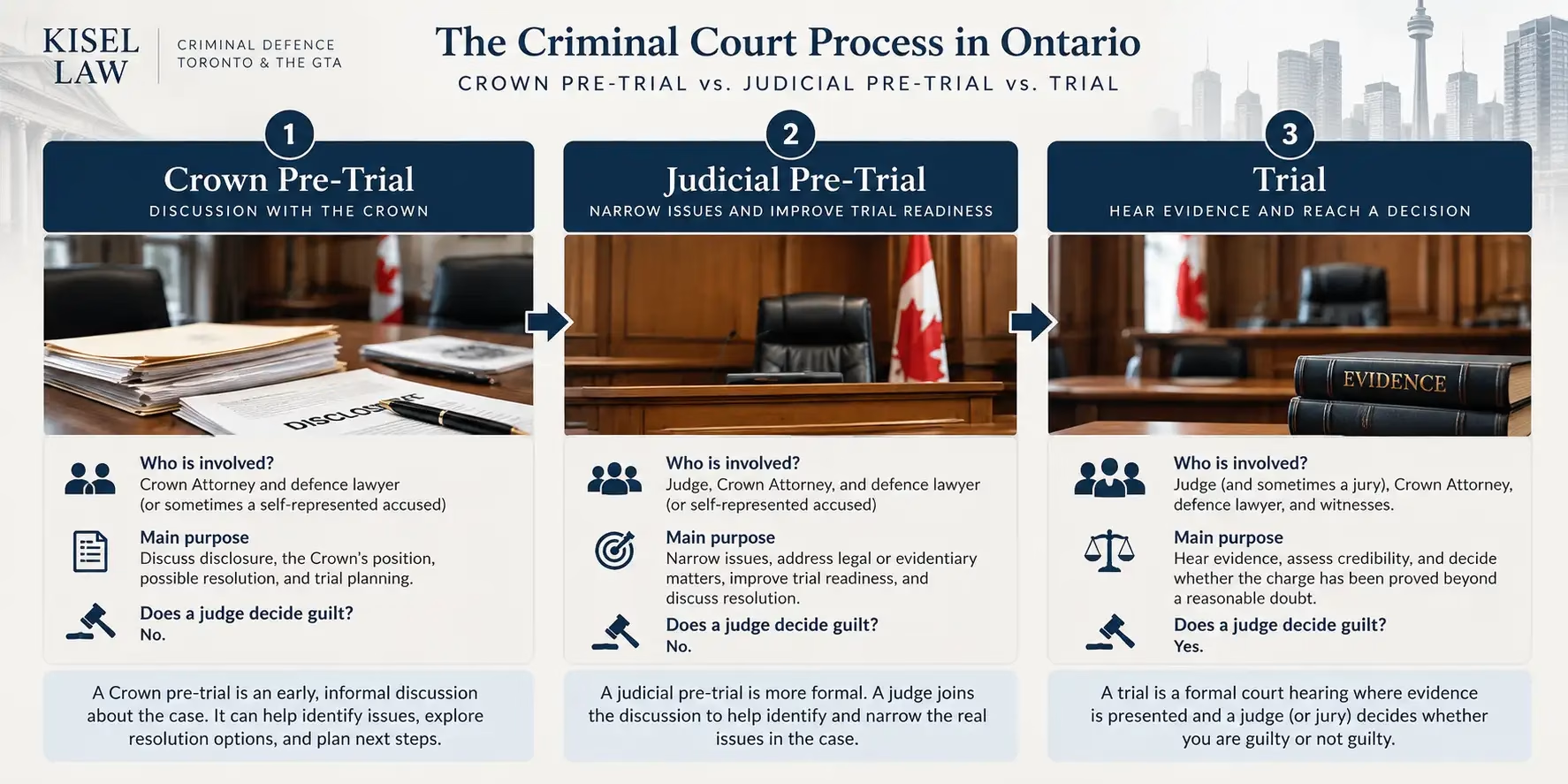
A Crown pre-trial in Ontario is easy to confuse with a judicial pre-trial because both happen before trial and may involve resolution. The key difference is judicial involvement.
| Stage | Who is involved | Main purpose | Judge decides guilt? |
|---|---|---|---|
| Crown pre-trial | Crown and defence lawyer, or sometimes a self-represented accused | Disclosure, Crown position, resolution, trial planning | No |
| Judicial pre-trial | Judge, Crown, defence lawyer or self-represented accused | Narrow issues, improve trial readiness, discuss resolution | No |
| Trial | Judge, Crown, defence, witnesses and sometimes a jury | Hear evidence and decide whether the charge is proved | Yes |
Kisel Law has a detailed guide to the judicial pre-trial in Ontario. That stage is more formal because a judge joins the discussion and the parties identify issues that may require court time.
A Crown pre-trial in Ontario is therefore an earlier strategic checkpoint. It helps determine whether the file can resolve, needs more work, or should move toward a judicial pre-trial and trial.
7 Mistakes to Avoid Before a Crown Pre-Trial in Ontario
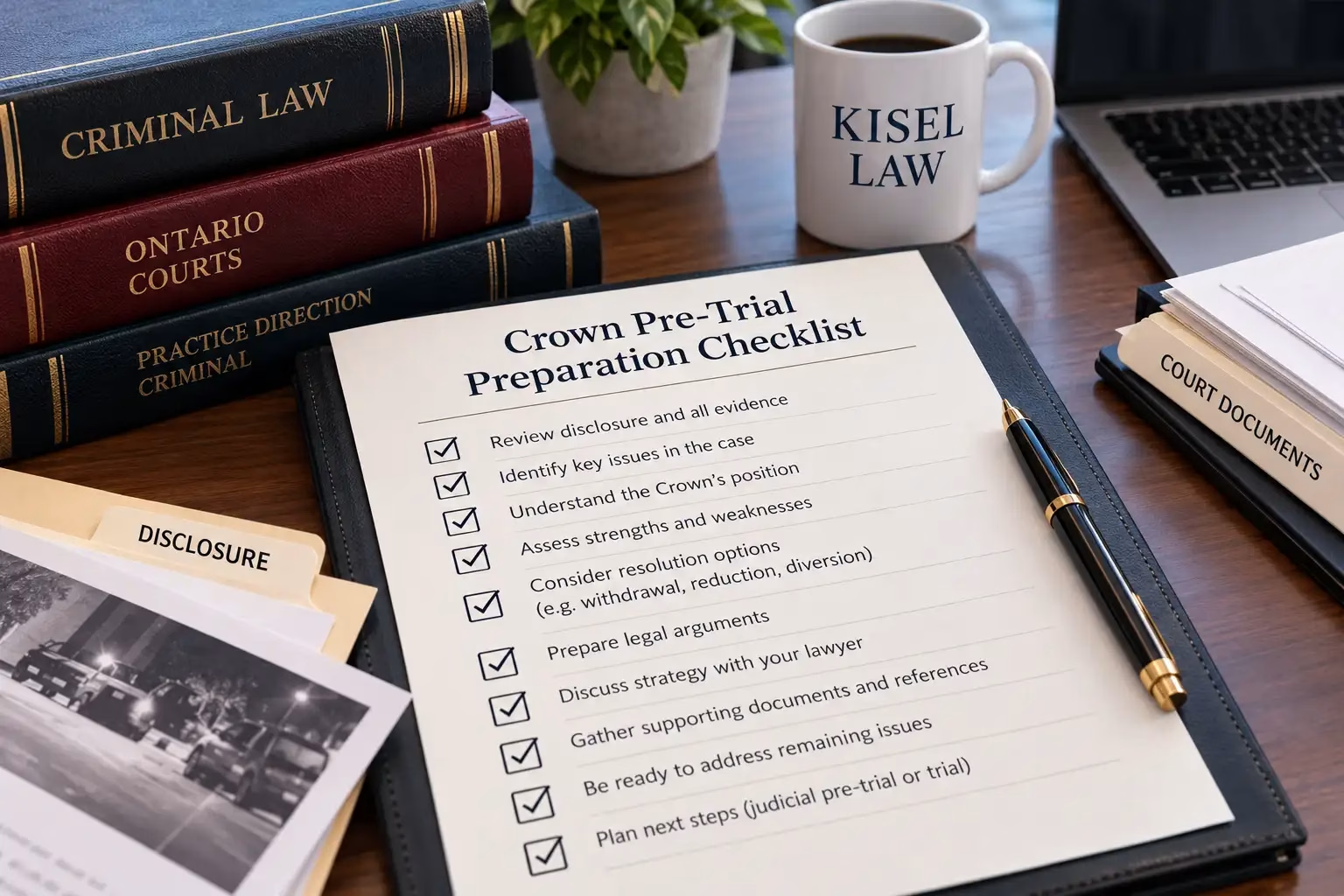
Preparation matters because a rushed pre-trial can create delay or lead to decisions made without the full picture.
1. Discussing resolution before reviewing the evidence
Do not treat the Crown’s position as the only thing that matters. A Crown pre-trial in Ontario should be informed by what the evidence shows, what is missing, and what legal issues may exist.
A proposed resolution should be compared with realistic defence options after disclosure has been reviewed.
2. Giving an unplanned factual explanation to the Crown
An unrepresented accused may feel the fastest way to fix the case is to explain everything directly to the prosecutor. That can be risky.
The Ontario Court of Justice cautions people to be careful about what they say to the Crown without a lawyer or duty counsel present. Understand the purpose of the meeting before discussing the facts.
3. Assuming the Crown Screening Form is final
A screening form can show a preliminary resolution or sentencing position, but it is not a judge’s ruling.
A Crown pre-trial in Ontario is one stage where counsel can discuss that position, identify evidentiary concerns, and ask whether another approach is available.
4. Treating the pre-trial as a guaranteed negotiation
Not every case will resolve. The Crown may maintain its position, the defence may reject it, or the evidence may make trial the appropriate next step.
The purpose of a Crown pre-trial in Ontario is to clarify the case, not to guarantee a withdrawal, peace bond, diversion, reduced charge, or agreed sentence.
5. Ignoring Charter and evidentiary issues
A file may involve search-and-seizure questions, statements to police, identification problems, disclosure gaps, or another issue affecting admissibility or trial strategy.
Those issues should be identified early enough to influence planning rather than left until a trial date is close.
6. Guessing at the trial estimate
If a case is going to trial, the estimate should reflect witnesses, cross-examinations, legal applications, interpreters, experts, and the complexity of the evidence.
A Crown pre-trial in Ontario can narrow what actually needs to be litigated and help produce a more realistic estimate.
7. Letting the case drift without a clear next step
After the discussion, there should usually be a clearer plan: obtain specific disclosure, continue resolution discussions, schedule a judicial pre-trial, set a plea, or prepare for trial.
Ontario’s Jordan-compliant trial scheduling practice direction emphasizes timely movement toward resolution or trial. A Crown pre-trial in Ontario should be a working stage, not an indefinite holding pattern.
What Can Happen After a Crown Pre-Trial in Ontario?
There is no single outcome. The next step depends on the evidence, the Crown’s position, defence instructions, and whether more court involvement is needed.
Possible next steps include:
- requesting specific missing disclosure;
- continuing targeted resolution discussions;
- arranging diversion where available;
- discussing a peace bond or withdrawal where appropriate;
- scheduling a guilty plea after informed legal advice;
- scheduling a judicial pre-trial;
- preparing a Charter or other pre-trial application; or
- moving toward a trial date.
A Crown pre-trial in Ontario can also expose a disagreement that cannot be resolved through negotiation. That is not necessarily a failed meeting. Clarifying the real issues can make later preparation more efficient.
Can charges be withdrawn after a Crown pre-trial?
They can be, but withdrawal is not automatic. The Crown may reconsider a charge based on the evidence, public-interest considerations, new information, evidentiary problems, or an appropriate resolution.
A Crown pre-trial in Ontario creates an opportunity for informed discussion. It does not give the defence a right to a particular outcome.
Can you plead guilty at the Crown pre-trial?
The discussion itself is not normally the guilty plea hearing. A guilty plea is entered before a judge, who must be satisfied that it is voluntary and understood.
The Crown pre-trial can be where a proposed guilty plea and sentence position are discussed. The decision should still be based on the evidence, legal advice, consequences, and available alternatives.
How a Criminal Defence Lawyer Prepares for a Crown Pre-Trial in Ontario
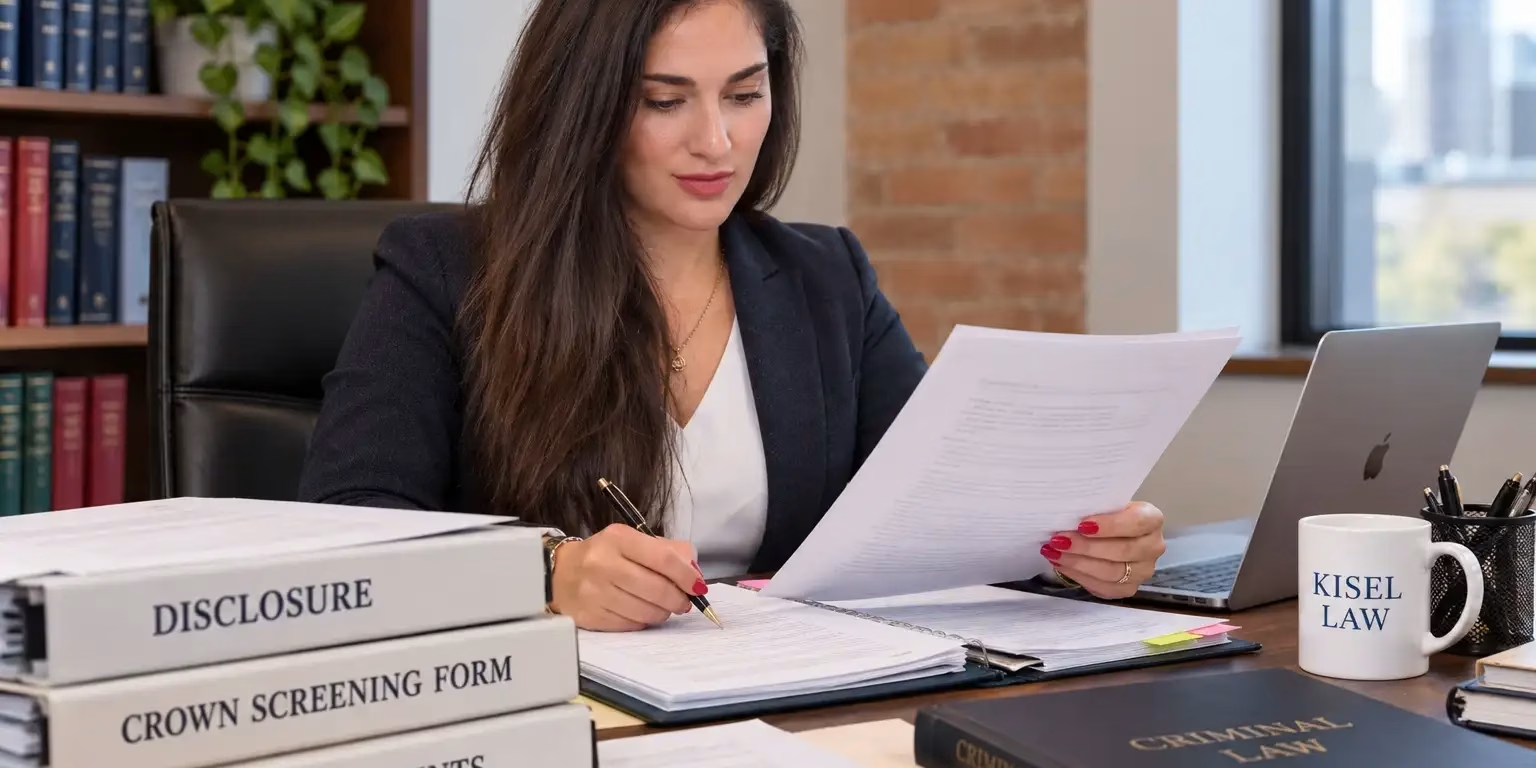
Preparation usually begins with disclosure. Counsel reviews the evidence, identifies missing items, considers legal issues, and gets clear instructions from the client.
The lawyer can then approach the Crown with specific questions instead of general uncertainty. That may mean asking for a missing video, challenging an assumption in the screening position, explaining why a proposed resolution does not fit the evidence, or identifying what will be contested at trial.
What should you have ready before the meeting?
Before a Crown pre-trial in Ontario, it is useful to have release documents, disclosure, the Crown screening form, a timeline of court dates, notes about missing evidence, and practical questions for counsel.
Tell your lawyer about information that may materially affect the case, including witnesses, relevant messages, video, medical documents, employment consequences, immigration concerns, or new police contact. Do not contact a complainant or witness if a release condition or court order prohibits it.
Speak With Kisel Law Before a Crown Pre-Trial in Ontario
A Crown pre-trial in Ontario can shape the direction of a criminal case long before trial. It is where disclosure problems, the Crown’s position, possible resolution, legal issues, and trial planning can start coming together.
Kisel Law represents people facing criminal charges in Toronto and across the GTA. You can review the firm’s criminal defence practice areas or its Toronto criminal lawyer services.
If a Crown pre-trial in Ontario is approaching, bring the disclosure, release papers, screening form, and your questions about the evidence or next stage. For advice based on the specific facts of your case, contact Kisel Law before important decisions are made.
This article provides general legal information and is not legal advice for a specific case.