

Appearance notice Ontario questions usually start with confusion. You may have been released by police, handed a document, told to attend court, and left wondering whether you have been charged, whether you need a lawyer, and what happens if you miss one of the dates listed on the form.
An appearance notice is not something to ignore or treat like ordinary paperwork. It is often one of the first documents in a criminal case, and it can set important obligations from the very beginning.
This guide explains what an appearance notice is, what information to check, how it differs from other release documents, and what practical steps can help you avoid early mistakes. It is general information, not legal advice for a specific case.
What an Appearance Notice Ontario Means
An appearance notice Ontario document is usually given by police when they require you to attend court at a future date. In plain language, it tells you that the matter is not finished simply because you were released from the station or roadside interaction.
The document may include your name, the alleged offence, the court address, the date and time of your first court appearance, and sometimes a separate date for fingerprints or photographs. It may also include warnings about what can happen if you do not attend.
Many people ask, “Does an appearance notice mean I have a criminal record?” Not by itself. Being charged or required to attend court is not the same as being convicted. A criminal record usually depends on the outcome of the case. Still, the early steps matter because missing a required date can create new legal problems.
If your next concern is what happens once you get to court, Kisel Law’s guide to a first court appearance in Ontario explains that stage in more detail. The appearance notice is often the document that gets you there.
Why an Appearance Notice Is Different From a Warning
An appearance notice Ontario form is not just a casual reminder from police. It is a formal document connected to the criminal court process. That means you should read it carefully, keep it safe, and make sure you understand every date on it.
A warning may tell you not to do something again. An appearance notice tells you to attend court. Those are very different things.
People sometimes make the mistake of assuming that because they were not held for bail, the allegation must be minor or almost over. That is not a safe assumption. Police release can still lead to a real criminal case. The case may involve disclosure, Crown screening, court appearances, resolution discussions, or trial preparation.
If you were released with conditions instead of only a court date, you may also want to read Kisel Law’s article on an undertaking in Ontario. An undertaking can create ongoing rules before court, while an appearance notice is primarily about requiring attendance.
9 Crucial Steps to Take After Receiving an Appearance Notice Ontario Document
Once you receive an appearance notice Ontario document, your goal should be simple: get organized early. The first few days can affect how smoothly the rest of the case moves.
1. Read every line before putting it away
Do not only look at the offence name or the court date. Read the entire document from top to bottom. Check for court location, courtroom details, appearance method, fingerprint requirements, police station information, and any warnings about failing to attend.
If anything is unclear, do not guess. A missed date can be far more serious than a misunderstood instruction.
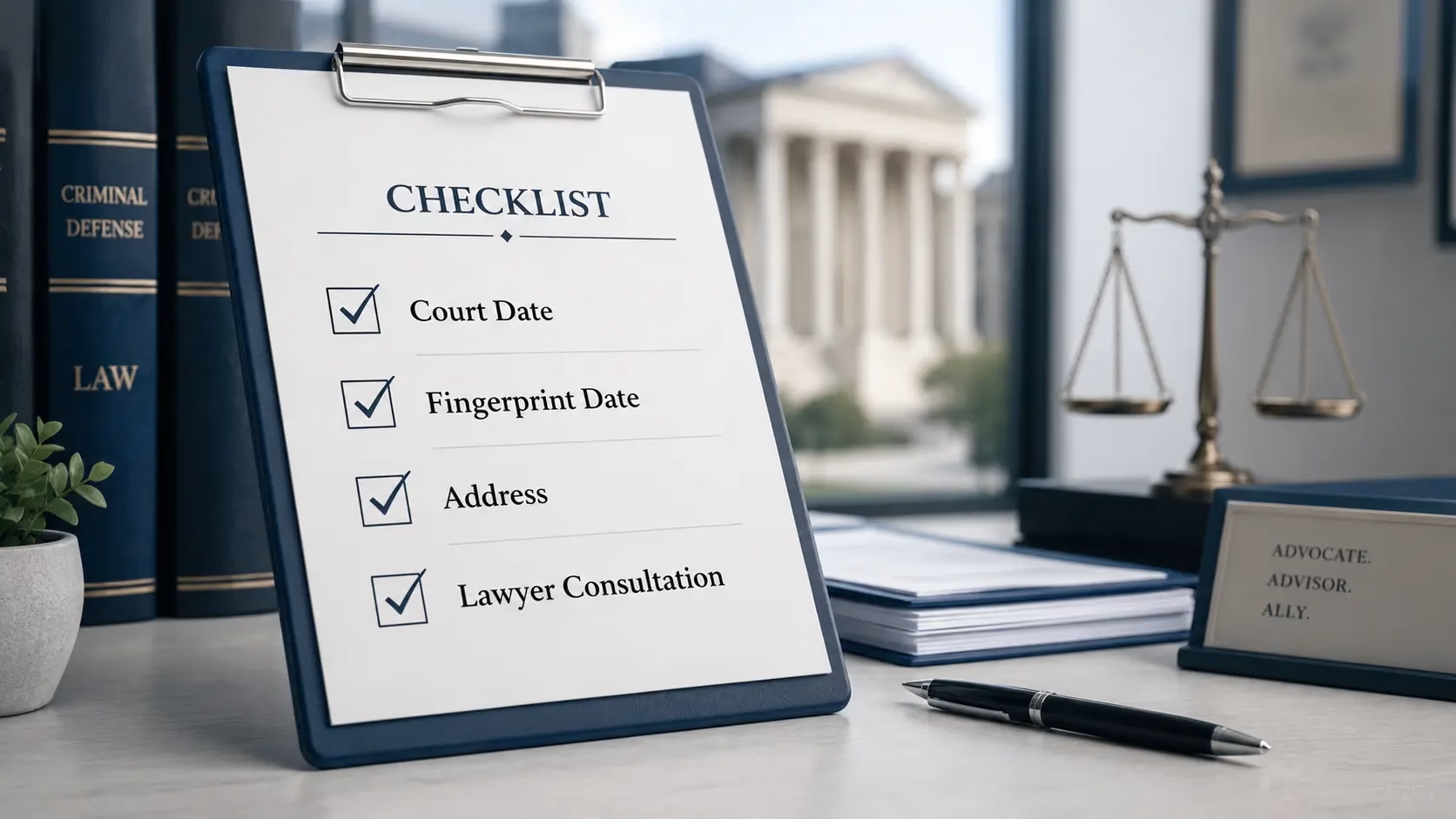
2. Separate your court date from your fingerprint date
One of the most common mistakes is confusing the court date with the fingerprint date. They may be on different days, at different times, and in different locations.
Your fingerprint date is often handled at a police station or identification unit. Your court date is handled through the courthouse or virtual court process. Missing either can cause problems.
A helpful rule is to enter both dates into your phone calendar immediately, then add reminders for one week before, one day before, and the morning of each date.
3. Confirm whether court is in person or virtual
An appearance notice Ontario document may list a courthouse address, but that does not always mean you simply walk into any courtroom and wait. Some appearances may involve remote or hybrid procedures depending on the court, location, and current scheduling practice.
The Ontario Court of Justice criminal court guide is a useful public starting point for understanding how early court appearances work. If you are unsure how your specific appearance will proceed, confirm the details before the date arrives.
4. Keep the original document and create a backup
Take a clear photo of the appearance notice. Save it somewhere you can access quickly. Email it to yourself if needed. Keep the original in a safe place.
If you speak with a lawyer, the lawyer will usually want to see the document. If you apply for legal aid or speak with duty counsel, the information on the notice may also help identify the court location, charge, and next step.
5. Do not contact witnesses or complainants about the case
Even if your appearance notice does not list no-contact conditions, contacting a complainant, witness, co-accused, or alleged victim can still create risk. A message that feels harmless to you may be misunderstood, preserved, or later used as evidence.
This is especially important in cases involving domestic allegations, workplace conflict, neighbours, texting, social media, or ongoing relationship issues. If your matter involves allegations like domestic assault or criminal harassment, review Kisel Law’s relevant practice areas and get advice before making any contact that could complicate the file.
6. Start gathering your own timeline
Memory fades quickly. Write down what happened while the details are still fresh. Include times, locations, names, messages, screenshots, receipts, videos, and anything else that may help explain the full context.
This does not mean posting about the case online or sending long explanations to police. It means privately organizing information so your defence lawyer can understand the file properly.
7. Avoid discussing the allegation by text or social media
A criminal case can become harder when people create unnecessary digital evidence after release. Group chats, apology texts, emotional posts, direct messages, and deleted conversations can all become relevant.
Even if you believe you are only defending yourself, written messages can be taken out of context. The safer approach is to stay quiet about the allegation and speak to a criminal defence lawyer before responding to anyone connected to the incident.
8. Ask early about disclosure
Disclosure is the evidence and case material the Crown provides to the defence. It may include police notes, witness statements, videos, photographs, 911 calls, body-worn camera footage, text messages, and other documents.
Your appearance notice does not usually contain all of that evidence. It is only an early procedural document. To understand the real strengths and weaknesses of the case, disclosure needs to be requested, received, and reviewed carefully.
Kisel Law’s article on criminal disclosure in Ontario explains why disclosure is so important before making decisions about pleas, negotiations, Charter issues, or trial strategy.
9. Speak with a lawyer before the first court date
Many people wait until after the first appearance to get legal advice. That can be a mistake. A lawyer may help you understand the document, confirm whether dates are separate, discuss whether your attendance is required, request disclosure, and start identifying issues early.
If your situation involves bail, conditions, a possible breach, a search, or a serious allegation, early advice becomes even more important. Kisel Law’s pages on bail hearings, breaching court orders, and search warrants may be helpful depending on the facts.
Appearance Notice Ontario vs. Other Criminal Court Documents
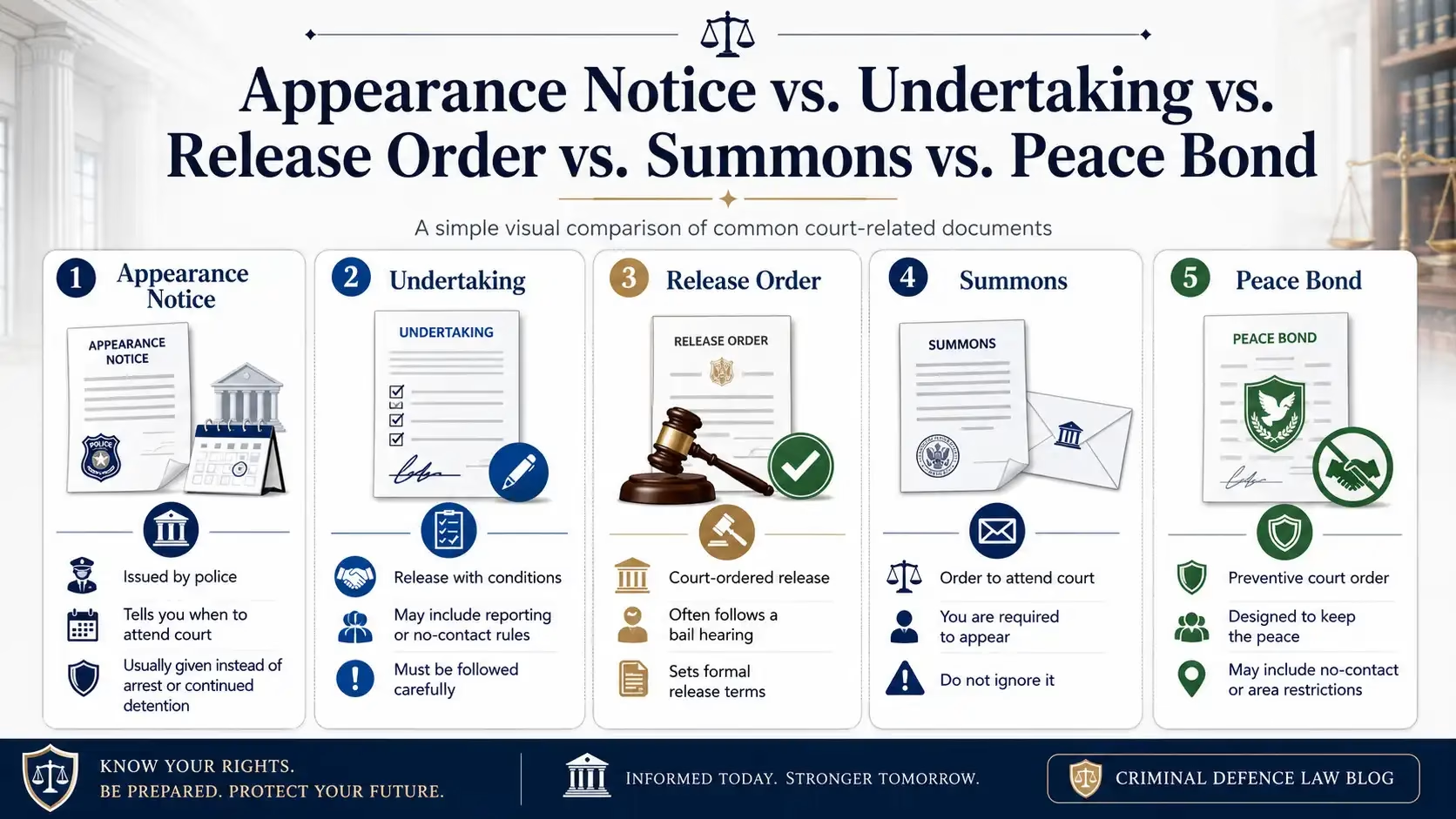
An appearance notice Ontario document is only one type of paperwork a person may receive after police involvement. The label matters because different documents create different obligations.
| Document | What it usually does | Main risk if ignored |
|---|---|---|
| Appearance notice | Requires you to attend court and sometimes attend for fingerprints | Missing court or fingerprints can lead to serious consequences |
| Undertaking | Releases you with promises and sometimes conditions | Breaching conditions may lead to a new charge |
| Release order | Sets court-ordered release terms, often after bail court | Failure to comply can affect release and create new allegations |
| Summons | Orders you to attend court on a specified date | Failing to attend may lead to a warrant or further proceedings |
| Peace bond | Creates conditions to keep the peace, often as a preventive or resolution tool | Breach can result in a new criminal charge |
If you are comparing documents because your case may resolve without a trial, Kisel Law’s guide to a peace bond in Ontario and article on having charges withdrawn in Canada can provide useful background.
Is an Appearance Notice the Same as Being Released on Bail?
No. An appearance notice Ontario document is not the same as a bail hearing or a release order after bail court.
Bail usually becomes an issue when police do not simply release a person and the court must decide whether they should be released while the case continues. An appearance notice usually means police released you with a requirement to attend court later.
That said, both situations can lead into the same broader criminal process. You may still have disclosure to review, court appearances to attend, and decisions to make about resolution or trial.
If bail becomes part of your situation, Kisel Law’s article with tips for a successful bail hearing explains how preparation and a practical release plan can matter.
What Happens If You Miss the Date on an Appearance Notice Ontario Form?

Missing a date on an appearance notice Ontario form can make the case more difficult. Depending on the circumstances, you may face additional allegations, a warrant, or stricter release terms later.
Some people miss court because they wrote down the wrong date. Others miss fingerprints because they thought only the court date mattered. Some move homes and never receive later information. These may sound like small mistakes, but in a criminal case they can create avoidable complications.
The Criminal Code provisions related to appearance notices and attendance obligations show why the wording on the document should be taken seriously. The point is not to panic. The point is to act early and stay organized.
If you already missed a date, do not ignore the problem. Get legal advice immediately and avoid making assumptions about whether the court “will understand.” The faster the issue is addressed, the better positioned you may be to reduce further damage.
Do You Need a Lawyer for an Appearance Notice Ontario Case?
You are not legally required to have a lawyer simply because you received an appearance notice Ontario document. But getting legal advice early can be very helpful.
A lawyer can review the document, explain the charge, check whether the dates make sense, help with disclosure, and speak to the Crown where appropriate. A lawyer can also identify whether the case raises issues involving search and seizure, identity, credibility, unreliable statements, self-defence, mental health, addiction, immigration concerns, employment consequences, professional discipline, or record-related risks.
For people who are self-represented or unsure about eligibility for assistance, Legal Aid Ontario’s information about preparing for a first appearance can be a useful public resource. Even if you are still deciding what to do, it is better to gather information before the court date instead of arriving unprepared.
How an Appearance Notice Fits Into the Bigger Criminal Process
An appearance notice Ontario document often sits near the beginning of the process. It does not tell you how the case will end. It tells you that the case has started moving through the system.
After the first court date, the matter may involve disclosure review, Crown discussions, further appearances, a judicial pre-trial, trial scheduling, or resolution discussions. Some cases resolve early. Others require deeper analysis and litigation.
If your case becomes more complex, Kisel Law’s guide to a judicial pre-trial in Ontario explains how court-led case management can become important later in the process.
The key is not to assume that the first document tells the whole story. A short appearance notice can lead to a file with videos, witness statements, police notes, forensic evidence, financial records, phone data, or Charter issues.
Common Situations Where an Appearance Notice May Be Given
An appearance notice Ontario document may appear in many different kinds of cases. It is not limited to one offence category.
For example, someone may receive one after a shoplifting allegation, a driving-related incident, a fight, a domestic call, a fraud investigation, a workplace dispute, or an allegation involving online messages. The seriousness of the case depends on the charge, the evidence, the background facts, and the Crown’s position.
In theft or fraud-related cases, early organization can be especially important because documents, receipts, banking records, employment materials, and communications may all matter. Kisel Law’s pages on fraud and theft, fraud, and white collar crime may be relevant if the allegation involves financial conduct.
In investor, securities, or professional-discipline contexts, a criminal allegation may also create regulatory concerns. Kisel Law’s regulatory law and professional discipline page is useful for understanding how legal issues can extend beyond the criminal courtroom.
How to Prepare Before Your First Court Date
Preparation for an appearance notice Ontario case does not need to be complicated, but it should be careful.
Start by confirming your dates. Then gather your paperwork. Save the notice, police card, occurrence number, release documents, business cards, emails, screenshots, and anything else related to the allegation.
Next, write a private timeline. Do not exaggerate, argue, or try to sound legal. Just record what happened in order. Include what was said, who was present, where people were standing, what messages exist, and whether any videos or witnesses may be available.
Then think about practical life issues. Will the court date affect work? Do you need time off? Do you need childcare? Do you need transportation? If the matter is virtual, do you have a private place, stable internet, and the correct link?
You can also check public court information through the Ontario Court of Justice public access resources, but do not rely only on online searches. The document you received and direct legal advice are usually more important for your specific obligations.
What Not to Do After Receiving an Appearance Notice Ontario Document
Some of the most damaging early mistakes happen after release, not during the police interaction itself.
Do not post about the allegation. Do not message the complainant to “clear things up.” Do not ask friends to contact witnesses. Do not throw away paperwork. Do not assume the charge will disappear because no one has called you. Do not miss fingerprints because you think they are optional.
Also, do not rush into a guilty plea before disclosure has been reviewed. A plea can have long-term consequences for employment, travel, immigration, professional licensing, family proceedings, and future background checks. The right decision depends on the evidence, not just the stress of wanting the matter over.
At the same time, do not ignore realistic resolution options. Some cases may be resolved through withdrawal discussions, peace bond negotiations, diversion-style outcomes where available, or other strategic paths. Others should be fought. The point is to make informed decisions instead of fear-based ones.
When the Appearance Notice Involves a Toronto or GTA Court
An appearance notice Ontario case may be heard in Toronto or another GTA courthouse depending on where the allegation arose. Court location matters because procedures, scheduling practices, Crown offices, and local expectations can vary.
Kisel Law represents clients facing criminal charges in Toronto and across surrounding communities. If your document lists a Toronto court, the criminal lawyer Toronto page is a relevant starting point. If your case is outside downtown Toronto, Kisel Law also has location pages for Mississauga, Brampton, Scarborough, North York, Markham, Vaughan, Ajax, and Pickering.
Wherever the case is located, the same basic principle applies: take the document seriously, confirm your dates, and get advice before the first appearance if possible.
How Kisel Law Can Help With an Appearance Notice Ontario Case
An appearance notice Ontario document is often the first sign that a criminal allegation is moving into court. It may look simple, but it can raise important questions about disclosure, release obligations, fingerprints, first appearances, future negotiations, and defence strategy.
Kisel Law helps individuals understand the early stages of a criminal case and avoid preventable mistakes. The firm’s criminal defence practice areas cover a wide range of allegations, including bail issues, breaches, fraud, assault-related charges, search warrants, and other criminal matters. You can also learn more about the firm through the Kisel Law team page and client reviews.
If you recently received an appearance notice, do not wait until the court date to figure out what it means. Read it carefully, save a copy, avoid unnecessary contact about the case, and speak with a criminal defence lawyer about your next step.
To discuss your situation, you can contact Kisel Law or book a free consultation. Early guidance can help you understand the document, prepare for court, and protect your position from the start.