

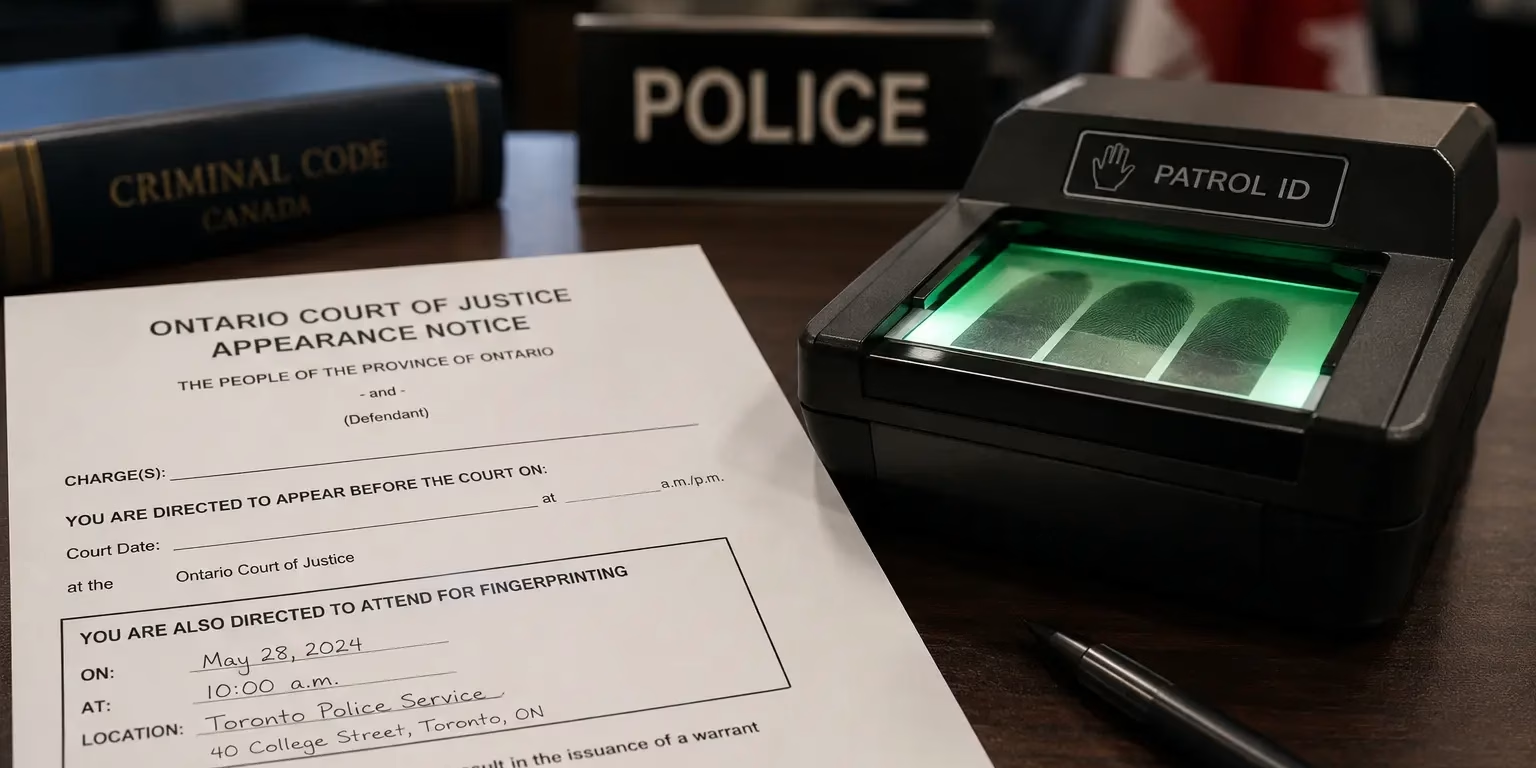
Criminal fingerprinting in Ontario can be one of the most confusing requirements that appears after a person is charged. You may have been released from a police station, handed paperwork, and told to return on a date that is separate from your court date. If your paperwork includes an appearance notice in Ontario, read every date carefully because the fingerprint appointment can carry its own legal consequences.
The key point is that criminal fingerprinting in Ontario is an identification step, not a finding of guilt. It can happen before the Crown has fully screened the file and before you have received disclosure. If you were released on an undertaking in Ontario, the fingerprint requirement may appear alongside other obligations that must also be taken seriously.
What Criminal Fingerprinting in Ontario Actually Means
Criminal fingerprinting in Ontario refers to the collection of fingerprints, photographs, and related identifying information from certain people who are charged with qualifying criminal offences. The legal authority comes primarily from the federal Identification of Criminals Act.
The law does not mean that every interaction with police leads to fingerprints. The requirement generally applies where the person is charged with an indictable offence or an offence that can be prosecuted either by indictment or summary conviction, often called a hybrid offence. The exact paperwork and timing depend on how the person was charged and released.
Fingerprinting serves an identification function. It helps law enforcement connect a particular person to the correct criminal file and distinguish that person from someone else with a similar name, date of birth, or other personal information.
Does being fingerprinted mean you have a criminal record?
No. Criminal fingerprinting in Ontario does not itself mean you have been convicted or that a court has found you guilty.
A criminal charge begins a legal process. A conviction is a possible outcome of that process, but it is not automatic. Charges can be withdrawn, stayed, resolved in other ways, or result in an acquittal. That distinction matters when people hear the word “fingerprinting” and assume the case has already been decided.
You should also avoid assuming that every police record disappears automatically if a charge ends without a conviction. Record retention, access, and destruction can involve separate rules and police-service policies. If that issue matters for employment, immigration, travel, professional licensing, or a background check, get advice based on the outcome of your specific case.
Why You May Receive a Separate Fingerprint Appointment

A fingerprint date is often separate from the first court date. That is why someone can leave police custody with two dates on the same document or with different instructions for each step.
Under the Criminal Code, an appearance notice can require a person to attend at a stated time and place for identification purposes when the legal requirements are met. Similar fingerprinting obligations can also arise through an undertaking, summons, or court order.
Criminal fingerprinting in Ontario is therefore not simply an optional administrative appointment. If your document says you must attend, treat it as a formal legal obligation unless a lawyer or the issuing authority tells you that the requirement has been lawfully changed.
Which documents can contain a fingerprint requirement?
The exact form depends on how the case began.
| Document | What it generally does | Fingerprint requirement |
|---|---|---|
| Appearance notice | Requires future court attendance after police release | May include a separate identification date |
| Undertaking | Releases a person subject to stated obligations or conditions | May require attendance for fingerprints and photographs |
| Summons | Formally requires a person to attend court | May also require identification attendance where authorized |
| Release-related court order | Sets terms after a judicial release decision | A court may make a separate identification order where permitted |
If you are unsure what document you received, do not rely on the title alone. Read the dates, addresses, checked boxes, and instructions. Kisel Law’s guide to a first court appearance in Ontario explains how the court date fits into the next stage of the case.
What Happens at a Criminal Fingerprinting Appointment?
The practical process can vary by police service, but criminal fingerprinting in Ontario normally involves confirming identity and collecting fingerprints and photographs for identification purposes. The appointment is usually much shorter and more administrative than a court appearance.
Follow the instructions printed on your paperwork. Check the police location, date, time, and any direction about identification or documents to bring. Do not assume that the fingerprint appointment is held at the courthouse simply because your first court date is listed on the same release document.
A common mistake is to focus only on the courtroom date and overlook the earlier police attendance. Another is to show up at the wrong police location because the person remembers where they were arrested rather than the address written on the document.
Will police question you about the charge during fingerprinting?
Criminal fingerprinting in Ontario is an identification process, but that does not make the surrounding situation risk-free. A person should not treat a fingerprint appointment as an invitation to explain the allegation, fill gaps in a statement, or try to persuade police that the charge should disappear.
If police want to speak with you about the facts of the case, the legal issues are different from routine fingerprinting. Kisel Law’s guide to a voluntary police interview in Ontario explains why getting legal advice before speaking can matter.
7 Mistakes to Avoid With Criminal Fingerprinting in Ontario

Most fingerprint problems are preventable. The safest approach is to treat the appointment with the same care you would give any other compulsory step in a criminal case.
1. Confusing the fingerprint date with the court date
Criminal fingerprinting in Ontario often happens on a different day and at a different location from court. Put both dates in your calendar as soon as you receive the paperwork.
Use separate reminders for each appointment. A simple calendar entry should include the time, full address, purpose of attendance, and any instructions written on the document.
2. Assuming the appointment is optional
If your appearance notice, undertaking, summons, or order requires attendance, do not skip it because it looks administrative.
The Criminal Code provisions on failing to attend specifically address failures to appear for Identification of Criminals Act purposes in certain circumstances. Depending on the document and facts, a missed appointment without lawful excuse can create an additional legal problem.
3. Waiting until the appointment day to read the paperwork
Criminal fingerprinting in Ontario becomes much easier to manage when you check the document early. Confirm whether the police station is the same place where you were initially processed. Confirm the time. Check whether the instructions mention identification, arrival procedures, or a particular unit.
If something is genuinely unclear, deal with it before the deadline rather than guessing on the morning of the appointment.
4. Volunteering a fresh statement about the allegation
You may feel that explaining yourself will help. It can also create new evidence.
Keep the fingerprint appointment focused on the required identification process. If an officer wants to discuss the underlying events, consider getting legal advice before answering substantive questions. The fact that you have arrived for criminal fingerprinting in Ontario does not eliminate your right to understand the legal consequences of speaking.
5. Assuming a missed date can simply be ignored
Missing criminal fingerprinting in Ontario can be serious. Section 512.2 of the Criminal Code allows a justice, in specified circumstances, to issue a warrant where an accused required by an appearance notice or undertaking fails to attend for Identification of Criminals Act purposes.
That does not mean every missed appointment automatically produces a warrant or a new conviction. The exact consequences depend on the document, whether it was confirmed as required, whether there was a lawful excuse, and what steps were taken afterward. But ignoring the problem is a poor strategy.
6. Treating fingerprints as proof that the case is strong
Criminal fingerprinting in Ontario says very little about whether the Crown can ultimately prove the allegation. It is an identification procedure, not an evaluation of witness credibility, search legality, intent, self-defence, reliability, or reasonable doubt.
The strength of the case becomes clearer through evidence review. Once the file moves forward, criminal disclosure in Ontario may include police notes, statements, recordings, video, photographs, digital evidence, expert material, and other information that actually bears on the merits of the charge.
7. Forgetting that new charges can create new obligations
A person who has already been fingerprinted should not assume that a later or additional charge is automatically covered by the earlier attendance. New paperwork can create a new identification requirement.
Read every new document as if it stands on its own. If criminal fingerprinting in Ontario is required again, confirm the new date rather than relying on what happened in the earlier file.
What Should You Do If You Missed Your Fingerprint Date?
If you missed criminal fingerprinting in Ontario, act promptly. Do not assume that showing up days later without checking will fix the issue, and do not ignore calls or documents because you are embarrassed about the mistake.
Start by finding the exact appearance notice, undertaking, summons, or order. Note the missed date, the location, and the reason you did not attend. Preserve anything that may help explain a genuine problem, such as hospital records, travel disruption documentation, or other time-stamped evidence.
Then speak with a criminal defence lawyer about the safest way to address the missed attendance. The legal significance can depend on whether the document was properly issued and confirmed, whether a lawful excuse may exist, whether a warrant has been sought, and whether any new allegation has been laid.
Can you be arrested for missing fingerprinting?
Potentially, yes. Criminal fingerprinting in Ontario is tied to statutory attendance requirements in qualifying cases. As noted above, the Criminal Code permits a justice to issue an arrest warrant in specified circumstances after a failure to attend under an appearance notice or undertaking.
The important word is “potentially.” A missed appointment is not something to diagnose from a generic internet checklist. The correct response depends on the paperwork and what has happened on the file since the missed date.
How Fingerprinting Fits Into the Early Criminal Court Process
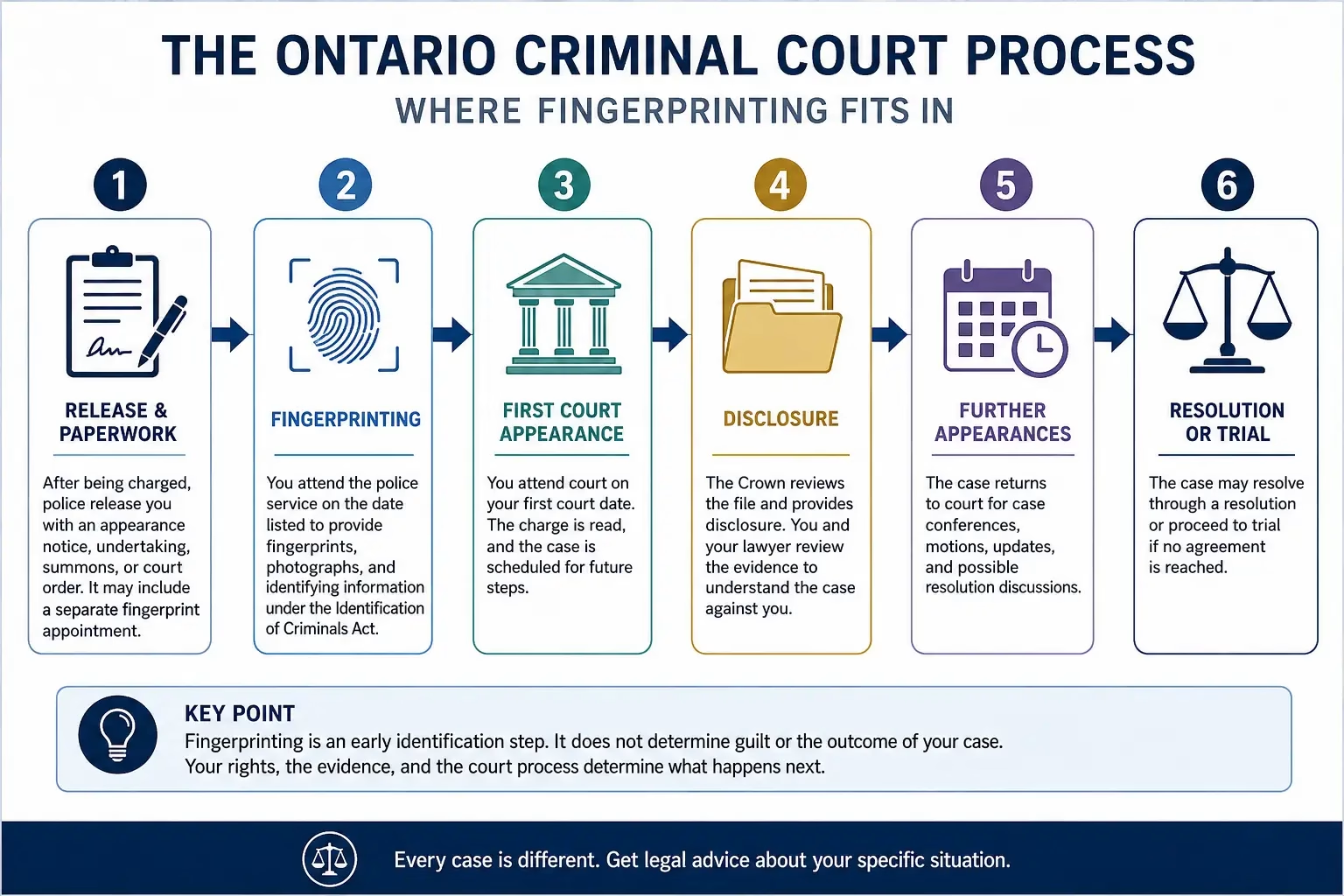
Criminal fingerprinting in Ontario is only one early step. A typical out-of-custody file may involve release paperwork, a fingerprint appointment, a first court appearance, Crown screening, disclosure, follow-up appearances, resolution discussions, and possibly later motions or trial preparation.
Not every case follows the same sequence. Bail cases, summons cases, serious indictable matters, and files with multiple accused can move differently. The Ontario Court of Justice criminal court information is a useful public resource for current court access and scheduling information.
What matters is keeping each obligation separate. Fingerprints deal with identification. Disclosure deals with the evidence. Court appearances move the case through the judicial process. Legal strategy deals with how the defence responds to the allegation.
Does fingerprinting happen before disclosure?
Often, yes. Criminal fingerprinting in Ontario can occur very early, sometimes before the accused has received the Crown’s disclosure package or had a meaningful opportunity to assess the evidence.
That timing can make the process feel backwards. You may be required to complete an identification step before you know exactly what evidence exists. It does not mean you should make major decisions about a plea or resolution before understanding the case.
How to Prepare for Criminal Fingerprinting in Ontario
A short checklist can prevent most avoidable problems:
- Read the release or summons document from top to bottom.
- Confirm the fingerprint date separately from the court date.
- Verify the exact police location and arrival time.
- Follow any written instructions about identification or paperwork.
- Keep a copy or clear photo of the document.
- Avoid discussing the facts of the allegation unless you have received legal advice about speaking.
- Contact counsel promptly if you cannot attend or have already missed the date.
- Keep tracking the next court date even after fingerprinting is complete.
Criminal fingerprinting in Ontario is easier to handle when it is treated as one part of a larger case-management checklist rather than an isolated errand.
Get Clear Advice About Criminal Fingerprinting in Ontario From Kisel Law
Criminal fingerprinting in Ontario can look routine, but the surrounding paperwork may affect your court attendance, release obligations, and next legal steps. If you have been charged, received a fingerprint date, missed an appointment, or are unsure what your document requires, getting advice early can prevent a simple misunderstanding from becoming a larger problem.
Kisel Law represents people facing criminal allegations in Toronto and across the GTA. You can review the firm’s criminal defence practice areas, learn more about working with a criminal lawyer in Toronto, or contact Kisel Law to discuss your situation.
The goal is not to make the fingerprint process feel more dramatic than it is. It is to make sure every required step is handled correctly while the defence stays focused on the evidence, your rights, and the best path forward.