
Being required to attend Brampton criminal court can be stressful, especially when you have been given police paperwork but little explanation about what happens next. You may be wondering whether your first appearance is a trial, when you will receive the evidence, whether you must attend personally, and how long the case could take.
A criminal charge does not mean that you have been found guilty. It means that a court process has begun. The steps taken at the beginning of the case can affect your release conditions, your defence strategy, and the options available later.
This guide explains what generally happens after someone is charged in Brampton, how to prepare for court, and when it may be helpful to speak with a criminal lawyer in Brampton.
Where Is Brampton Criminal Court?
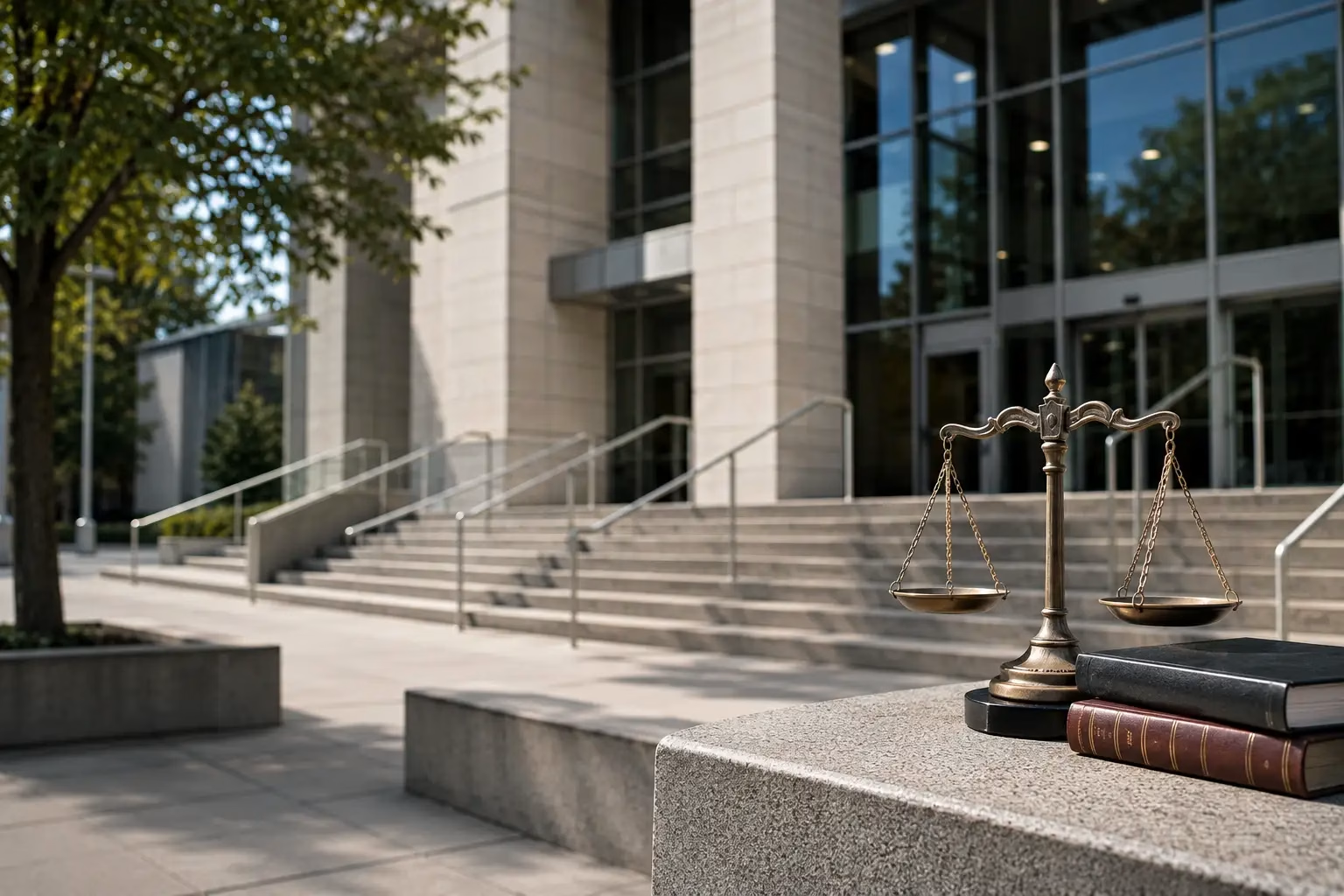
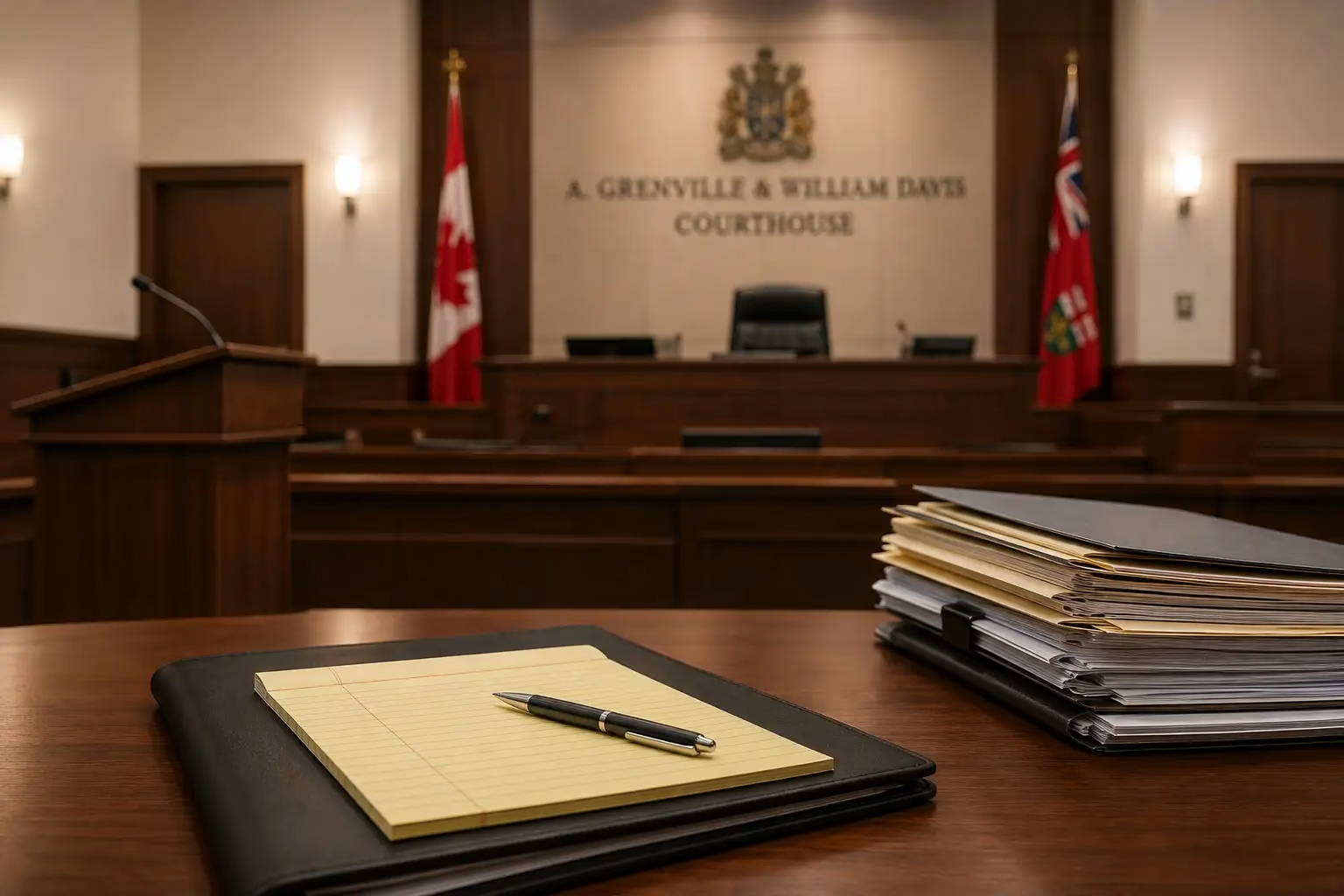
Criminal matters in Brampton are heard at the A. Grenville and William Davis Courthouse, located at:
7755 Hurontario Street
Brampton, Ontario
L6W 4T1
The courthouse handles criminal matters as well as several other types of proceedings. Current courthouse hours, contact information, accessibility details, and service information are available through the Ontario government’s official Brampton courthouse page.
Do not assume that every court appearance will take place in person. Depending on the type and stage of the case, an appearance may be conducted in person, by video, or by telephone. Attendance instructions can also change.
Review the documents given to you by police or the court. Before your appearance, confirm the date, time, courtroom, and method of attendance.
How Does a Brampton Criminal Case Begin?
A criminal case can begin in several ways. You may:
- receive an appearance notice;
- receive a summons requiring you to attend court;
- be arrested and released on an undertaking;
- be released by a court after a bail hearing; or
- remain in custody while the case continues.
Your release documents may contain more than one important date. For example, you may have one date for fingerprinting and another date for court.
Read every page carefully. Missing a required court or fingerprinting appointment may result in a warrant or an additional criminal allegation.
If you were released on an undertaking, you may also be required to follow conditions. These could include restrictions on contact, locations, weapons, alcohol, travel, internet access, or where you live.
Kisel Law’s guide to an undertaking in Ontario explains how these documents work and why the exact wording of each condition matters.
What Happens If You Are Held for a Bail Hearing?
If police do not release you after an arrest, you must generally be brought before a justice without unreasonable delay. Section 503 of the Criminal Code states that when a justice is available, this must occur within 24 hours. When a justice is not available during that period, the person must be brought before one as soon as possible.
At a bail hearing, the court decides whether the accused should be released while the case continues or detained in custody.
The court may consider whether:
- the accused is likely to attend court;
- release would create a public-safety concern;
- detention is necessary to maintain confidence in the administration of justice;
- proposed conditions can address the identified concerns; and
- a surety or another form of supervision is appropriate.
A bail hearing is not a trial. The court is not deciding whether the accused is guilty. It is deciding whether the person should remain in custody or be released while the charge is addressed.
Families preparing for this stage may find Kisel Law’s guide to being a surety in Ontario helpful.
Your Right to Speak With a Lawyer
Section 10(b) of the Canadian Charter of Rights and Freedoms protects the right of a person who has been arrested or detained to retain and instruct counsel without delay and to be informed of that right.
Legal advice can be especially important before deciding whether to answer police questions, provide a written or recorded statement, or consent to a search.
You do not need to argue with police or interfere physically with an investigation. You can state clearly that you want to speak with a lawyer and obtain advice about what the law requires in your circumstances.
The Department of Justice provides additional information about the Charter right to counsel.

What Happens at Your First Brampton Criminal Court Appearance?
Your first Brampton criminal court appearance is usually a case-management appearance. It is generally not a trial, and witnesses will not normally testify.
The court may address:
- whether disclosure has been provided;
- whether you have retained a lawyer;
- whether you have applied for Legal Aid;
- whether additional disclosure has been requested;
- whether discussions with the Crown are required;
- whether a judicial pre-trial should be scheduled; and
- what must happen before the next court date.
The purpose is usually to organize the case and move it toward the next appropriate stage.
This is not normally the time to stand up and explain your entire side of the allegation. Speaking about the facts before reviewing the evidence or receiving legal advice could create avoidable problems.
For a broader explanation, read Kisel Law’s guide to a first court appearance in Ontario.
Do You Have to Attend Brampton Criminal Court Personally?
Whether you must attend personally depends on the type of appearance, the directions on your documents, the court’s current procedures, and whether a lawyer is authorized to appear for you.
A lawyer may be able to appear for an accused at some administrative dates. Other proceedings may require the accused to attend.
Never assume that retaining a lawyer automatically excuses you from court. Confirm the attendance requirement with your lawyer before the date.
What Is Criminal Disclosure?
Disclosure is the evidence and relevant information in the Crown’s possession. Depending on the case, disclosure may include:
- police officers’ notes;
- witness statements;
- surveillance or body-camera recordings;
- 911 calls;
- photographs;
- text messages and emails;
- financial or business records;
- forensic reports;
- search-warrant materials;
- a police synopsis; and
- a Crown screening form.
Disclosure helps the accused understand the case they must answer. It may also reveal inconsistencies, missing evidence, identification concerns, search issues, or possible Charter arguments.
The first package may not contain everything. Video files, forensic results, additional notes, or digital records may arrive later.
Do not make an important decision based only on a short summary in your release paperwork. Review the actual disclosure carefully and obtain advice about how the evidence may apply to your circumstances.
Kisel Law’s article on criminal disclosure in Ontario provides a more detailed explanation.
What Happens After Disclosure Is Reviewed?
The next step depends on the evidence, the type of charge, the Crown’s position, and the defence strategy.
Crown Pre-Trial
A Crown pre-trial is a discussion between the prosecutor and the defence. It may address:
- missing disclosure;
- the Crown’s position;
- possible resolution;
- legal or evidentiary issues;
- whether the case is expected to proceed to trial; and
- how much court time may be required.
The Crown represents the public interest and is not the accused person’s legal adviser. An unrepresented accused should be careful about discussing the facts of the allegation without first obtaining independent advice.
Judicial Pre-Trial
A judicial pre-trial involves a judge, the Crown, and the defence. Its purpose may include narrowing the issues, addressing case-management concerns, discussing whether resolution is possible, and estimating the time required for trial.
The judge is not deciding guilt at a judicial pre-trial.
Kisel Law’s guide to a judicial pre-trial in Ontario explains this stage in more detail.
Resolution or Trial
Not every criminal case ends in a trial. Depending on the law, evidence, and circumstances, a matter may result in:
- withdrawal of one or more charges;
- an approved diversion process;
- a peace bond;
- a negotiated resolution;
- a guilty plea followed by sentencing; or
- a trial.
A quick resolution is not necessarily the right resolution. A criminal outcome can affect employment, immigration status, professional licensing, travel, family proceedings, and future background checks.
Before accepting a resolution or entering a guilty plea, understand both the immediate sentence and the possible long-term consequences.
If the matter proceeds to trial, the Crown must prove every essential element of the charge beyond a reasonable doubt. The accused is presumed innocent and is not required to prove innocence.
Common Mistakes Before a Brampton Court Date
People sometimes create additional problems while trying to deal with the stress of a criminal charge. Common mistakes include the following.
Missing Court or Fingerprinting
Record every required date. Confirm whether the appearance is in person or remote, and allow enough time for travel, security screening, parking, and finding the correct courtroom.
Breaching a Release Condition
A condition remains in effect unless it expires or is lawfully changed. Do not ignore a condition because you believe it is unnecessary or because another person says they do not want it enforced.
When a condition affects housing, employment, childcare, or necessary communication, speak with a lawyer about whether a formal variation may be available.
Contacting a Complainant
Do not contact a complainant directly or indirectly when a no-contact condition applies. Asking a friend or relative to deliver a message could also create a problem.
Do not pressure anyone to withdraw an allegation or change a statement.
Posting About the Case Online
Social-media posts, messages, photographs, and deleted content may become evidence. Avoid public explanations, indirect messages, or arguments about the complainant, police, witnesses, or the charge.
Providing Another Police Statement
Police may contact you after a charge has been laid. Obtain legal advice before agreeing to another interview or providing additional information.
Pleading Guilty Before Reviewing the Evidence
Stress can make an immediate guilty plea seem like the fastest way to finish the case. However, a plea gives up the right to a trial and may create consequences that are difficult or impossible to reverse.
Review the disclosure and obtain advice before making that decision.
How to Prepare for Brampton Criminal Court
Good preparation can reduce confusion and help prevent avoidable setbacks.
Keep Your Documents Together
Bring or retain copies of:
- your appearance notice, summons, undertaking, or release order;
- your bail conditions;
- fingerprinting instructions;
- the police occurrence number;
- court notices and emails;
- disclosure instructions; and
- correspondence from your lawyer, the Crown, or the court.
Confirm the Attendance Instructions
Check the date, time, courtroom, and method of attendance. Court schedules and virtual-appearance information can change.
The Ontario Court of Justice criminal court guide provides general information about the court process and available legal resources.
Follow Every Release Condition
Read the exact wording instead of relying on memory. When you do not understand a condition, obtain advice before acting.
Preserve Relevant Evidence
Keep potentially relevant messages, call records, photographs, receipts, location information, and documents. Make a private timeline while events remain fresh.
Do not edit records, delete communications, or ask a witness to change their account.
Avoid Public Discussions
Limit what you say about the allegation to friends, co-workers, family members, or online audiences. Statements made outside court may still become relevant to the prosecution.
Is Duty Counsel Available at the Brampton Courthouse?
Legal Aid Ontario operates a criminal duty counsel office at the Brampton courthouse. Duty counsel may provide legal information, summary advice, referrals, and assistance with certain court appearances, depending on eligibility and the circumstances.
The Brampton criminal duty counsel office is located at 7755 Hurontario Street. Current contact information is available from Legal Aid Ontario.
Duty counsel provides an important public service, but duty counsel may not be able to manage every aspect of a case from beginning to end.
Frequently Asked Questions About Brampton Criminal Court
Is My First Brampton Court Date a Trial?
Usually not. The first appearance is generally used to address disclosure, legal representation, scheduling, and the next procedural step.
Can I Tell the Judge My Side at the First Appearance?
The first case-management date is normally not the time to present a complete defence. Speaking about the allegation before reviewing disclosure may create unnecessary risks.
Can the Complainant Drop the Charge?
Once a criminal charge has been laid, the complainant does not control the prosecution. The Crown decides whether the charge continues, resolves, or is withdrawn.
The complainant’s position may be considered, but it is not the only factor. Never contact or pressure a complainant, especially when a no-contact condition applies.
How Long Does a Brampton Criminal Case Take?
There is no single timeline. The length of the case can depend on the charge, disclosure, complexity, number of witnesses, court availability, pre-trial applications, resolution discussions, and whether the matter proceeds to trial.
What Happens If I Miss Court?
Missing a required appearance may lead to a warrant or an additional allegation. Contact a criminal defence lawyer promptly instead of waiting for the problem to resolve on its own.
Should I Speak With a Lawyer Before My First Court Date?
Obtaining advice before the first appearance can help you understand your documents, release conditions, disclosure, attendance obligations, and immediate risks.
Speak With Kisel Law About a Brampton Criminal Charge
A criminal case can affect your freedom, employment, reputation, family life, and ability to travel. Although the first court date may be brief, decisions made early in the process can affect what happens later.
Kisel Law provides criminal defence representation to people facing charges in Brampton, Toronto, and communities across the Greater Toronto Area. Nicole Kiselyov can review the circumstances, explain the court process, and provide advice based on the evidence and the specific issues in your case.
Book a confidential consultation with Kisel Law or contact the firm to discuss the next steps.
This article provides general legal information and is not a substitute for legal advice about your specific circumstances. Court procedures and attendance requirements may change. Confirm the current requirements that apply to your case.
If you have been arrested, detained, or contacted by police, obtain advice about your circumstances before making a statement or consenting to a search.