
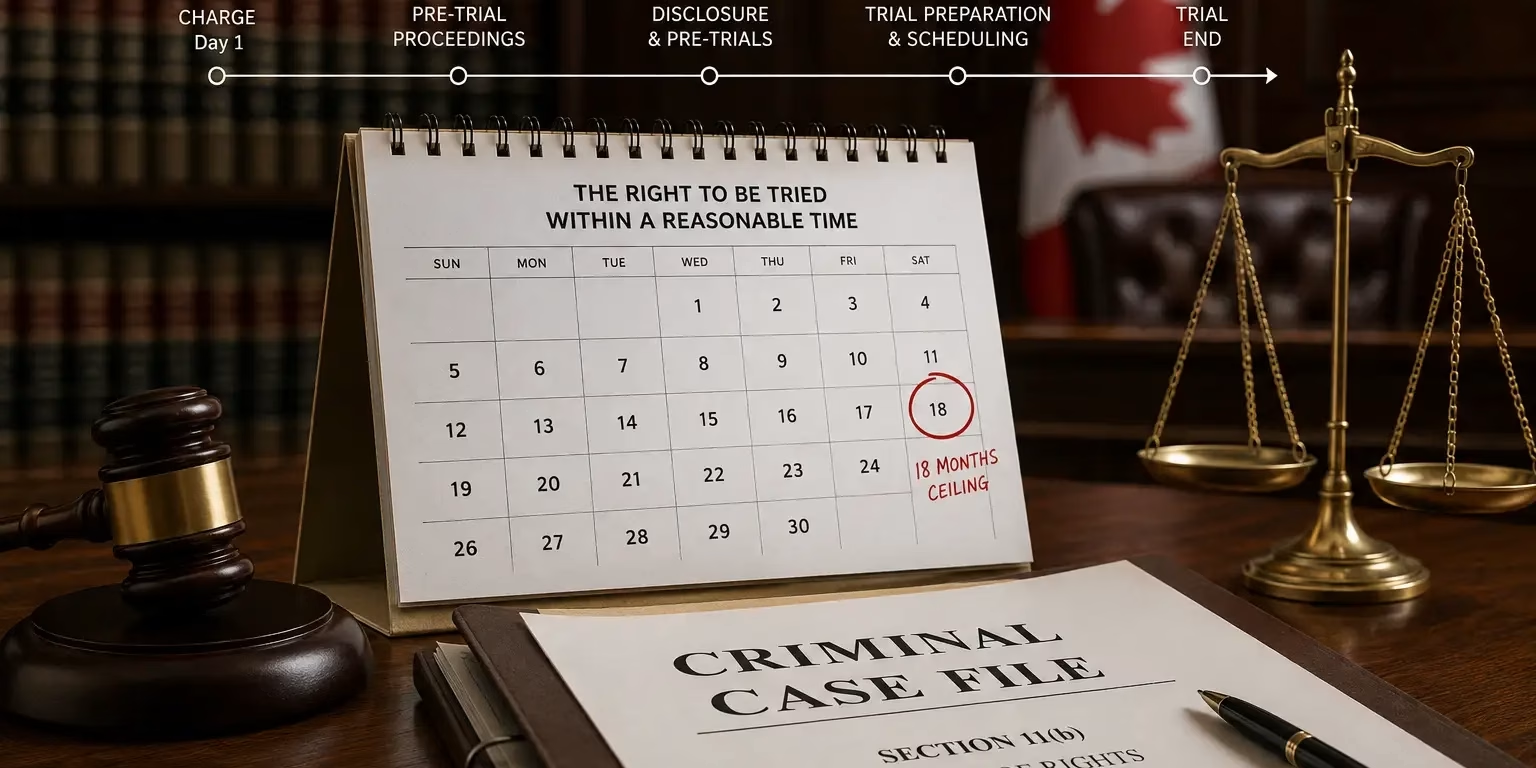
11(b) delay in Ontario can become a serious issue when a criminal case keeps getting adjourned, disclosure is slow, or trial dates are pushed far into the future. The concern is not just inconvenience. Section 11(b) of the Canadian Charter protects the right to be tried within a reasonable time, and in some cases delay can lead to a stay of proceedings.
If your case is already raising timing concerns, the key is not to guess from calendar dates alone. You need to understand what counts, what does not count, and when a Charter application may be worth discussing.
What Does 11(b) Delay in Ontario Mean?
11(b) delay in Ontario refers to delay in bringing a criminal case to trial within a reasonable time. It comes from section 11(b) of the Canadian Charter of Rights and Freedoms, which protects anyone charged with an offence from being left under unresolved criminal allegations for too long.
A delayed case can affect your life long before trial. Bail conditions may restrict where you can go, who you can speak to, or whether you can work. The charge may affect travel, employment, immigration concerns, family stress, and reputation. Even when a person is presumed innocent, the pressure of waiting can be real.
The most important modern case is R. v. Jordan. Jordan created presumptive ceilings for criminal trial delay. In plain language, that means there are time limits after which delay is presumed unreasonable unless the Crown can justify it.
The Jordan Timeline: 18 Months and 30 Months
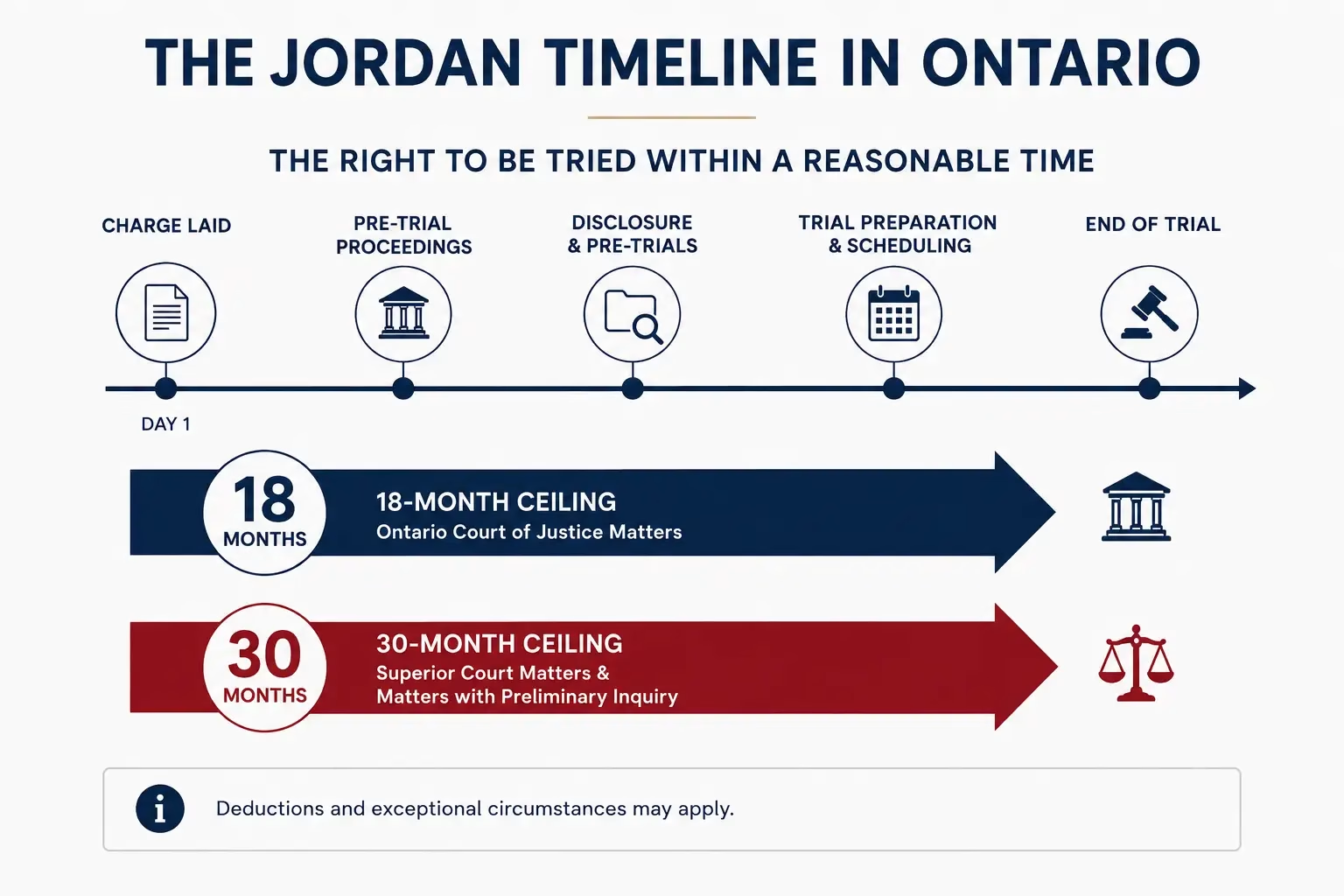
For most Ontario Court of Justice matters, the Jordan ceiling is 18 months from the charge to the actual or anticipated end of trial. For Superior Court matters, or provincial court matters that include a preliminary inquiry, the ceiling is usually 30 months.
That does not mean every case close to 18 months automatically wins an application. It also does not mean a case under 18 months can never raise a delay issue. The analysis depends on the total time, the court level, who caused each period of delay, whether any time was waived, and whether exceptional circumstances apply.
Here is a simple way to think about 11(b) delay in Ontario:
| Delay issue | Why it matters |
|---|---|
| Date the Information was sworn | Often the starting point for calculating delay |
| Anticipated end of trial | Usually the endpoint, not just the first trial date |
| Defence-caused delay | Usually deducted from the total |
| Crown or institutional delay | May count toward the Jordan calculation |
| Exceptional circumstances | May justify delay beyond the ceiling |
| Remedy sought | Usually a stay of proceedings if the Charter breach is proven |
For anyone evaluating 11(b) delay in Ontario, the Ontario Court of Justice also has Jordan-compliant trial scheduling procedures. These procedures are designed to move cases toward resolution or trial earlier, especially when a file is approaching important timelines.
What Counts Toward 11(b) Delay in Ontario?
11(b) delay in Ontario is not calculated by simply counting every day on the calendar and assuming the answer is obvious. The first step is usually total delay. Then the court looks at deductions and explanations.
Defence delay is a major example. If the defence requests an adjournment because counsel is unavailable, disclosure has not been reviewed, a client changes lawyers, or the defence is not ready to proceed, that period may be treated differently from delay caused by the Crown or the court system.
There can also be waived delay. Waiver is not something to treat casually. If the defence clearly waives a period of delay on the record, that time may not help a later 11(b) delay in Ontario application.
Exceptional circumstances are another key issue. These are events that may be outside the Crown’s control and reasonably unavoidable, such as unexpected illness, major witness issues, or certain scheduling complications. The point is not whether the case took a long time only. The point is why it took that long.
Does Every Long Criminal Case Get Stayed?
No. A long case does not automatically end just because it feels unfair.
For 11(b) delay in Ontario, the court looks at the legal framework, not just frustration. If the net delay exceeds the Jordan ceiling, the Crown normally has to justify the excess delay. If the net delay is below the ceiling, the defence usually has the harder job of showing that it took meaningful steps to move the case forward and that the case still took markedly longer than it reasonably should have.
That is why early strategy matters. A person who repeatedly delays the case, misses steps, or waits until the last minute may have a weaker delay argument than someone who consistently pushed the file forward.
7 Common 11(b) Delay in Ontario Mistakes That Can Hurt a Case
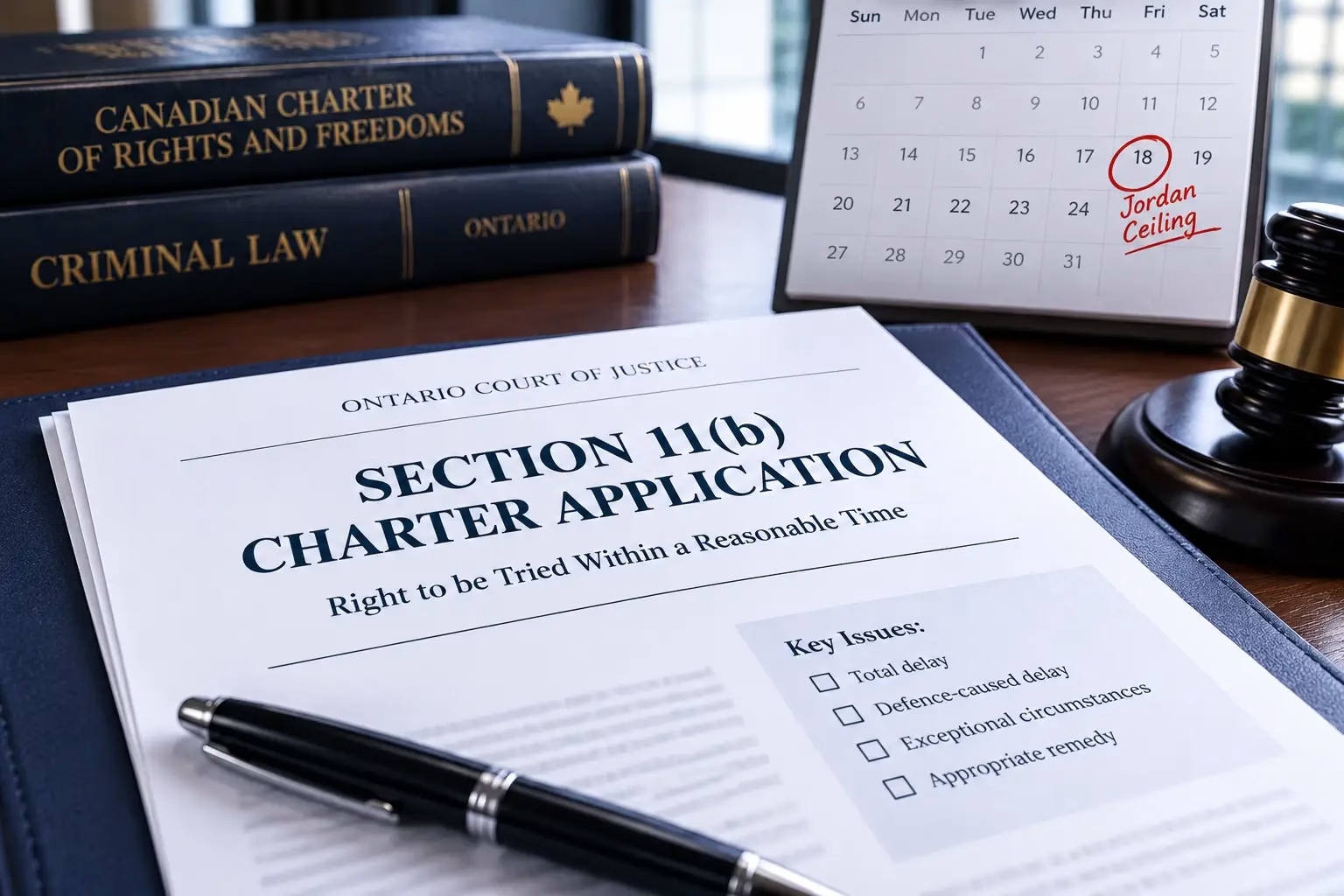
A possible 11(b) delay in Ontario issue should be handled carefully. These applications are usually won or lost on the details. Small decisions can affect the calculation later.
- Assuming every adjournment helps the defence. It may not. If the adjournment was requested by the defence, caused by defence unreadiness, or linked to a defence choice, that time may be deducted.
- Ignoring disclosure problems until trial is close. Disclosure issues should usually be identified early, documented, and followed up.
- Treating delay as separate from the rest of the defence. Timing issues often connect to disclosure, Crown pre-trials, judicial pre-trials, witness availability, Charter motions, and trial readiness.
- Failing to track who caused each adjournment. A delay argument is stronger when the timeline is clear and supported by the court history.
- Waiving delay without understanding the impact. A clear waiver may remove that period from a later delay argument.
- Waiting too long to review the Jordan timeline. A delay issue should be assessed before the file is already at the edge of trial.
- Assuming a stay is automatic once the ceiling is reached. The Crown may still argue exceptional circumstances or defence-caused delay.
If disclosure is central to your case, Kisel Law’s guide to criminal disclosure in Ontario explains why reviewing the evidence carefully matters before major decisions are made.
When Should You Start Tracking Delay?
Start early. A useful delay review begins long before the trial date is around the corner.
Keep track of court dates, what happened at each appearance, who asked for the adjournment, whether disclosure was complete, whether Crown discussions happened, and whether a trial date was offered. If you are represented by counsel, your lawyer will usually have a more formal timeline.
This is especially important after the first few appearances. Kisel Law’s article on a first court appearance in Ontario explains that early dates are often about disclosure, scheduling, and moving the case forward. Those early steps can later matter in a 11(b) delay in Ontario review.
How Judicial Pre-Trials Affect 11(b) Delay in Ontario
A judicial pre-trial can help move a case toward resolution or trial readiness. It can identify disclosure problems, narrow issues, discuss realistic trial estimates, and help the parties avoid wasting court time.
For 11(b) delay in Ontario, judicial pre-trials can matter because they show whether the parties were actively trying to move the case forward. If a file is drifting without meaningful progress, that may become important. If the defence was not ready or avoided necessary steps, that may also matter.
A judicial pre-trial does not decide guilt or innocence. It is a case-management step. Kisel Law’s guide to a judicial pre-trial in Ontario can help explain how that stage fits into the broader process.
What Is a Section 11(b) Charter Application?

A section 11(b) Charter application asks the court to find that delay has breached the accused person’s right to be tried within a reasonable time. If the application succeeds, the usual remedy is a stay of proceedings, which ends the prosecution.
That remedy is powerful. It is also one reason courts take the analysis seriously. A stay is not a warning or a minor procedural correction. It means the case stops.
For Ontario Court of Justice matters, the court has a specific practice direction for section 11(b) Charter applications. It deals with timing, scheduling, written materials, and how the delay chart should identify periods that may be defence delay or exceptional circumstances.
Can You Bring an 11(b) Application Before the Trial Date?
Sometimes, yes. In fact, the issue is often scheduled before the trial date so that court time is not wasted if the proceedings are stayed.
The stronger question is whether the application is ready, properly supported, and strategically sensible. A rushed 11(b) delay in Ontario application can fail if the timeline is wrong, the record is incomplete, or the defence has not dealt honestly with its own delay.
A good review usually asks practical questions. When was the Information sworn? What is the anticipated end of trial? Which adjournments were defence-related? Was any delay waived? Were there exceptional circumstances? Did the defence take meaningful steps to move the case forward?
11(b) Delay in Ontario Examples From Real Cases
Imagine someone charged with assault who receives several adjournments because disclosure is incomplete. The defence follows up, attends court, requests missing video, and pushes for meaningful Crown discussions. If the trial is eventually set beyond the Jordan ceiling, 11(b) delay in Ontario may need close review.
Now imagine a different case where the accused changes lawyers twice, asks for multiple adjournments, and is not ready when trial dates are offered. The calendar may still show a long wait, but some of that time may be defence delay.
In a search-related drug case, delay may also connect to Charter litigation. If police searched a home, vehicle, or phone, the defence may need warrant materials, officer notes, and time to assess whether a search challenge is realistic. Kisel Law’s search warrant issues page explains why the legality of a search can become an important part of defence strategy.
Why 11(b) Delay in Ontario Matters Even If the Case Is Not Stayed
Not every delay argument ends with a stay. Still, delay can shape strategy.
Delay may affect witness memory, availability of records, video retention, stress on the accused, bail conditions, and resolution discussions. It may also reveal whether the case is being managed properly.
If you are on strict release conditions, timing can be even more stressful. A case that drags on may keep no-contact rules, address restrictions, curfews, or reporting terms in place longer than expected. If release is still an issue, Kisel Law’s bail hearings page may be a helpful starting point.
Justice Canada’s public explanation of section 11(b) also emphasizes that timely trials protect more than courtroom efficiency. Delay affects fairness, stress, and confidence in the justice system.
What to Do If You Suspect 11(b) Delay in Ontario
Do not wait until the last court date to raise concerns. The earlier the timeline is reviewed, the easier it is to identify what is actually happening.
Start by gathering your court documents, release papers, disclosure notices, adjournment history, emails about missing disclosure, Crown pre-trial dates, judicial pre-trial dates, and any trial scheduling information. If you have changed lawyers, make sure the file history is clear.
Then speak with a criminal defence lawyer about whether the timeline supports a real issue. A lawyer can separate delay that counts from delay that likely does not. That distinction is often the difference between a serious application and a weak one.
Talk to Kisel Law About Delay, Charter Issues, and Trial Strategy
11(b) delay in Ontario is not just a technical argument. It can affect whether a criminal case should continue, how urgently the file should be managed, and what steps need to happen before trial.
Kisel Law defends criminal cases across Toronto and the GTA, including matters involving criminal defence practice areas, Charter issues, disclosure problems, bail conditions, search warrants, and trial strategy. If your case has been moving slowly or you are worried about upcoming trial dates, you can contact Kisel Law for a consultation.
This article is general legal information, not legal advice about your specific case. If delay may affect your matter, get advice based on your actual court history, disclosure status, and scheduled trial dates.