
A stunt driving in Ontario charge usually starts with a traffic stop that ends very differently from a normal speeding ticket. Instead of a fine you can pay online, the driver loses their licence on the spot, watches the vehicle get towed and leaves with a summons to appear in court.
Stunt driving is a provincial offence under the Highway Traffic Act, not a Criminal Code charge, but the penalties are among the heaviest any driver can face in this province. This guide explains what counts as stunt driving in Ontario, what happens at the roadside and in court, and the decisions that matter most in the first few weeks. Kisel Law handles Highway Traffic Act offences for drivers in Toronto and across the GTA. This article provides general legal information and is not legal advice for a specific case.
What Counts as Stunt Driving in Ontario?
Most people think of stunt driving as burnouts or wheelies, but the legal definition is much broader. The detailed list of conduct sits in Ontario Regulation 455/07 under the Highway Traffic Act, and speed alone is enough to trigger a charge.
According to the Ministry of Transportation’s guidance on speeding and aggressive driving, stunt driving includes:
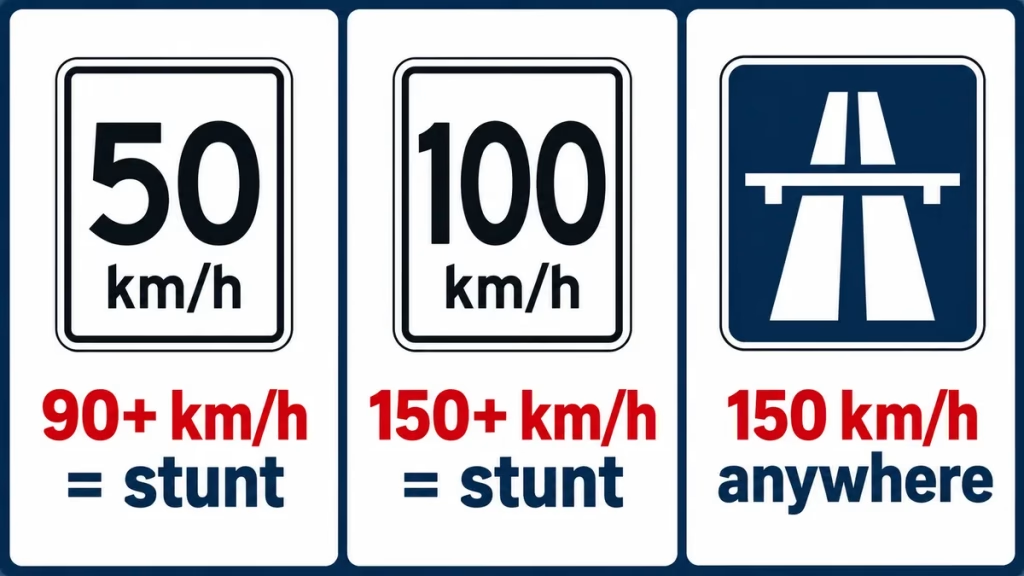
- driving 40 km/h or more over the speed limit on roads with a limit under 80 km/h
- driving 50 km/h or more over the speed limit
- driving 150 km/h or more anywhere in the province, including 110 km/h sections of freeway
- driving in a way that prevents other vehicles from passing
- intentionally cutting off another vehicle
- intentionally driving too close to another vehicle, a pedestrian or a fixed object
Street racing is treated the same way. It covers two or more vehicles competing, chasing another vehicle, and repeatedly changing lanes at high speed while weaving through traffic.
Is 40 over stunt driving in Ontario?
Yes, on any road with a posted limit below 80 km/h. Driving 40 km/h or more over the limit on those roads meets the stunt driving in Ontario threshold, so 90 km/h in a 50 zone qualifies.
On roads posted at 80 km/h or higher, the speed trigger is 50 km/h or more over the limit. On a 100 km/h highway, that means 150 km/h, which also matches the separate 150 km/h rule that applies everywhere.
Is stunt driving in Ontario only about speed?
No. Speed is the most common reason for a charge, but stunt driving in Ontario also covers conduct such as blocking other vehicles from passing, deliberately cutting someone off or tailgating at close range. A driver can be charged even when the speedometer never reaches the 40 or 50 km/h thresholds.
Roadside Penalties for Stunt Driving in Ontario
The roadside consequences of stunt driving in Ontario apply immediately, before any court has looked at the evidence. The Ministry lists two of them:
- An immediate 30-day driver’s licence suspension.
- An immediate 14-day vehicle impoundment, whether the vehicle belongs to the driver or not.
That second point catches many families off guard. If a son or daughter is stopped in a parent’s car, or an employee in a company vehicle, the vehicle is still impounded. These roadside measures are separate from the penalties a court can impose if the driver is later convicted.
Can you drive after a stunt driving charge?
Not during the 30-day roadside suspension. Once that period ends, the longer post-conviction suspensions described below only apply if the charge results in a conviction, so the answer depends on the status of your licence and any other suspension that may apply.
Check your licence status before getting behind the wheel again rather than assuming it is clear. If anything about the stop is unclear, our guide on whether police can search your car in Ontario covers other rights that often come up during the same traffic stop.
Penalties for Stunt Driving in Ontario After a Conviction
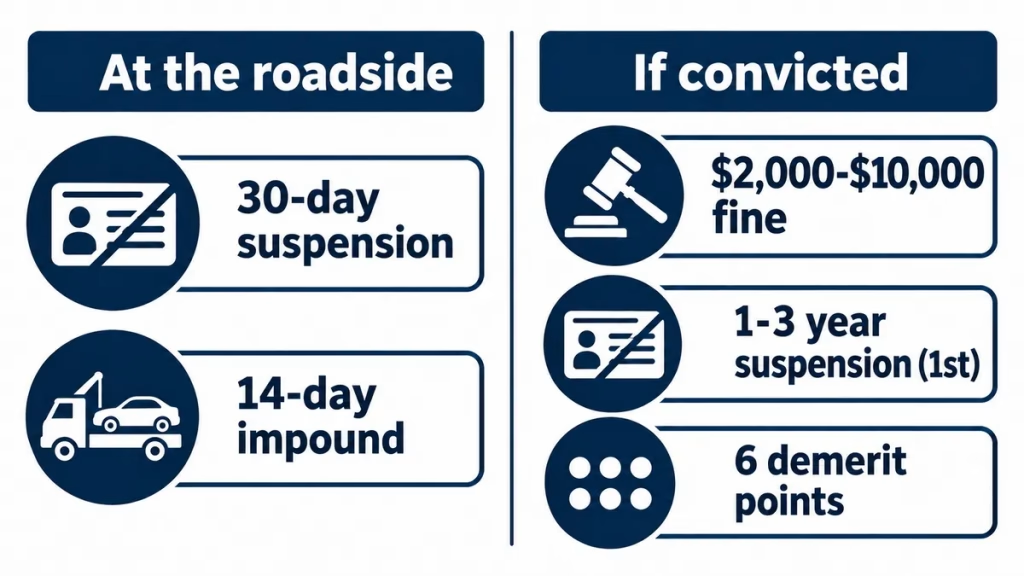
If the charge ends in a conviction, the court penalties are significant. The Ministry’s published penalties for stunt driving in Ontario are summarized below.
| Penalty | What applies on conviction |
|---|---|
| Fine | Minimum $2,000, maximum $10,000 |
| Jail | Up to six months |
| Demerit points | Six |
| Licence suspension, 1st conviction | 1 to 3 years |
| Licence suspension, 2nd conviction | 3 to 10 years |
| Licence suspension, 3rd conviction | Lifetime, reducible after 10 years under certain criteria |
| Licence suspension, 4th or later | Lifetime, not reducible |
| Driver improvement course | Mandatory |
The Ministry also warns that convictions for stunt, careless or aggressive driving can substantially increase insurance rates or make a driver uninsurable. For many people, that cost lasts longer than the fine itself.
Does stunt driving go on your criminal record?
No. Stunt driving is a provincial offence under the Highway Traffic Act, so a conviction is not a Criminal Code conviction. It does, however, carry six demerit points and the licence and insurance consequences described above.
The picture changes if police lay a criminal charge as well. When the driving is alleged to be dangerous to the public, police can also charge dangerous operation of a conveyance under section 320.13 of the Criminal Code, which is a criminal offence.
What happens to new drivers charged with stunt driving?
Drivers with a G1, G2, M1 or M2 licence face extra consequences. The Ministry states that a novice driver convicted of stunt driving faces at least a 30-day licence suspension and possible cancellation of the licence, on top of the standard penalties.
Stunt Driving vs. Careless Driving vs. Dangerous Driving
These three charges are often confused, yet they sit in different legal categories with very different consequences. Knowing which one you are facing is the first step, because stunt driving in Ontario is handled under provincial law while dangerous driving is prosecuted as a crime.
- Stunt driving is a Highway Traffic Act offence defined by specific speeds and behaviours, with the roadside suspension, impoundment and penalties described above.
- Careless driving is also a Highway Traffic Act offence. Without injury or death, the Ministry lists fines up to $2,000, six demerit points, up to six months in jail and a licence suspension of up to two years.
- Dangerous operation is a Criminal Code offence. It moves the case into criminal court and can lead to a criminal record if the person is convicted.
Alcohol or drugs add another layer. If police also allege impairment, the case can involve impaired or over 80 charges, which follow their own criminal process and penalties.
How Stunt Driving in Ontario Cases Move Through Court
Stunt driving charges are commonly laid by a Summons to Defendant, which municipal provincial offences offices describe as the process used for more serious offences. Unlike an ordinary speeding ticket, the summons sets a court date that the defendant must deal with.
- Keep the summons. It lists the first court date and location.
- Attend or send a representative. You can appear yourself or have someone, such as a lawyer or licensed paralegal, appear on your behalf.
- Request disclosure. The summons package explains how to contact the prosecutor and request the officer’s notes and other disclosure.
- Review the evidence before deciding. How speed was measured, where the stop happened and what the officer recorded can all matter.
- Decide on resolution or trial. That decision should come after disclosure, not before.
Missing the court date is a serious mistake. Provincial offences offices warn that if no one attends, the trial may go ahead in the defendant’s absence and a conviction may be entered. The idea of reviewing the evidence first is the same one that applies in criminal cases, as our article on criminal disclosure in Ontario explains.
Common Mistakes After Stunt Driving in Ontario Charges
Many of the problems we see with stunt driving in Ontario cases come from decisions made in the first few days. Avoid these:
- Treating the summons like a ticket. There is a court date, and ignoring it can lead to a conviction in your absence.
- Driving during the roadside suspension. It only adds to the legal and insurance problems.
- Pleading guilty at the first appearance without understanding the licence suspension, demerit points and insurance impact.
- Not asking for disclosure. You cannot assess the case without seeing what the officer recorded.
- Explaining yourself to the officer or prosecutor without advice. Comments made early can become part of the evidence.
- Forgetting the novice driver rules if you hold a G1, G2, M1 or M2 licence.
Can a stunt driving charge be reduced to speeding?
Sometimes, but it is never automatic. Whether a prosecutor will consider an amended charge depends on the evidence, the driving record and the specific facts, and some cases are better resolved at trial.
Any discussion with the prosecutor should happen only after the disclosure has been reviewed. A lawyer can explain the realistic options without promising a particular result. For a broader look at other traffic charges, see our overview of Highway Traffic Act offences and your rights.
Speak With Kisel Law About Stunt Driving in Ontario
A charge for stunt driving in Ontario can affect your licence, your insurance and, for many people, your job. The right approach depends on the evidence, your driving history and whether any criminal charge was laid as well.
Kisel Law represents drivers charged in Toronto and across the GTA. You can learn more about our Toronto criminal lawyer services or contact Kisel Law to book a confidential consultation. Bring your summons, any impound or suspension paperwork and your questions, ideally before your first court date.