

Criminal disclosure in Ontario is one of the most important parts of defending a criminal charge. Before you can make informed decisions about a plea, trial, resolution, Charter issue, or next court date, you need to understand what the Crown’s case actually contains.
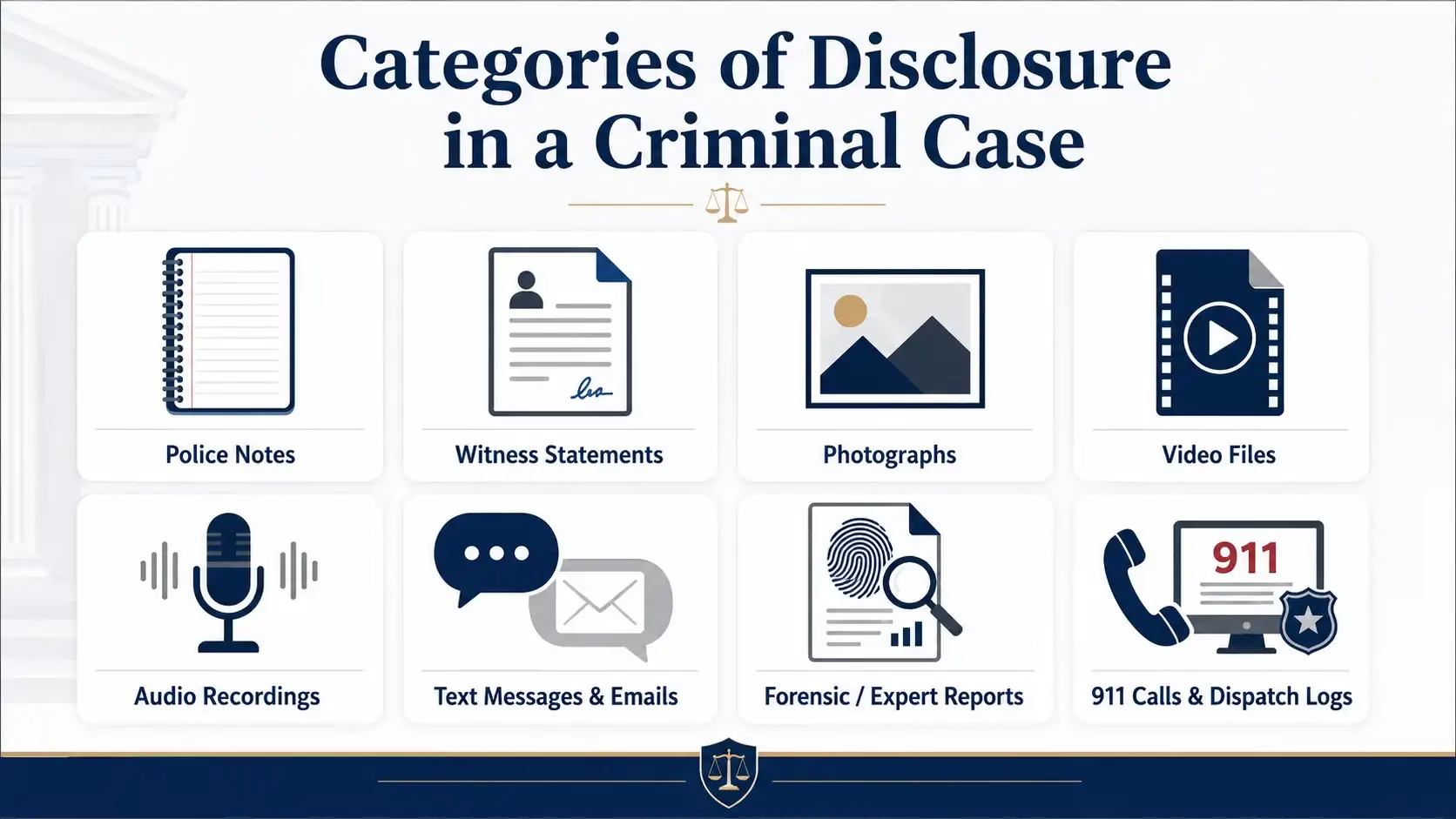
Disclosure is the evidence and case material gathered in relation to the allegation. It may include police notes, witness statements, video, photographs, text messages, 911 calls, body-worn camera footage, surveillance clips, forensic documents, expert reports, diagrams, and other materials.
Some files are small. Others are large, technical, and difficult to review without legal guidance.
The key point is simple: you should not treat disclosure like ordinary paperwork. Criminal disclosure in Ontario is the foundation for understanding the strengths, weaknesses, risks, and possible next steps in your case.
If you are already preparing for a court date, Kisel Law’s guide to a first court appearance in Ontario can help you understand where disclosure fits in the early process. If you are still dealing with release conditions, the firm’s article on an undertaking in Ontario may also be useful.
What Is Criminal Disclosure in Ontario?
Criminal disclosure in Ontario is the collection of information the prosecution has about the case and must provide to the defence so the accused can understand and respond to the allegations.
In practical terms, it is the file you review before deciding what the case is really about.
People sometimes assume disclosure only means the evidence the Crown plans to use at trial. That is too narrow. Disclosure can also include information that may help the defence, weaken the prosecution’s theory, raise doubt, or point to further investigation.
The Supreme Court of Canada’s decision in R. v. Stinchcombe is the leading case often associated with the Crown’s disclosure obligation.
For everyday purposes, think of disclosure as the material that helps answer practical questions.
What exactly are you accused of doing? Who says it happened? What does the police evidence show? Are there recordings, messages, or photographs? Is the evidence complete? Are there missing pieces? Does the case raise possible Charter concerns? Are there realistic resolution options?
Those questions matter in every type of criminal case. They become especially important in allegations involving domestic assault, criminal harassment and threats, drug offences, fraud, and white collar crime, where the details often control the strategy.
Why Criminal Disclosure in Ontario Matters So Much
Criminal disclosure in Ontario matters because most meaningful defence decisions should not be made blindly.
A charge summary may sound serious, but the actual evidence may be weaker, narrower, more complicated, or more defensible than it first appears.
For example, an assault allegation may turn on inconsistent witness accounts. A drug case may depend on whether police had lawful grounds for a search. A fraud allegation may involve hundreds of documents that require careful financial context. A harassment case may include selected messages while leaving out earlier parts of the conversation.
Without disclosure, you may only know the accusation. With disclosure, you can begin to assess the proof.
That does not mean disclosure automatically answers every question. Sometimes it creates new ones.
Why is a video missing? Why does one officer’s note differ from another? Why does a complainant’s statement change over time? Why was a phone searched? Why was a person detained before speaking to counsel?
Those questions can affect whether the defence should pursue further disclosure, negotiate with the Crown, prepare for a judicial pre-trial in Ontario, bring a Charter application, or set the matter for trial.
What Is Usually Included in a Disclosure Package?
The contents of criminal disclosure in Ontario depend on the allegation, the police investigation, the court, and the stage of the case.
Some disclosure arrives in one package. Other disclosure arrives in stages.

Here is a practical breakdown:
| Type of Material | Why It Matters |
|---|---|
| Police notes and reports | Show what officers say they observed, did, and were told during the investigation. |
| Witness statements | Help identify what complainants, witnesses, or civilians claim happened. |
| Video, audio, and photographs | May confirm, contradict, or add context to written statements. |
| Text messages and digital records | Often important in harassment, threats, domestic, fraud, and drug cases. |
| Search warrant materials | May be relevant if police searched a home, vehicle, phone, or business records. |
| Forensic or expert reports | Can matter in impaired driving, drug, firearm, fraud, and technical cases. |
| Background or court documents | May affect bail, Crown position, resolution discussions, or sentencing exposure. |
This list is not exhaustive. Criminal disclosure in Ontario can also include 911 recordings, body-worn camera footage, breath-testing documents, production orders, surveillance footage, property logs, lab results, officer emails, photographs of injuries, and other materials.
If police used a warrant or production order, Kisel Law’s page on search warrants may help you understand why the legality of the search can become part of the defence review.
How Do You Get Disclosure?
In many Ontario criminal cases, disclosure is requested from the Crown Attorney’s office or accessed through a digital disclosure process.
Legal Aid Ontario provides public guidance on how to request a disclosure package, including the type of information that may be needed to verify identity and locate the case.
If you have a lawyer, your lawyer will usually handle the request, review, follow-up, and strategy around missing materials. This is important because receiving criminal disclosure in Ontario is not the same as understanding it.
Disclosure may arrive through a secure portal, email instructions, courthouse process, or Crown office procedure. The format can vary. You may need identification information, charge details, an occurrence number, or contact information.
If you do not know what to do, do not ignore the issue until your next court date. Waiting can slow the case and create avoidable pressure.
If your matter is urgent because you are in custody or a loved one has just been arrested, Kisel Law’s bail hearings page explains why early legal action can matter before the case moves deeper into the court process.
Criminal Disclosure in Ontario Is Often Incomplete at First
One of the most common misunderstandings about criminal disclosure in Ontario is the belief that the first package is always complete.
It may not be.
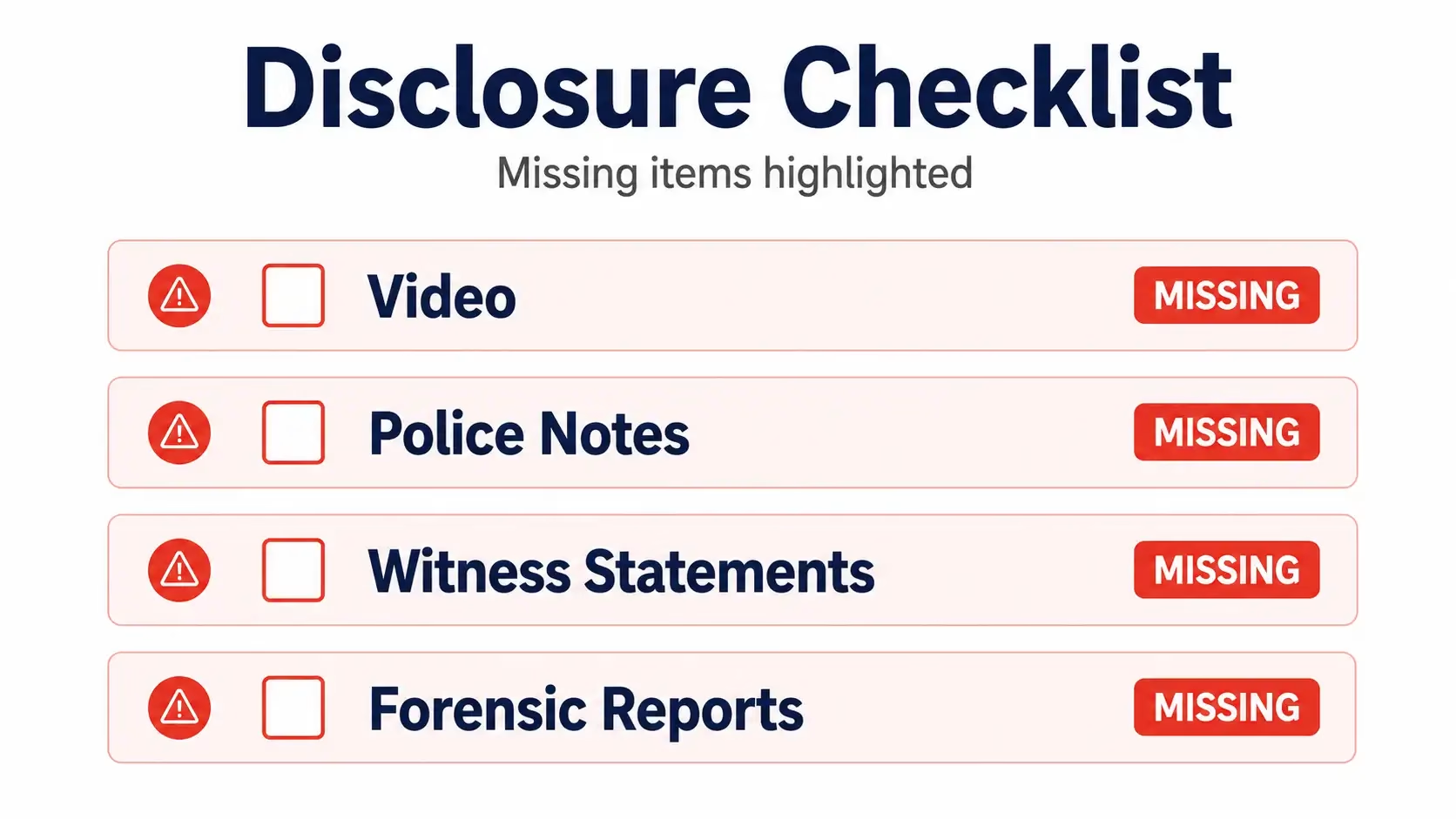
Sometimes police have not yet sent everything to the Crown. Sometimes video is still being processed. Sometimes forensic testing is pending. Sometimes there are technical download issues. Sometimes a short summary says something exists, but the actual file has not been produced yet.
This is why a careful disclosure review is not just reading from page one to the end. It involves checking whether the package makes sense.
For example, if an officer’s notes refer to surveillance footage, is that footage included? If a witness statement mentions screenshots, are the screenshots attached? If police searched a phone, is there a warrant or consent record? If there was a 911 call, is the audio available? If an officer says the accused made a statement, is there a recording or detailed note of the statement?
A lawyer can help identify what is missing and ask for follow-up disclosure. That can affect trial readiness, resolution discussions, and whether the case should move forward.
How to Review Disclosure Without Missing the Point
Criminal disclosure in Ontario should be reviewed with both detail and strategy.
It is not enough to look for one sentence that seems helpful or harmful. The bigger question is how all the evidence fits together.
Start with the basic timeline. When did the alleged event happen? When were police called? When were statements taken? When was the accused arrested or released? When were searches completed? When did the Crown receive the file?
Next, separate direct evidence from assumptions.
A witness saying “I saw him push her” is different from a witness saying “she looked upset afterward.” A video showing a brief clip is different from a video showing the full interaction. A police summary is not the same as the original notes, recordings, and exhibits behind it.
Then look for gaps. Missing footage, unclear timestamps, incomplete conversations, inconsistent witness descriptions, and vague officer notes may all matter.
Finally, connect the review to legal strategy.
If police obtained evidence through a questionable search, the issue may connect to a Charter argument. If the disclosure shows weak identification, the defence may focus on reasonable doubt. If the file shows a complainant does not want to proceed, that does not automatically end the case, but it may affect discussions about withdrawal, diversion, or a possible peace bond in Ontario.
Kisel Law’s article on having charges withdrawn in Canada explains why the Crown’s decision-making can depend on evidence, public interest, and the overall strength of the case.
What If Something Is Missing From Disclosure?
If something appears to be missing from criminal disclosure in Ontario, the answer is usually not to panic or assume bad faith.
The better approach is to identify the missing item clearly and request it properly.
A useful request should be specific. Instead of saying “I need everything,” it may be better to identify the exact missing video, statement, notebook entry, forensic report, warrant document, photograph, or digital record.
Some missing items are minor. Others can be central.
A missing surveillance video may affect identification. Missing phone records may affect the meaning of alleged messages. Missing search warrant materials may affect whether evidence can be challenged. Missing police notes may affect cross-examination.
The Ontario Crown Prosecution Manual on disclosure and the federal PPSC principles of disclosure provide useful public background on disclosure obligations.
In a real case, however, the practical question is how the missing item affects your next step.
If disclosure remains incomplete, the court may need to know. This is especially important if the case is being pushed toward trial or a meaningful pre-trial discussion before the defence has the necessary materials.
Should You Explain Your Side Before Reviewing Disclosure?
Usually, you should be very cautious.
Many people want to explain themselves as soon as possible. That reaction is understandable. Being charged is stressful, and it can feel unfair to stay quiet when you believe there is another side to the story.
But giving statements, sending messages, contacting witnesses, or trying to “clear things up” without understanding the evidence can create new problems.
Criminal disclosure in Ontario lets you see what the allegation is based on before making strategic decisions. It can also reveal whether there are contradictions, missing context, unlawful search issues, or weaknesses that should be handled carefully.
This is especially important in cases involving release conditions.
If your undertaking, bail order, or peace bond proposal includes no-contact terms, do not contact the complainant or witnesses to discuss disclosure, evidence, or “what really happened.” Even well-intentioned contact can lead to a new allegation.
If you are unsure what your release paperwork allows, review Kisel Law’s articles on undertakings and peace bonds, then speak with counsel before acting.
How Disclosure Affects Resolution, Trial, and Charter Strategy
Criminal disclosure in Ontario is often the turning point between guessing and planning.
If the disclosure is strong, the defence may focus on reducing risk, negotiating a better outcome, or exploring options that avoid the harshest consequences.
If the disclosure is weak, the defence may push back more firmly, request withdrawal, seek a trial, or challenge key parts of the Crown’s theory.
If the disclosure shows possible rights violations, the strategy may involve a Charter application. Examples can include unlawful detention, improper questioning, denial of counsel, unreasonable search, overbroad warrant execution, or problems with how evidence was seized.
Disclosure can also affect whether a case is ready for a Crown pre-trial or judicial pre-trial.
A meaningful pre-trial requires more than general impressions. Counsel needs to know what evidence exists, what is missing, how many witnesses may be needed, what legal issues are likely, and whether admissions could narrow the trial.
For people in Toronto and the GTA, local procedure and courthouse expectations can also matter. Kisel Law serves clients through pages such as Criminal Lawyer Toronto, Criminal Lawyer Brampton, Criminal Lawyer Mississauga, Criminal Lawyer Etobicoke, and Criminal Lawyer North York.
Common Mistakes People Make With Disclosure
A common mistake is assuming disclosure proves guilt. It does not. Disclosure is the Crown’s case material, not a final decision by a judge.
Another mistake is reading only the summary. Police summaries can be useful, but the details often sit in notes, recordings, exhibits, and timelines.
In some cases, the most important defence issue is hidden in a small inconsistency or a missing attachment.
A third mistake is focusing only on what looks bad. Strong defence work also looks for context, legal problems, proof gaps, witness reliability issues, and alternatives to the Crown’s interpretation.
A fourth mistake is waiting too long.
Criminal disclosure in Ontario takes time to review properly, especially in files involving financial records, phone downloads, surveillance, forensic evidence, or multiple witnesses. If you wait until the last minute, you may lose the chance to ask for missing items before an important court date.
Disclosure should be treated as an active process. Receive it, organize it, review it, identify gaps, connect it to legal issues, and use it to guide the next step.
When Should You Speak With a Criminal Defence Lawyer?
You should consider speaking with a criminal defence lawyer as early as possible after being charged, especially before making decisions based on disclosure you do not fully understand.
A lawyer can help explain what the disclosure shows, what it does not show, what should be requested, and how the evidence affects your options.
That guidance can be valuable even when the charge seems minor. Criminal cases can affect employment, travel, immigration status, family responsibilities, licensing, reputation, and future record suspension concerns.
Criminal disclosure in Ontario is also important because every charge has its own evidence pattern.
A domestic allegation may depend on credibility, injuries, photographs, and no-contact terms. A drug case may depend on search powers, possession, knowledge, and police observations. A fraud case may require document analysis and financial context. A white collar matter may involve business records, electronic evidence, and complex timelines.
If your charge involves a specialized area, start with Kisel Law’s practice areas page and then speak with counsel about the specific evidence in your file.

Kisel Law Can Help You Understand the Evidence Before You Decide
Criminal disclosure in Ontario can feel overwhelming, but it is also one of the most useful tools for protecting your rights.
It helps clarify what the Crown can prove, what still needs to be requested, what legal issues may exist, and whether the case should be resolved, challenged, or prepared for trial.
The most important thing is not simply getting the disclosure. It is understanding what the disclosure means.
Kisel Law assists people facing criminal charges in Toronto and surrounding areas by reviewing evidence carefully, identifying missing materials, assessing Charter issues, preparing for bail and court appearances, and building defence strategies that reflect the actual facts of the case.
Whether your matter involves assault, harassment, fraud, drug allegations, a search warrant, or another criminal charge, the right review can make a major difference.
To learn more about the firm, visit Kisel Law, review the firm’s criminal defence practice areas, or contact Kisel Law to discuss your situation. You can also use the book a free consultation page to take the next step.