


A voluntary police interview in Ontario may sound informal, but what you say can affect whether police lay charges, seek a warrant, or use your statement as evidence. Many people agree to an interview because they believe they can clear up a misunderstanding. Instead, they may unintentionally provide details that strengthen the investigation.
If police have contacted you, slow down before answering questions or agreeing to attend a station. Speaking with a lawyer who handles criminal defence matters can help you understand why police want the interview, whether you are required to attend, and what risks may arise if you participate.
What Is a Voluntary Police Interview in Ontario?
A voluntary police interview in Ontario is generally an interview that police ask you to attend without first arresting or formally detaining you. The request may come by telephone, email, text message, or an officer visiting your home or workplace.
Police might describe the conversation as:
- An opportunity to provide your side of the story
- A routine request for information
- A chance to clear up a misunderstanding
- A brief conversation at the station
- An informal interview about another person
- A request for help with an investigation
The word “voluntary” does not mean the interview is harmless. It usually means police are asking for your cooperation rather than using their legal authority to require your presence at that moment.
Police may already have witness statements, messages, video recordings, financial records, phone data, or other evidence. Your answers may be used to confirm a timeline, identify inconsistencies, obtain new evidence, or assess whether charges should be laid.
Do You Have to Attend a Voluntary Police Interview in Ontario?
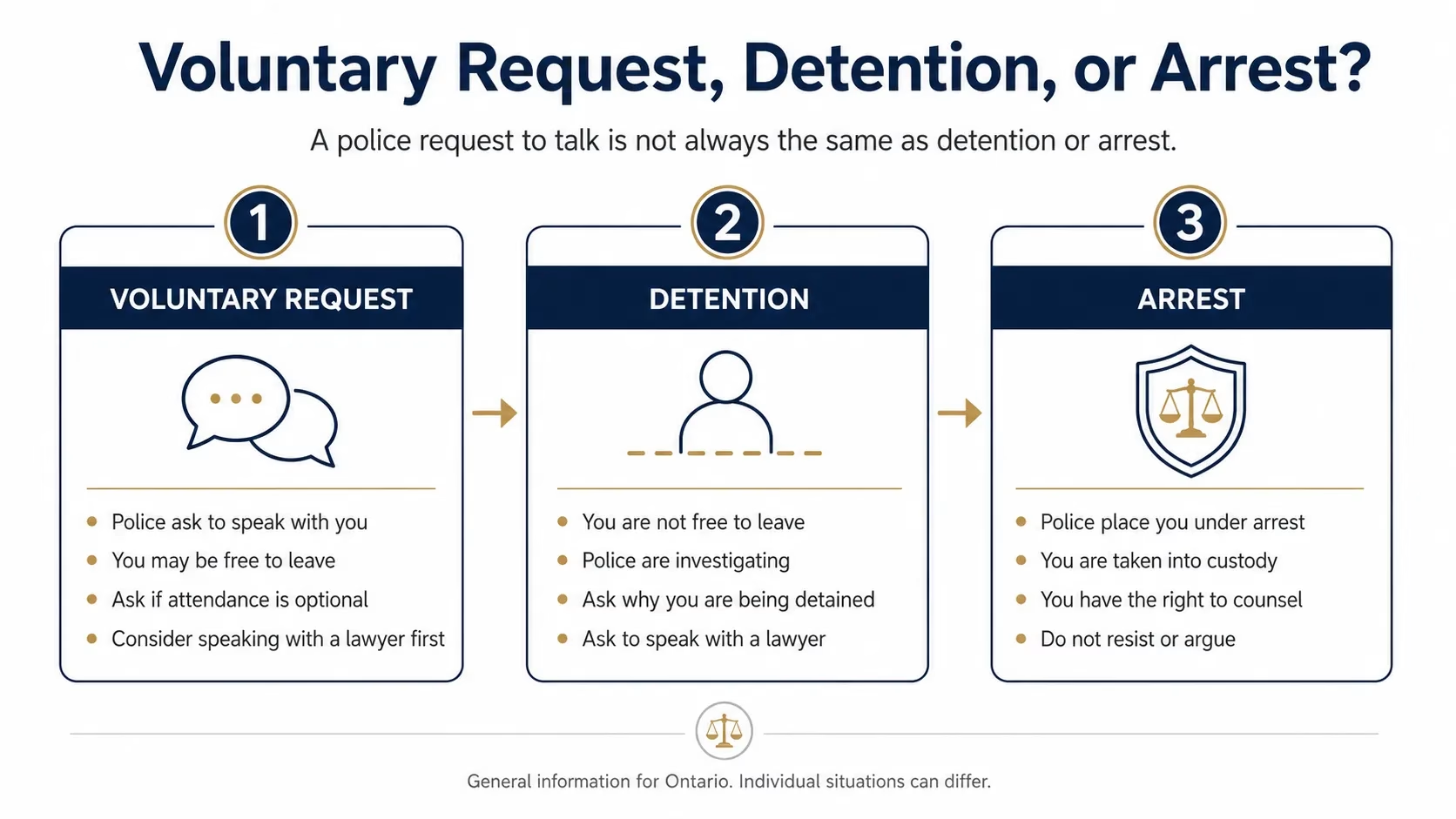
You may not be legally required to attend an interview that is genuinely voluntary. However, you should not ignore the request or make a decision without understanding the circumstances.
A police officer may not explain:
- Whether you are a witness, suspect, or person of interest
- What evidence has already been collected
- Whether another person has accused you of an offence
- Whether police are considering an arrest
- Whether they plan to seek a search warrant
- Whether the investigation could affect your employment, immigration status, professional licence, or family proceedings
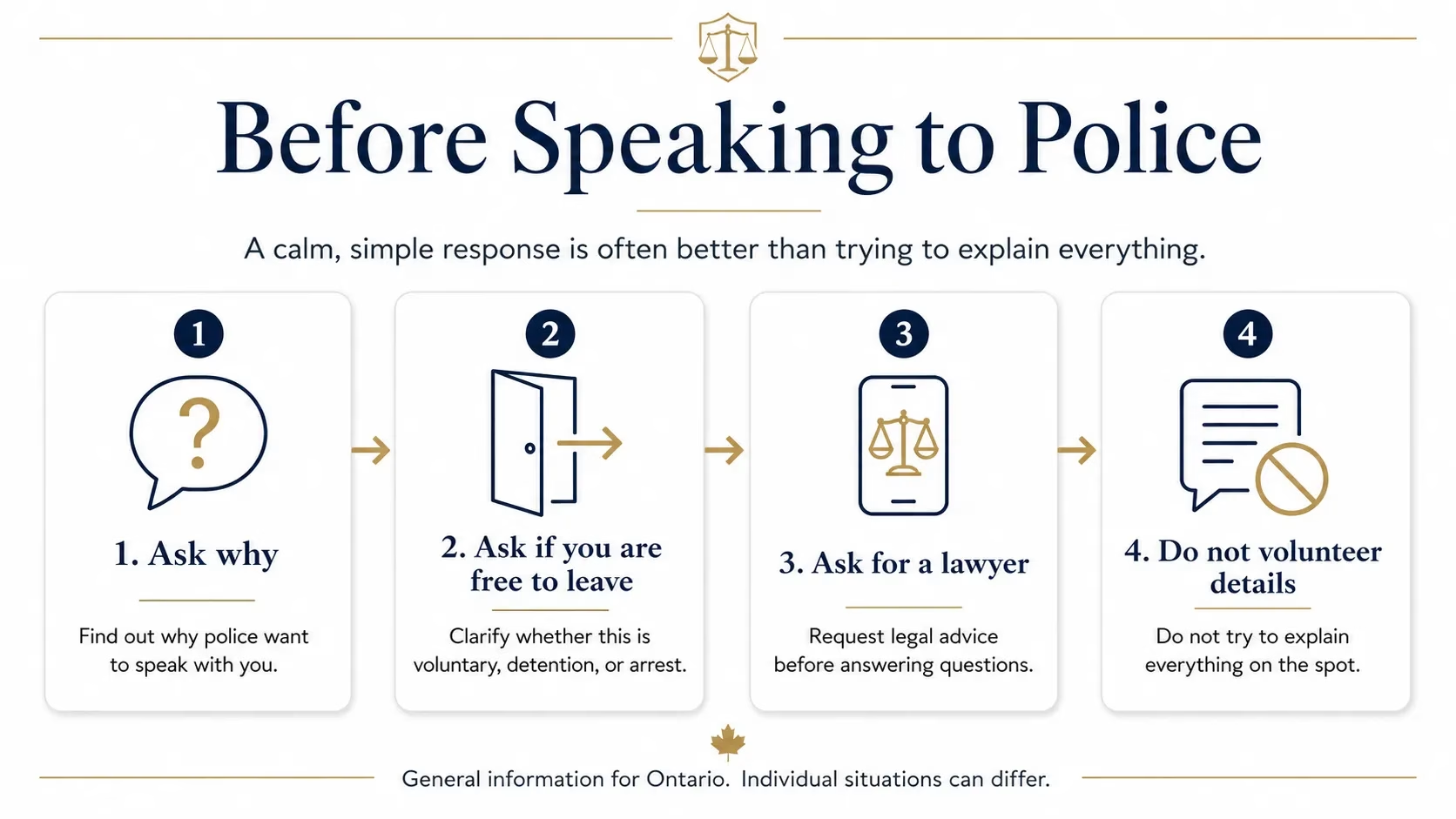
Before agreeing to a voluntary police interview in Ontario, ask for the officer’s name, badge number, police service, telephone number, and a general explanation of the investigation. Do not begin discussing the incident while collecting this information.
You can calmly tell the officer that you want legal advice before responding.
Can refusing an interview make you look guilty?
Choosing not to participate in a voluntary interview is not the same as admitting guilt. People have legitimate reasons to obtain legal advice before speaking to police, particularly when they do not know the evidence or the precise nature of the allegation.
Trying to appear cooperative by answering immediately can create greater risk. A person may guess about dates, misunderstand a question, adopt inaccurate wording, or make a statement that appears inconsistent with other evidence.
The safest decision depends on the specific facts. A lawyer may recommend declining the interview, communicating through counsel, providing limited information, or taking another carefully planned approach.
When Does a Police Conversation Become a Detention?
A conversation can begin as voluntary and later become more restrictive. Whether someone has been detained depends on the circumstances, not only the words an officer uses.
Relevant factors may include:
- Whether police tell you that you are free to leave
- The location of the interview
- The number of officers present
- Whether doors are blocked or locked
- Whether police retain your identification or property
- Whether the questioning becomes confrontational
- Whether officers use commands rather than requests
- Whether a reasonable person would believe they could end the interaction
If you are arrested or detained, section 10(b) of the Canadian Charter of Rights and Freedoms protects your right to retain and instruct counsel without delay.
Do not assume that protections will automatically be explained at the beginning of a voluntary police interview in Ontario. Obtaining advice before attending can be more effective than waiting for the situation to escalate.
How can you ask whether you are free to leave?
You can ask a direct question:
“Am I being detained, or am I free to leave?”
If the officer confirms that you are free to leave, you can state that you do not wish to answer questions and end the interaction. Avoid arguing, resisting, or attempting to explain the allegation before leaving.
If police say you are detained or under arrest, ask to speak with a lawyer and follow lawful directions. Do not physically resist.
Your Right to Silence During Police Questioning
Canadian law recognizes important protections relating to silence and self-incrimination. Justice Canada’s explanation of section 7 of the Charter discusses the principle that a person should have a meaningful choice about whether to speak to authorities.
The practical problem is that remaining silent can be difficult. Police officers are trained interviewers. They may appear friendly, sympathetic, disappointed, confrontational, or certain that they already know what happened.
They may say:
- “We just want to hear your side.”
- “This is your chance to explain.”
- “If you did nothing wrong, why wouldn’t you talk?”
- “The other person has already told us everything.”
- “This will go better if you cooperate.”
- “We only need to clarify a few details.”
These statements may encourage you to speak, but they do not tell you whether answering is in your legal interests.
During a voluntary police interview in Ontario, even a small detail may become important. A statement about your location, relationship, communications, alcohol consumption, phone use, or memory can later be compared with other evidence.
Can police continue questioning after you speak to a lawyer?
Many people believe that asking for a lawyer means police can no longer ask questions or that the lawyer will remain in the interview room. Canadian law is more complicated.
The Supreme Court of Canada’s decision in R. v. Sinclair addresses the right to counsel during custodial interrogation. In general, speaking to a lawyer does not necessarily mean counsel will be physically present throughout police questioning.
That is why the advice you receive before or during an investigation matters. A lawyer can explain how to respond if questioning continues and why attempting to persuade police of your innocence may be dangerous.
Seven Mistakes to Avoid Before a Police Interview
1. Trying to clear everything up over the phone
A telephone conversation with police can still become evidence. Do not assume the call is merely administrative.
Avoid explaining where you were, what happened, who was present, or why you believe the complaint is false. Collect the officer’s contact details and say that you will obtain legal advice.
2. Assuming innocence makes the interview safe
An innocent person can provide inaccurate information without intending to lie. Stress affects memory. People confuse dates, estimate times incorrectly, or forget details that later appear significant.
Police may interpret a mistake as dishonesty rather than an ordinary memory problem.
3. Believing the conversation is off the record
Do not rely on statements such as “between you and me” or “this is just an informal conversation.” Assume anything you say to police may be recorded, documented, or repeated in court.
4. Bringing your phone or documents without advice
Police may ask you to bring your phone, photographs, messages, banking records, or other documents. Providing access voluntarily can create issues that go beyond the original interview.
Kisel Law’s guide on whether police can search your phone in Canada explains why searches of digital devices raise important privacy and Charter concerns.
If police want to search property or seize a device, obtain advice before consenting. Kisel Law also represents clients in matters involving search warrants.
5. Deleting messages or changing evidence
Do not delete, edit, hide, destroy, or ask another person to alter information. Attempts to “clean up” a phone, account, document, or timeline can create additional legal problems.
Preserve potentially relevant material and show it privately to your lawyer.
6. Contacting the complainant or other witnesses
A person may contact a complainant because they want to apologize, resolve a misunderstanding, or ask why an allegation was made. That communication may be interpreted as pressure, intimidation, manipulation, or an attempt to coordinate evidence.
Do not ask friends or relatives to contact the person for you.
7. Posting about the investigation online
Social media posts, private messages, comments, photographs, and location information can become evidence. Avoid discussing the allegation publicly or indirectly.
Even a post that does not name the complainant may be linked to the investigation.
What Should You Do When Police Contact You?
If police request a voluntary police interview in Ontario, use a calm and deliberate process.
Step 1: Confirm who is contacting you
Ask for the officer’s:
- Full name
- Badge number
- Police service
- Division or unit
- Telephone number
- Email address
- Occurrence or file number, if available
Be cautious if the contact seems unusual. You can call the police service through its publicly listed number to confirm the officer’s identity.
Step 2: Ask for general information
Ask what the officer wants to discuss and whether you are being treated as a witness or possible suspect. The officer may provide limited information, but the answer can still help your lawyer assess the situation.
Do not respond to factual questions about the allegation.
Step 3: Do not agree to an immediate meeting
You do not need to make a decision during the first call. Tell the officer you want legal advice and will respond after speaking with counsel.
Step 4: Preserve relevant information
Save messages, emails, photographs, call records, receipts, calendars, and other information that may help establish a timeline. Do not forward sensitive material widely or discuss it with people who may become witnesses.
Step 5: Speak privately with a criminal defence lawyer
Explain everything to your lawyer, including facts you believe may be embarrassing or unhelpful. Legal advice is only effective when counsel understands the complete situation.
A lawyer can contact the officer, obtain additional information where possible, and advise whether participating in the voluntary police interview in Ontario is appropriate.
What can you say to the officer?
A brief response may be enough:
“Thank you for contacting me. I am not prepared to discuss the matter right now. I would like to obtain legal advice first, and I or my lawyer will respond.”
This response is polite and does not volunteer details.
What Happens If Charges Are Laid After the Interview?
A voluntary police interview in Ontario may occur before charges, but police can also arrest or charge a person after collecting additional evidence.
If charges are laid, the next stages may include release conditions, fingerprinting, a first court appearance, disclosure, Crown screening, resolution discussions, or trial preparation.
The disclosure process allows the defence to review relevant evidence in the prosecution’s possession. Kisel Law’s guide to criminal disclosure in Ontario explains what disclosure may contain and why reviewing it carefully is essential.
In some cases, an arrest may lead to a bail hearing. Kisel Law assists accused people and their families with bail hearings in Toronto, including release planning and proposed conditions.
Statements made during an interview can become an important part of the disclosure. Police and prosecutors may compare the statement with witness accounts, surveillance, digital evidence, forensic results, or testimony given later.
When Should You Contact a Lawyer Immediately?
Seek legal advice promptly when:
- Police ask you to attend a station
- Police say you are under investigation
- An officer asks about a specific allegation or complainant
- Police want access to your phone, computer, home, or vehicle
- You are asked to provide a written or recorded statement
- Police suggest charges may be avoided if you cooperate
- The allegation involves assault, sexual assault, fraud, impaired driving, drugs, weapons, harassment, or domestic conflict
- The investigation may affect immigration, employment, travel, education, or professional licensing
- Police have contacted your family, employer, neighbours, or coworkers
- You believe an arrest or search may be imminent
Early legal advice does not guarantee a particular result. It can, however, prevent avoidable mistakes and help you make decisions based on the evidence and legal risks rather than fear or pressure.

Speak With Kisel Law Before Agreeing to an Interview
Every voluntary police interview in Ontario is different. The correct strategy depends on the allegation, the available evidence, your relationship with the people involved, your prior communications, and whether police are considering an arrest or search.
Criminal defence lawyer Nicole Kiselyov assists clients facing police investigations and criminal allegations in Toronto and the Greater Toronto Area. Kisel Law can communicate with police, assess whether an interview is advisable, and help you protect your rights before you provide a statement.
If police have asked to speak with you, do not assume that explaining yourself is the quickest way to resolve the situation. Contact Kisel Law for a confidential consultation before agreeing to a voluntary police interview in Ontario.
This article provides general legal information and is not a substitute for advice about your specific circumstances.