

Police search your phone questions usually begin in a stressful moment. Maybe you were arrested. Maybe officers seized your device during a search. Maybe your disclosure includes screenshots, messages, photos, location data, or app records that you never expected to become part of a criminal case.
A phone is not just a phone anymore.
It can hold private conversations, banking records, photos, search history, location data, contacts, social media accounts, cloud access, work information, and years of personal context. That is why police search your phone concerns can raise serious privacy and defence issues in Canadian criminal cases.
This guide explains when police may try to search a device, when a warrant may matter, how phone evidence can show up in disclosure, and why it is risky to make quick assumptions about your rights.
If you are already dealing with charges, it may also help to review Kisel Law’s guide to criminal disclosure in Ontario, because phone evidence often becomes important once the Crown’s case materials are produced.
Can Police Search Your Phone in Canada After an Arrest?
The simple answer is: sometimes, but not automatically.
Many people assume that if police arrest someone, officers can search everything the person has with them. Others assume the opposite and believe a phone can never be searched unless police first obtain a warrant. Neither assumption is completely safe.
Canadian law recognizes that police may have certain search powers after a lawful arrest. At the same time, phones receive special attention because they contain deeply personal information.
The Supreme Court of Canada decision in R. v. Fearon is often discussed in this area. In general terms, the decision recognized that a warrantless phone search incident to arrest is not justified in every case. The arrest must be lawful, the search must be truly connected to the arrest, the purpose must be valid, the search should be limited, and police should keep detailed notes.
That means police search your phone issues often turn on the details.
Why was the phone searched? What exactly did officers look at? How soon after arrest did the search happen? Did they browse broadly or look for something specific? Did they record what they did? Was the search connected to officer safety, preserving evidence, locating evidence, or another recognized purpose?
Those facts can matter later.
Why Phone Searches Are Different From Ordinary Searches
A wallet might show identification. A backpack might contain physical items. A phone can reveal a person’s private life.
That difference matters.
A modern smartphone may include messages, photos, notes, call logs, deleted items, app data, cloud accounts, map history, calendar entries, browser history, and private communications with lawyers, doctors, family members, employers, or partners. A few taps can expose information far beyond the allegation being investigated.
This is why section 8 of the Canadian Charter of Rights and Freedoms, which protects against unreasonable search and seizure, is often central when police search your phone.
A phone search may affect cases involving domestic assault, criminal harassment and threats, drug offences, fraud or investment-related allegations, white collar crime, and other criminal matters where digital evidence may become part of the Crown’s theory.
A phone can provide evidence. It can also provide context that helps the defence.
That is why the question is not only whether police found something. The better question is whether they were legally allowed to search, whether the search stayed within proper limits, and whether the evidence can be challenged.
When Police Search Your Phone May Be Lawful
There are several situations where police may argue they had authority to search a device.
One situation is a search incident to arrest. This does not give police unlimited permission to browse a person’s entire digital life. The search must be connected to the arrest and limited to a valid law enforcement purpose.
Another situation involves a warrant. A search warrant or other judicial authorization may allow police to seize and search a device or obtain specific digital records. The wording matters. A warrant should identify what police are permitted to search for and where they are permitted to search.
Kisel Law’s Search Warrants page explains why a warrant is not automatically valid simply because it exists. The grounds for the warrant, the scope of the authorization, and the way the search was carried out can all become important.
Police may also argue that consent was given. Consent can be complicated. A person may feel pressured, confused, or unsure whether they can refuse. If phone access was obtained because someone “agreed” during a tense police interaction, the circumstances may need careful review.
Here is a practical breakdown:
| Situation | Key issue | Why it matters |
|---|---|---|
| Search after arrest | Was the search truly connected to the arrest? | Police cannot simply browse out of curiosity. |
| Search with a warrant | Did the warrant authorize the phone search? | The wording and grounds may be challenged. |
| Consent search | Was consent voluntary and informed? | Pressure or confusion may affect validity. |
| Search of cloud data | Was the search limited to the device or broader accounts? | Cloud access can raise separate privacy issues. |
| Search for specific evidence | Did police stay within the proper scope? | Overbroad searches can create Charter issues. |
If police search your phone in any of these situations, the defence may need to examine both the legal authority and the practical steps officers took.
When Police Search Your Phone May Go Too Far
A phone search may become problematic when officers go beyond what the law permits.
For example, a limited search for recent messages connected to an arrest is very different from scrolling through months of photos, unrelated chats, private notes, banking apps, or social media accounts. A search that begins with a narrow purpose can become much broader in practice.
Police search your phone concerns may also arise if officers fail to document what they searched. Notes matter. Without proper notes, it can be harder to understand whether the search was limited, targeted, and connected to the reason police claimed they had authority.
Another issue is timing. A quick search immediately connected to an arrest may be analyzed differently from a later forensic download. A full extraction of phone data can raise different concerns than a brief look at a visible screen.
This is where Charter applications may become important. If a search violated Charter rights, the defence may ask the court to exclude evidence. That does not happen automatically. The court will consider the seriousness of the breach, the impact on the accused person’s rights, and society’s interest in deciding the case on its merits.
Can Police Search Your Phone If It Is Locked?
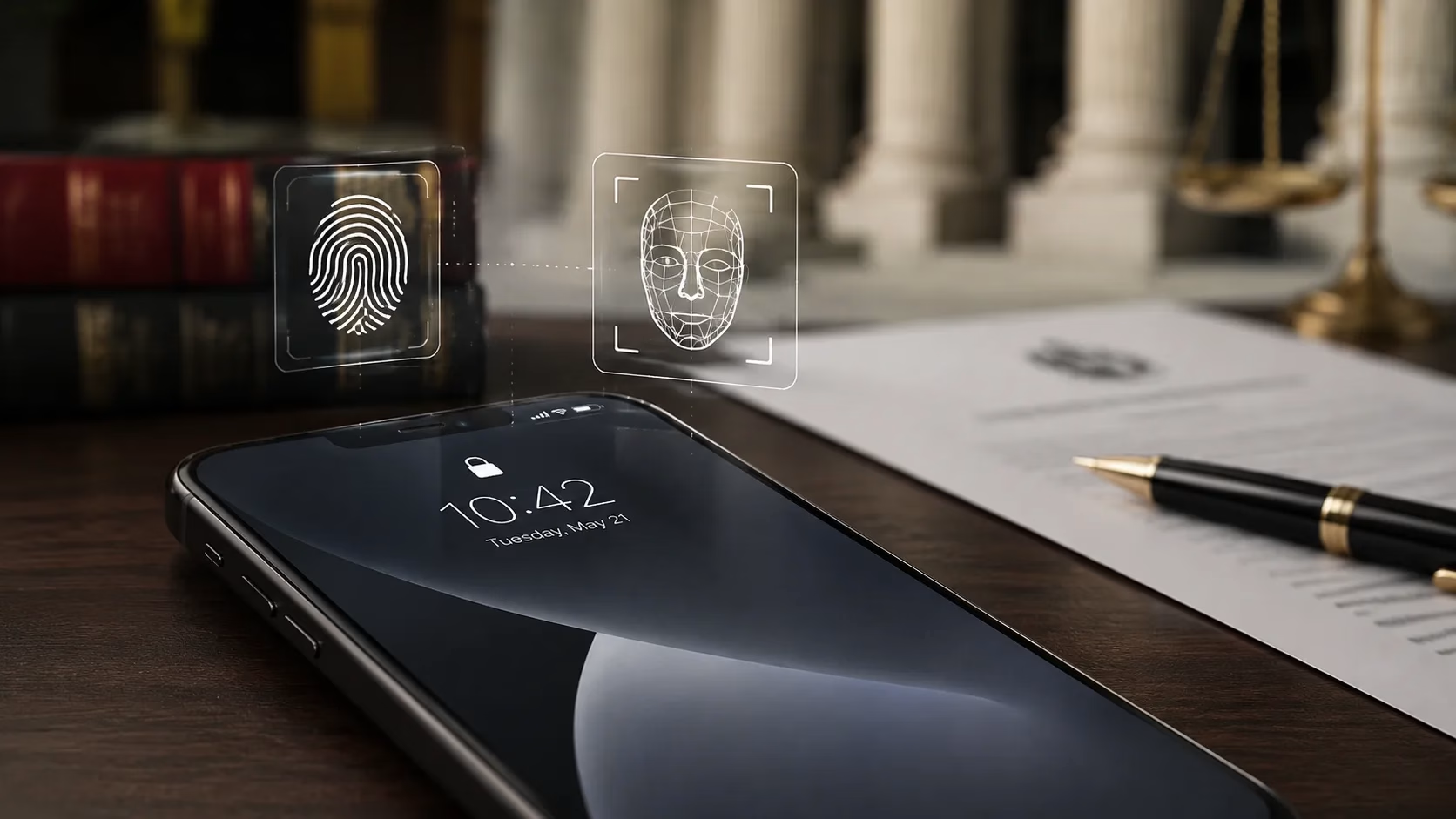
A locked phone creates additional questions.
Police may seize a locked phone as part of an investigation. The harder issue is whether they can make someone unlock it, provide a passcode, use a fingerprint, or use face recognition. These questions can become legally complex and fact-specific.
Do not assume the answer is simple.
If police ask for your password or ask you to unlock your device, the safest practical response is usually to ask to speak with a lawyer before deciding what to do. Do not lie. Do not destroy evidence. Do not physically interfere with police. But also do not guess about your obligations in a high-pressure moment.
Police search your phone situations can unfold quickly, especially at a police station, roadside stop, home search, or after an arrest. A few seconds of panic can affect the entire case.
If the phone was locked but police later obtained data through a warrant, extraction tool, cloud account, or another method, your lawyer may still need to review how that happened and whether the proper process was followed.
What Should You Do If Police Take Your Phone?
If police take your phone, stay calm and focus on protecting yourself.
Ask why the phone is being taken. Ask whether you are under arrest or detained. Ask to speak with a lawyer. Do not argue, grab the phone, delete anything, or try to outsmart the situation. That can create new problems.
If possible, remember practical details:
When was the phone taken?
Who took it?
Did officers ask for the passcode?
Did anyone look through the phone in front of you?
Did police say they had a warrant?
Were you given paperwork?
Did the search happen before or after you spoke with counsel?
These details may matter later when your lawyer reviews disclosure.
If you were released by police with conditions, Kisel Law’s article on an undertaking in Ontario can help explain how release documents work. If your next step is court, the guide to a first court appearance in Ontario can also help you understand what to expect early in the process.
How Phone Evidence Shows Up in Criminal Disclosure
Phone evidence often appears in disclosure.
It may show up as screenshots, text message exports, call logs, photographs, videos, social media messages, location records, app data, or forensic extraction reports. Sometimes disclosure includes only selected portions of a conversation. Sometimes it includes a large technical download that is difficult to understand without context.
This matters because police search your phone evidence may look more damaging or more helpful depending on what is missing.
A single screenshot can leave out the messages before and after it. A photo may need time, location, and metadata context. A call log may show contact but not content. A message thread may include sarcasm, conflict, reconciliation, or third-party involvement that changes how the evidence should be understood.
If disclosure includes phone data, do not review it casually.
Create a timeline. Identify missing messages. Note whether screenshots appear cropped or incomplete. Watch for time-zone issues, deleted-message claims, duplicate downloads, or confusing file names. Ask whether the defence has received the full material or only a summary.
Legal Aid Ontario’s guidance on requesting a disclosure package may be helpful for self-represented accused persons, but receiving disclosure is not the same as understanding its legal importance.
Does a Phone Search Mean the Evidence Will Be Used at Trial?
Not always.
The Crown may try to use phone evidence, but the defence can review whether the evidence is admissible, reliable, complete, and fairly presented. If there is a Charter issue, the defence may consider whether an application should be brought.
Phone evidence may also affect resolution discussions. For example, messages may weaken the Crown’s case, support a defence theory, explain context, or show that an allegation is narrower than it first appeared. In other cases, phone evidence may increase risk and make early strategy even more important.
If your case moves beyond early disclosure review, Kisel Law’s article on a judicial pre-trial in Ontario explains how legal issues, witnesses, applications, and trial readiness may be discussed before a trial date.
Common Mistakes People Make With Phone Evidence
The first mistake is trying to explain everything to police without legal advice. People often believe they can clear things up by showing officers a few messages. That can backfire if the phone contains other information, if the messages are misunderstood, or if the search expands.
The second mistake is deleting content. Deleting messages, photos, accounts, or apps after police involvement can create serious problems. It may look suspicious and may complicate the defence.
The third mistake is assuming screenshots tell the whole story. They rarely do. Screenshots can be incomplete, out of order, missing context, or difficult to authenticate.
The fourth mistake is ignoring phone evidence until the last minute. Digital evidence can take time to review. If a file involves thousands of messages, multiple devices, or technical downloads, waiting until close to trial can limit your options.
The fifth mistake is treating every phone search the same. A roadside seizure, a search incident to arrest, a warrant-backed forensic download, and a consent search can raise different issues.
That is why police search your phone cases should be reviewed carefully rather than handled with generic advice.
How Phone Searches Connect to Search Warrants and Digital Records
Some phone cases involve traditional search warrants. Others involve production orders, forensic extractions, cloud account records, subscriber information, or business records. The Criminal Code search warrant framework is part of the broader legal background, but digital investigations can involve different tools depending on the evidence police want.
This can arise in many types of cases.
In a harassment case, police may focus on messages and call logs. In a drug case, they may look for contact patterns, photos, location information, or communications. In a fraud case, they may review emails, banking records, business communications, or investment discussions. In a regulatory or professional discipline context, digital records may overlap with broader document issues, which is why Kisel Law’s Regulatory Law & Professional Discipline page may be relevant for some clients.
The main point is simple: phone evidence is rarely just one document. It is often part of a larger evidentiary picture.
Do You Need a Lawyer If Police Search Your Phone?
In many cases, yes.
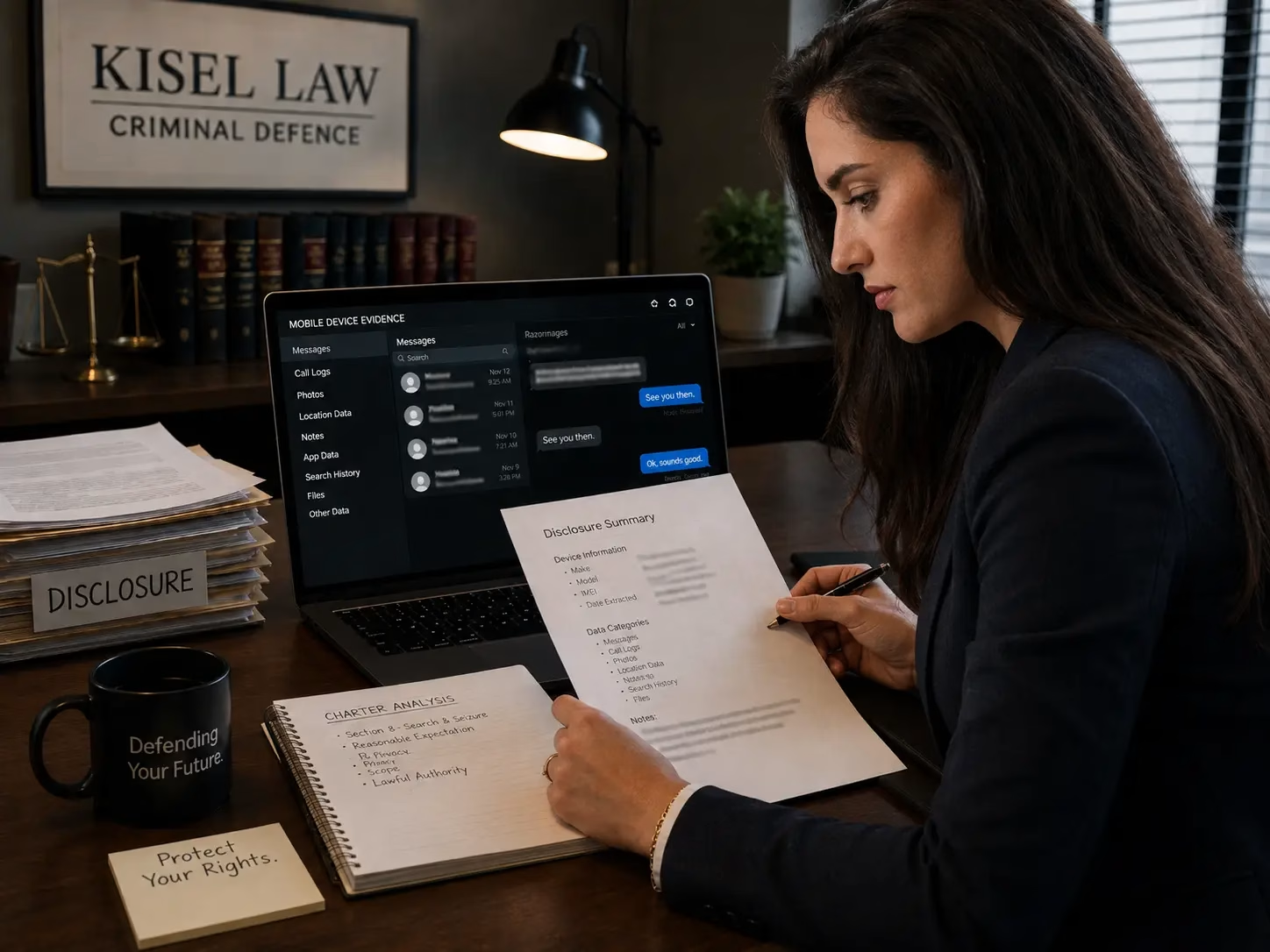
You may need a lawyer if police searched your phone after arrest, seized it under a warrant, asked for your password, used phone messages as evidence, relied on screenshots, or included digital records in disclosure.
A lawyer can review the authority for the search, the scope of the search, the officer notes, the warrant materials, the disclosure package, and any possible Charter issue. A lawyer can also assess whether the phone evidence actually proves what the Crown says it proves.
That review may affect negotiations, trial strategy, disclosure requests, pre-trial discussions, and possible applications.
If the matter involves urgent release issues, the Bail Hearings page may also be important. If the case is location-specific, Kisel Law assists clients in Toronto and surrounding areas, including people looking for a criminal lawyer in Toronto, Mississauga, Brampton, Vaughan, and nearby communities.
Kisel Law Can Help You Understand Phone Evidence Before You Decide
A phone search can feel personal, invasive, and overwhelming. It can also become one of the most important parts of a criminal case.
Before you assume the evidence is valid, harmless, or impossible to challenge, it is worth having the full situation reviewed. The key questions are practical and legal: why did police search the phone, what did they search, how did they document it, what did they find, what is missing, and how does it affect the defence?
Kisel Law helps people facing criminal charges understand evidence, disclosure, warrants, Charter issues, release conditions, and court strategy. Whether your matter involves phone records, messages, photos, search warrants, domestic allegations, fraud, drug charges, harassment, or another criminal allegation, early guidance can help you avoid mistakes and make informed decisions.
To discuss your situation, you can visit Kisel Law’s criminal defence practice areas, learn more about Nicole Kiselyov, book a free consultation, or contact Kisel Law directly.
When police search your phone, the details matter. The sooner those details are reviewed, the better positioned you may be to protect your rights, your privacy, and your future.