


Surety in Ontario questions often begin with a stressful phone call: someone has been arrested, they may be held for a bail hearing, and a family member or close friend is being asked to “sign for them.” It can sound simple in the moment, especially when everyone wants the person released as quickly as possible.
But acting as a surety in Ontario is not just a supportive gesture. It is a serious court commitment. A surety in Ontario may have to supervise the accused, report breaches, help enforce release conditions, and risk a financial pledge if the accused does not follow the rules.
This guide explains what a surety in Ontario does, how the role fits into bail, what questions a proposed surety should expect, and how families can prepare without creating avoidable problems. It is general legal information, not advice about a specific case. If someone is in custody now, Kisel Law’s bail hearings page is a useful next step.
What Is a Surety in Ontario?

A surety in Ontario is usually a trusted adult who promises the court that they will supervise an accused person while the criminal case continues. The accused has not been found guilty. Bail is about whether the person should be released or detained while the case moves forward.
Legal Aid Ontario explains that a surety supervises the accused and promises money to the court if the accused fails to follow bail conditions or fails to attend court. The Legal Aid Ontario surety overview is a helpful public resource for families learning the basics.
In practical terms, the surety in Ontario becomes part of the release plan. The court wants to know whether the accused will come back to court, follow conditions, avoid new allegations, and live in a stable environment. A strong surety in Ontario can help answer those concerns.
That does not mean every case requires a surety. The Criminal Code recognizes that release should generally use the least onerous appropriate form of release. You can review the federal Criminal Code bail provisions for the legal framework. The real question is what release plan is realistic, lawful, and persuasive in the circumstances.
Why the Role of a Surety in Ontario Matters So Much
A surety in Ontario can affect whether a bail plan feels safe and workable to the court. If the Crown is concerned about public safety, witness contact, missed court, substance use, weapons, or further allegations, a surety in Ontario may help address those concerns through supervision.
For example, imagine an accused person is charged after an argument involving a former partner. The court may be concerned about contact, emotional escalation, and where the accused will live. A surety who understands the no-contact terms, offers a separate residence, and is prepared to report breaches may make the plan stronger.
Now compare that with a proposed surety who has not read the conditions, does not know the accused’s schedule, and says, “I trust them completely.” Trust matters, but supervision matters more. The court is not simply asking whether the surety in Ontario loves the accused. It is asking whether the surety can help manage risk.
If your family is still building a plan, Kisel Law’s article with tips for a successful bail hearing can help explain why preparation is important before the hearing starts.
7 Powerful Facts About Being a Surety in Ontario
1. A surety is not just a character reference
The first mistake is thinking a surety in Ontario is simply there to say the accused is a good person. A character reference may speak to reputation. A surety accepts responsibility for supervision.
That means the proposed surety should be ready to explain their relationship to the accused, where the accused will live, how often they will see them, how they will monitor compliance, and what they will do if something goes wrong.
A strong answer sounds practical. For example: “They will live with me. I work from home three days a week. I know the no-contact condition. I will not allow visitors connected to the complainant. If they breach, I will call police.” That is very different from saying, “They promised me they will behave.”
2. The financial pledge is serious
A surety in Ontario may be asked to pledge an amount of money. In many cases, this is a promise to pay rather than cash paid upfront. Still, it is not symbolic. If the accused breaches bail or fails to attend court, the surety may face financial consequences.
This is one reason a surety in Ontario should never agree under pressure without understanding the order. It is also why proposed sureties in Ontario should be honest about assets, income, debts, and financial limits. Overpromising can create problems later.
Families sometimes ask, “Can I be a surety if I do not have a lot of money?” The answer depends on the case, the proposed pledge, and the court’s assessment. Money is only one part of the analysis. Reliability, supervision, stability, and credibility also matter.
3. The court will look at credibility and availability
Not every supportive person is a suitable surety in Ontario. The court may consider whether the proposed surety is over 18, has stable status in Canada, has outstanding charges, is involved in the alleged offence, or is realistically able to supervise.
Steps to Justice provides a plain-language breakdown of surety rights and responsibilities, including who may be suitable and what the role requires.
Availability is often overlooked. A surety who works long shifts, travels frequently, lives far away, or cannot communicate reliably with the accused may have trouble convincing the court. A surety in Ontario does not have to watch the accused every second, but the plan must make sense.
4. Bail conditions must be realistic
A surety in Ontario should understand every proposed condition before agreeing. Conditions may include no contact, no attendance at certain addresses, reporting, a curfew, house arrest, weapons prohibitions, alcohol or drug restrictions, or limits on devices and internet use in some cases.
The problem is that conditions can look simple in court and become complicated in real life. A no-contact order may affect parenting exchanges. A stay-away term may affect work. A curfew may affect shifts, school, medical appointments, or transportation.
If police released the accused on paperwork before court, Kisel Law’s guide to an undertaking in Ontario explains how release conditions can control everyday behaviour. If the person received an appearance notice in Ontario instead, the focus may be more on court attendance and early preparation.
5. A surety must be prepared to report a breach
This is the part many families struggle with most. A surety is expected to report serious non-compliance. If the accused breaks a condition, disappears, contacts a prohibited person, comes home intoxicated contrary to the order, or refuses to follow the plan, the surety cannot simply ignore it.
That does not mean every misunderstanding should lead to panic. It does mean the surety should know the conditions, document concerns, and get immediate legal guidance where appropriate.
When a breach allegation happens, the consequences can be serious. The accused may be arrested, the release plan may collapse, and the surety may be questioned about what they knew. Kisel Law’s breaching court orders page explains why compliance problems should be taken seriously from the beginning.
6. A surety can ask to be removed
A proposed surety should not accept the role believing there is no way out. If the relationship breaks down, the accused refuses supervision, or the surety can no longer manage the responsibility, the surety may seek to be relieved of the obligation.
That decision can affect the accused’s release. If no replacement plan is ready, the accused may be taken back into custody. For that reason, a surety should not threaten removal casually during family conflict. But if supervision is no longer safe or realistic, pretending everything is fine can be worse.
This is another reason to build the plan carefully before the hearing. A surety in Ontario should be stable enough to supervise and honest enough to step back if the role becomes impossible.
7. The surety plan can shape the rest of the case
Bail is early in the process, but it can influence everything that follows. A workable release plan helps the accused attend court, meet counsel, review disclosure, prepare evidence, continue work or school where possible, and avoid new charges.
A weak plan can create the opposite problem. New breach allegations can distract from the original case and make future release harder. If a case later moves toward disclosure review, negotiations, or a judicial pre-trial in Ontario, the accused is usually in a better position when they have followed every release term carefully.
Surety, Bail Plan, Undertaking, and Release Order: What Is the Difference?
The words used in bail court can be confusing. Here is a simple breakdown.
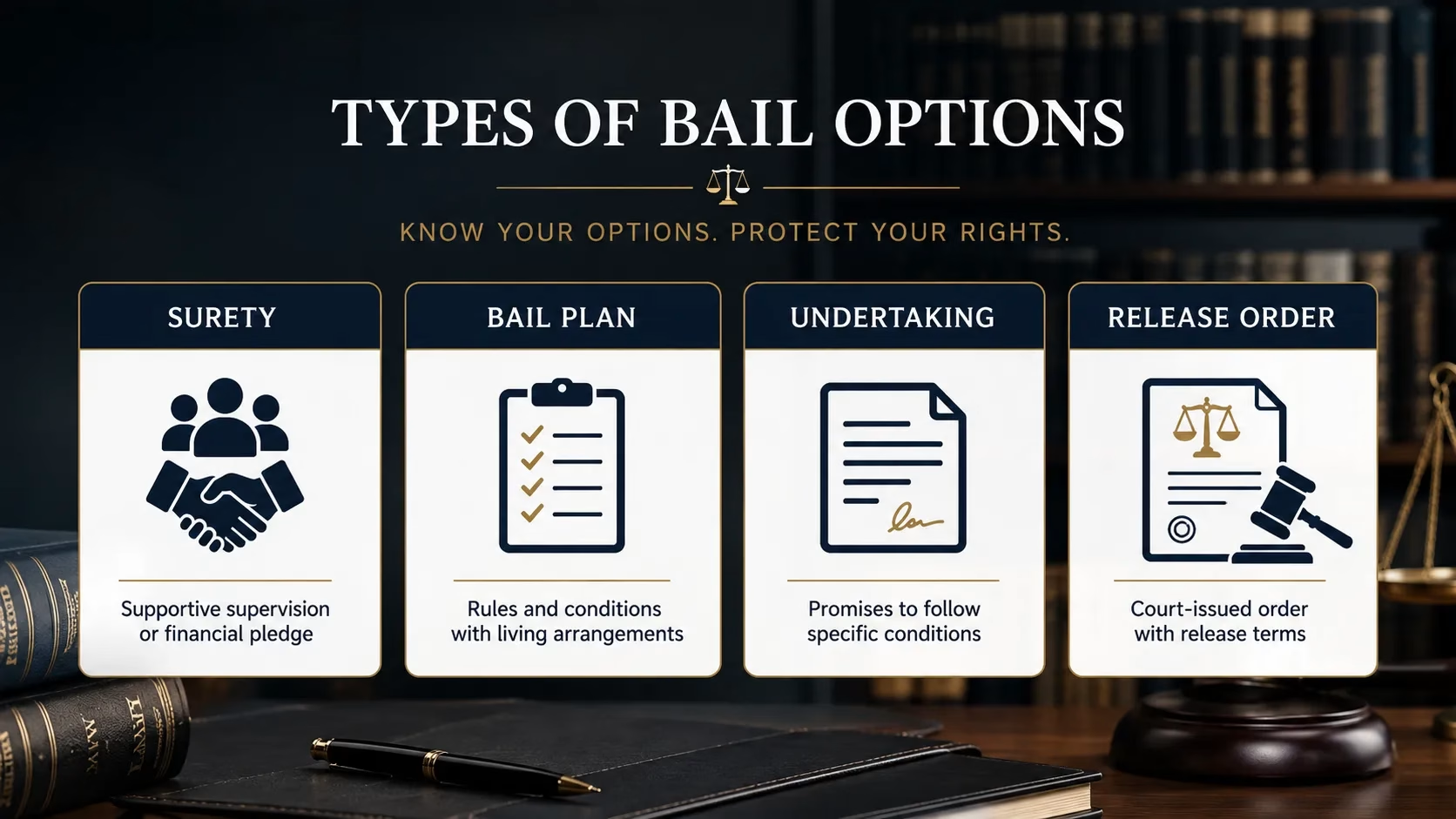
| Term | What it usually means | Why it matters |
|---|---|---|
| Surety | A person who supervises the accused and may pledge money | The court may rely on the surety to reduce concerns about release |
| Bail plan | The full proposal for release, including residence, supervision, and conditions | A strong plan is organized, realistic, and tailored to the concerns in the case |
| Undertaking | A release document often given by police, sometimes with conditions | Breaching it can create new legal problems |
| Release order | A court order setting the terms of release after bail court | The accused and surety must understand and follow it exactly |
A surety in Ontario is only one part of the broader plan. The court may also care about housing, employment, treatment, counselling, transportation, technology limits, no-contact terms, and how the accused will remember court dates.
If the accused has not yet received disclosure, it may be too early to know the full defence strategy. Kisel Law’s guide to criminal disclosure in Ontario explains why evidence review matters before major decisions are made later in the case.
What Questions Might a Proposed Surety Be Asked?
A proposed surety in Ontario should be ready for direct questions. The court may want clear answers, not vague reassurance.
Common questions include:
- How do you know the accused?
- Where will the accused live if released?
- Do you understand the charges?
- Do you understand the proposed conditions?
- Can you supervise the accused every day?
- What will you do if the accused breaches?
- Are you prepared to call police if necessary?
- Do you have criminal charges or legal issues of your own?
- What amount are you able to pledge?
These questions are not meant to embarrass the surety. They test whether the plan is real. A surety in Ontario who gives thoughtful, honest answers is usually more helpful than one who tries to say whatever they think the court wants to hear.
The Ontario Court of Justice practice direction on bail hearings also reflects the importance of focused, fair, and effective bail proceedings. Families should treat preparation as part of respecting that process.
Can a Surety in Ontario Supervise a Family Member?
Yes, a family member can often be proposed as a surety. Parents, spouses, siblings, adult children, relatives, close friends, employers, or community members may all be considered depending on the facts.
But family closeness can cut both ways. A parent may be deeply committed but too emotionally overwhelmed to report a breach. A spouse may offer housing but also be connected to the allegation. A sibling may want to help but live too far away to supervise.
The best surety in Ontario is not always the closest person emotionally. The best surety in Ontario is the person who can provide calm, credible, practical supervision.
For example, in a domestic assault allegation, the accused may need to live away from the complainant. A relative with a separate home and a clear understanding of no-contact rules may be more suitable than someone who minimizes the conditions. If the case involves alleged harassment or repeated messages, Kisel Law’s pages on criminal harassment and threats and domestic assault may provide helpful context about how interpersonal allegations can affect release terms.
What If You Cannot Find a Suitable Surety?
Not every accused person has a suitable surety available. Some people are new to Canada, live far from family, have strained relationships, or do not want to involve loved ones. Others may have supportive people who are not acceptable to the court.
If there is no suitable surety, the defence may need to explore other release options. That could include a different residential plan, stricter reporting, treatment supports, community supervision, or other conditions that address the Crown’s concerns without relying on a surety.
This is where careful legal strategy matters. A surety in Ontario should not be added to a plan just because everyone assumes one is required. If the law supports a less restrictive release, that point may need to be argued clearly.
Common Mistakes Sureties Should Avoid

One common mistake is agreeing before reading the proposed conditions. Another is assuming the accused can “sort it out later” if a term is inconvenient. Bail conditions remain binding unless changed through the proper process.
A second mistake is allowing indirect contact. If the order says no contact with a named person, that usually includes messages sent through friends, relatives, social media, or casual “tell them I said sorry” conversations. A surety who passes along messages may create risk for everyone involved.
A third mistake is treating the pledge as harmless because no money was paid upfront. A promise to pay can still become financially serious.
A fourth mistake is failing to plan for ordinary life. How will the accused get to court? Who will remind them? What happens if work conflicts with curfew? What if the complainant appears at a shared location? What if the accused receives a text from a prohibited person?
Good supervision is not only about reacting to breaches. It is about preventing predictable problems.
How a Surety Fits Into the Bigger Criminal Court Process
A surety in Ontario may become involved before the accused has seen the full evidence. That can feel strange. Families are asked to make urgent decisions while the case is still unclear.
After release, the case may involve first appearances, disclosure requests, Crown discussions, judicial pre-trials, motions, resolution meetings, or trial preparation. The accused may also need to manage employment, travel, immigration concerns, professional obligations, or family responsibilities while under conditions.
If the case may resolve through a negotiated outcome, Kisel Law’s article on a peace bond in Ontario may help explain how court conditions can continue even when a case does not end with a guilty plea. If the goal is to understand early court steps, the guide to a first court appearance in Ontario is also relevant.
For financial, workplace, or professional allegations, release conditions can overlap with business access, licensing concerns, devices, records, or communications. Kisel Law’s pages on fraud and theft, white collar crime, and regulatory law and professional discipline may be useful depending on the allegation.
When the Bail Hearing Is in Toronto or the GTA
A bail hearing can move quickly. If your loved one is in custody, preparation should start immediately. The proposed surety in Ontario should gather identification, basic financial information, employment details, address information, and a practical supervision plan.
Kisel Law assists people facing criminal charges in Toronto and surrounding communities. If the case is connected to a specific courthouse or region, the location pages for Toronto, Brampton, Mississauga, Scarborough, North York, Markham, Vaughan, Ajax, and Pickering can help users find locally relevant criminal defence information.
Speak With Kisel Law Before Acting as a Surety

Surety in Ontario decisions should be made carefully. A surety can be an important part of a release plan, but the role carries real responsibility. The person agreeing to supervise should understand the conditions, the financial pledge, the reporting obligation, and the practical limits of what they can manage.
If someone you care about is facing a bail hearing, Kisel Law can help assess the proposed release plan, prepare a potential surety, address concerns about conditions, and explain the next steps in the criminal process. You can explore the firm’s broader criminal defence practice areas, learn more about Nicole Kiselyov, or review client reviews to better understand the firm’s approach.
For urgent guidance, contact Kisel Law or book a free consultation. Early preparation can help protect the accused, support the surety in Ontario, and reduce the risk of avoidable mistakes from the very beginning.