

A conditional discharge in Ontario can be a significant sentencing outcome because it allows a person to be found guilty without having a criminal conviction registered. That distinction matters, but it does not mean the case disappears immediately or that there are no obligations afterward. A conditional discharge comes with a probation order, and the conditions must be taken seriously.
If your case is moving toward resolution, understanding the difference between a discharge, a conviction, a peace bond, and a withdrawal can help you ask better questions before making a decision. Kisel Law’s criminal defence practice areas provide a useful starting point for understanding how different charges and procedural issues fit into the criminal process.
What a Conditional Discharge in Ontario Actually Means
Under section 730 of Canada’s Criminal Code, a court may grant an absolute or conditional discharge after a person pleads guilty or is found guilty, provided the legal requirements are met. With a conditional discharge in Ontario, the court makes a finding of guilt but does not enter a conviction. Instead, the person is discharged on conditions contained in a probation order.
That makes a discharge very different from an acquittal. An acquittal means the Crown did not prove guilt beyond a reasonable doubt. A discharge comes after guilt has been admitted or established, but the court chooses not to convict.
The Criminal Code says a discharged person is deemed not to have been convicted of the offence, subject to limited exceptions such as appeal rights. You can review the wording in section 730 of the Criminal Code.
Is a conditional discharge the same as being found not guilty?
No. A conditional discharge in Ontario is not a finding of innocence and is not the same as having charges withdrawn.
This distinction is important when comparing possible resolutions. If the Crown withdraws a charge, there is no finding of guilt on that charge. If a court grants a conditional discharge, there has already been a guilty plea or a finding of guilt.
Kisel Law’s guide to having criminal charges withdrawn in Canada explains how a withdrawal differs from a sentencing outcome.
Who Can Receive a Conditional Discharge in Ontario?
A conditional discharge in Ontario is not available for every criminal offence. Section 730 sets two major legal limits.
A discharge cannot be granted for:
- an offence that carries a minimum punishment prescribed by law; or
- an offence punishable by imprisonment for 14 years or for life.
Even where the offence is legally eligible, a discharge is not automatic. The judge must also be satisfied that granting the discharge is in the best interests of the accused and is not contrary to the public interest.
That means two people charged with the same type of offence may not receive the same result. The court can consider the circumstances of the offence, the person’s background, the consequences of a conviction, rehabilitation, prior record, and other sentencing factors that are relevant to the specific case.
Does being a first-time offender guarantee a discharge?
No. Having no prior record can be helpful, but it does not guarantee a conditional discharge in Ontario. The court still has to apply the legal test and decide whether a discharge is appropriate in the circumstances.
The seriousness of the conduct matters. So can aggravating features, harm caused, breach of trust, prior court history, and whether the proposed outcome would be consistent with the public interest.
Before discussing a plea or resolution, it is usually important to understand the evidence first. Kisel Law’s guide to criminal disclosure in Ontario explains why disclosure review can affect decisions about whether to negotiate, set a trial, or consider a sentencing proposal.
Conditional Discharge in Ontario vs Other Outcomes
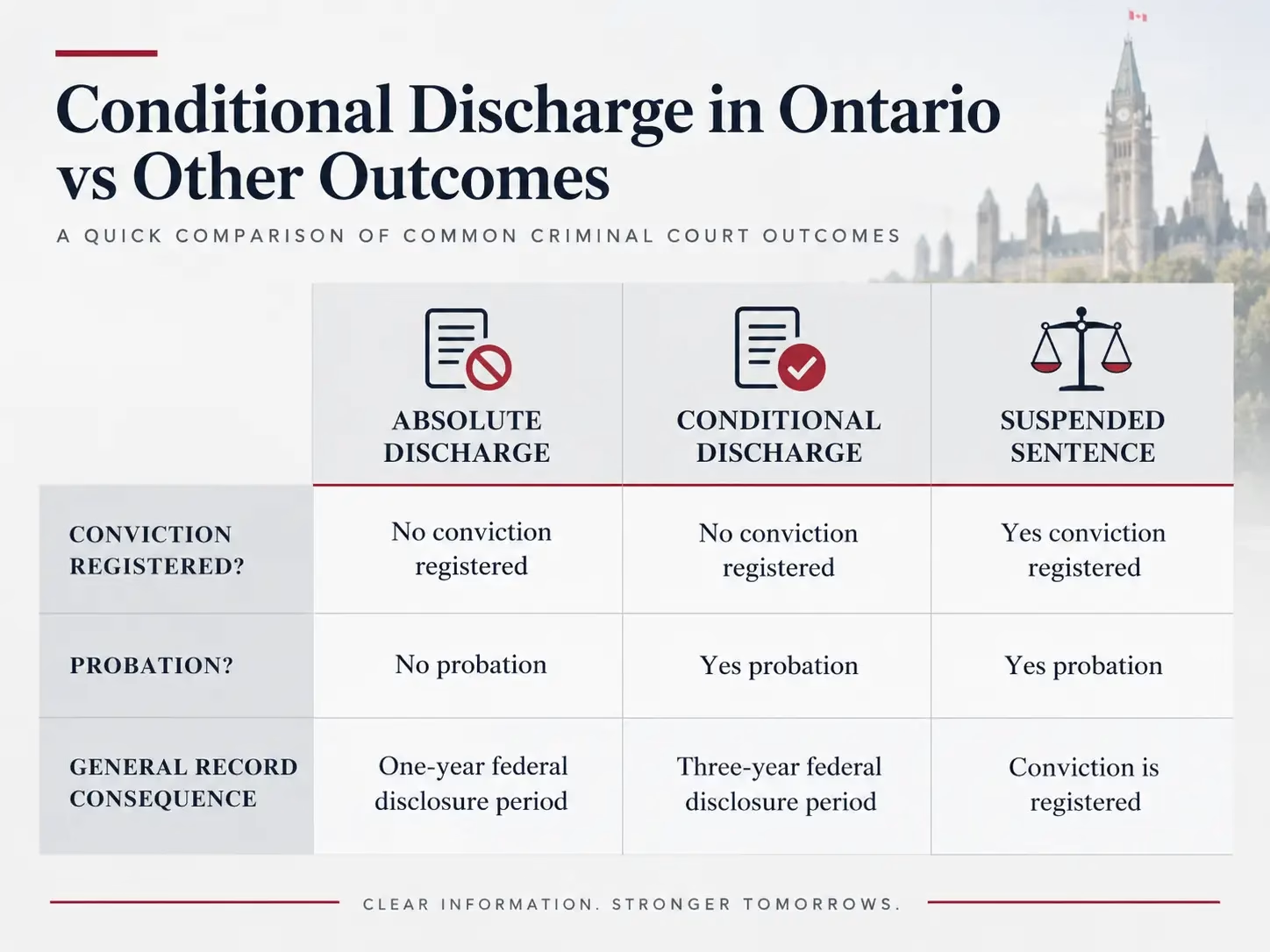
A conditional discharge in Ontario is often confused with an absolute discharge or a suspended sentence. They may all involve probation-related concepts, but they do not have the same legal effect.
| Outcome | Conviction registered? | Probation? | General record consequence |
|---|---|---|---|
| Absolute discharge | No | No | Discharge information is subject to a one-year federal disclosure period |
| Conditional discharge | No | Yes | Discharge information is subject to a three-year federal disclosure period |
| Suspended sentence | Yes | Yes | A conviction is registered |
The practical difference can be substantial. A suspended sentence involves a conviction. A discharge does not.
What is the difference between an absolute and conditional discharge?
An absolute discharge takes effect without a probation order. A conditional discharge in Ontario requires compliance with conditions prescribed in a probation order.
The record-related timelines are also different. Under the Criminal Records Act, federal records of an absolute discharge are subject to a one-year period before the statutory non-disclosure rule applies. For a conditional discharge, that period is three years from the date of the discharge order.
How is a conditional discharge different from a peace bond?
A peace bond is not simply another type of discharge. It is a recognizance with conditions and may be used in some cases as part of a resolution that does not involve a conviction.
Because the legal route is different, the consequences are different too. If a peace bond is being discussed, compare the proposed conditions, length, record implications, and what happens to the criminal charge itself. Kisel Law’s guide to a peace bond in Ontario explains that outcome in more detail.
What Conditions Can a Probation Order Include?
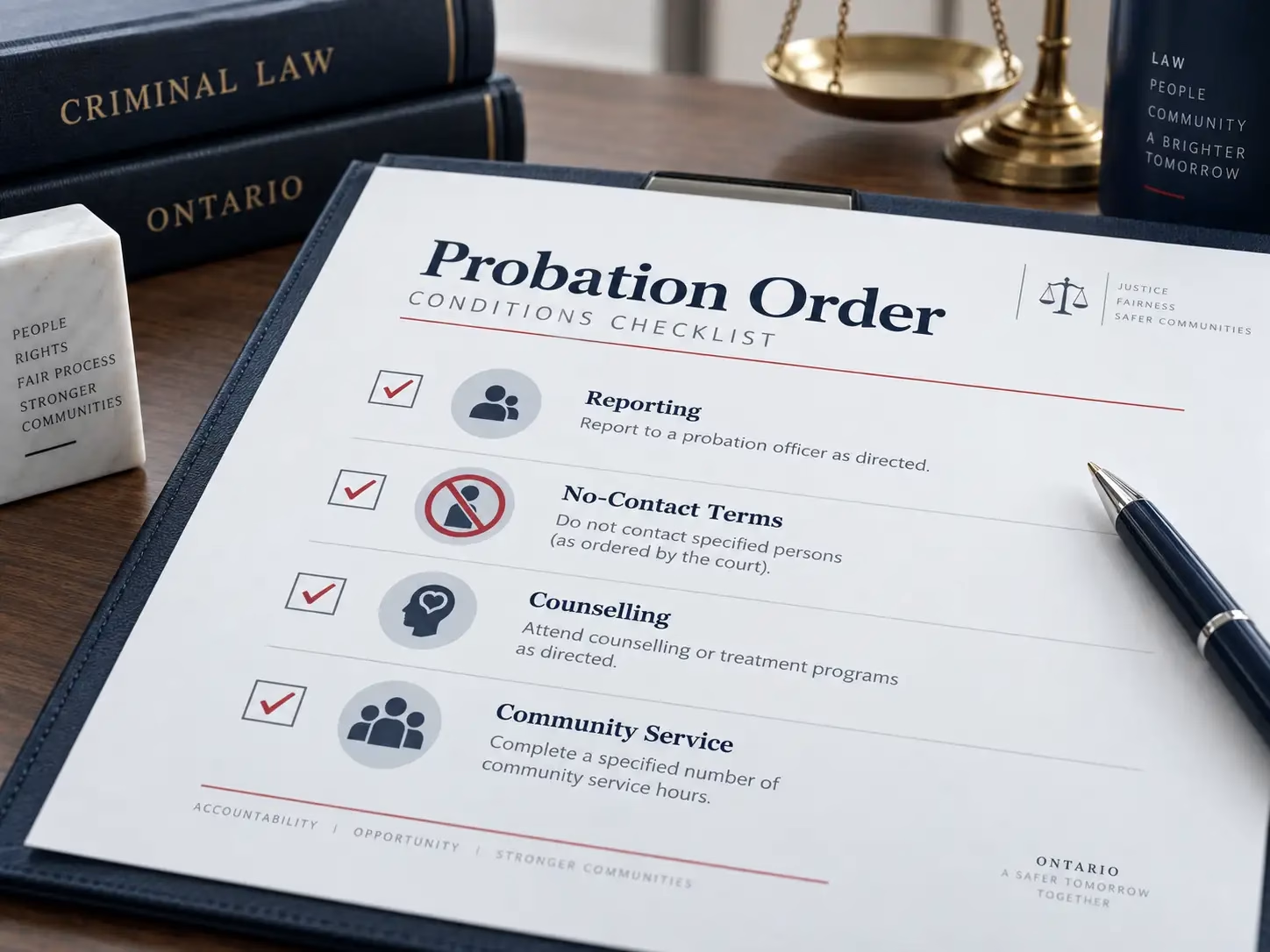
Every conditional discharge in Ontario includes a probation order. Under the Criminal Code, probation orders contain compulsory conditions, including keeping the peace and being of good behaviour, appearing before the court when required, and providing required updates about changes of name, address, employment, or occupation.
A judge can also impose optional conditions that fit the circumstances of the case. Depending on the facts, these may include:
- reporting to a probation officer;
- no-contact terms involving a specific person;
- restrictions on attending certain places;
- counselling or treatment requirements;
- community service;
- restrictions related to alcohol or drugs where legally appropriate; and
- other reasonable conditions connected to rehabilitation, protection of the public, or preventing further offending.
The exact wording matters. Section 732.1 of the Criminal Code sets out the compulsory and optional conditions that can appear in a probation order.
How long can probation last?
A probation order cannot continue for more than three years. A conditional discharge in Ontario may involve a shorter period depending on the circumstances and the sentence imposed.
Do not assume that a shorter probation period automatically means fewer restrictions. A six-month or twelve-month order can still contain significant no-contact, reporting, counselling, or location conditions.
Ontario’s probation and parole guidance explains the provincial probation system and related obligations.
Can probation conditions be changed later?
Potentially. The Criminal Code allows the court to change optional probation conditions on application in appropriate circumstances.
That does not mean a person can ignore a term that has become inconvenient or impractical. Until the order is formally changed, the existing wording remains enforceable. If work, housing, parenting, medical treatment, or other circumstances create a problem with a condition, get advice before acting.
Does a Conditional Discharge in Ontario Show on a Criminal Record Check?

This is one of the most misunderstood parts of a conditional discharge in Ontario. No criminal conviction is registered, but information about the discharge can still be disclosed on certain record checks during the applicable period.
Ontario recognizes three main types of police record checks:
- Criminal Record Check;
- Criminal Record and Judicial Matters Check; and
- Vulnerable Sector Check.
Under Ontario’s police record check framework, a conditional discharge is treated differently depending on the type of check and the amount of time that has passed since the discharge.
The Ontario government’s police record check guidance explains the different categories and disclosure rules.
How long does a conditional discharge stay on your record?
For a conditional discharge in Ontario imposed on or after July 24, 1992, federal law provides a three-year period before the relevant statutory non-disclosure rules apply.
The practical lesson is simple: “no conviction” does not mean “no record of anything from day one.” If employment, professional licensing, immigration, volunteering, or travel is important to you, ask what type of check or disclosure rule may apply before making a plea decision.
Do you need a record suspension after a discharge?
If the only outcome is a discharge, you generally do not apply for a record suspension for that discharge. Record suspensions relate to convictions, while a discharge is not a conviction.
If you also have prior convictions, the analysis can be different. Kisel Law’s record suspensions and waivers page discusses services for people dealing with conviction records.
What Happens if You Breach a Conditional Discharge in Ontario?
A conditional discharge in Ontario should never be treated as a paperwork-only outcome. The probation order is enforceable.
Failing or refusing to comply with a probation order without a reasonable excuse can itself be a criminal offence. In addition, if a person bound by the probation order is convicted of another offence, including a probation-breach offence, the original discharge can have further legal consequences in certain circumstances.
What should you do if a condition is difficult to follow?
Do not simply stop following it. If a condition is impossible, unclear, or causing an unexpected conflict with employment, housing, family responsibilities, or treatment, get legal advice about whether an application to change the optional condition is available.
Keep a copy of the probation order. Read the exact language. If reporting is required, confirm how and when to report. If a no-contact term has exceptions, do not assume an exception exists unless it is actually written into the order.
Should You Accept a Conditional Discharge in Ontario?
A conditional discharge in Ontario can be an important resolution option, but whether it makes sense depends on the evidence, available defences, proposed conditions, and the consequences that matter in your life.
Before entering a guilty plea, compare the discharge with the realistic alternatives. Questions worth asking include:
- Is the offence legally eligible for a discharge?
- What evidence does the Crown rely on, and are there viable defences?
- Is the Crown willing to support a discharge, or will the defence need to argue for it?
- What probation conditions are proposed?
- How could the order affect work, licensing, immigration, travel, family contact, or housing?
- Is a withdrawal, peace bond, trial, or another resolution realistically available?
- What would happen if a probation condition later becomes difficult to follow?
A favourable-sounding resolution is not automatically the best resolution. The useful comparison is between the actual options available in your case, not between a discharge and a hypothetical worst-case result.
Get Advice About a Conditional Discharge in Ontario from Kisel Law
If a conditional discharge in Ontario is being discussed in your case, the key questions are not limited to whether you will have a conviction. You also need to understand why the Crown is proposing the resolution, whether another outcome may be available, what conditions would apply, and how the order could affect your life.
Kisel Law represents clients facing criminal charges in Toronto and across the Greater Toronto Area. The firm can review the disclosure, assess available resolution options, explain the consequences of a discharge, and help you understand the choices available in your case.
If you want advice based on the facts of your case, contact Kisel Law to book a confidential consultation. A conditional discharge in Ontario can avoid a conviction, but the legal and practical consequences should be understood before a resolution is finalized.