


Bail variation in Ontario is the process used to ask for changes to release conditions that no longer fit your circumstances. A condition that seemed workable on the day of release can become difficult when work schedules change, housing changes, family responsibilities arise, or a restriction creates an unexpected practical problem.
The key point is that you cannot simply stop following a condition because it has become inconvenient. If you are still at the bail-planning stage, Kisel Law’s bail hearings page explains how release conditions are addressed at the beginning of the case. If you are already released, a bail variation in Ontario may be the proper way to seek a lawful change.
This guide explains how the process works, when consent may be possible, what happens if the Crown does not agree, and which mistakes can turn a manageable issue into a new criminal allegation. It is general legal information, not legal advice about your specific case.
What Does a Bail Variation in Ontario Actually Change?
A bail variation in Ontario changes one or more terms of an existing release order. The original criminal charge does not disappear, and the variation does not decide whether you are guilty or innocent. It only changes the conditions governing your release while the case continues.
Common conditions can include no-contact terms, restrictions on attending certain places, a curfew, a requirement to live at a specified address, weapons prohibitions, geographic restrictions, or supervision by a surety. Legal Aid Ontario provides a useful overview of bail conditions and why each condition must be followed as written.
A requested change should be specific. For example, a person may ask to change a curfew so they can work a new shift, change a residence condition after losing housing, or adjust a geographic restriction for medical appointments. A narrowly defined request is easier to understand than a vague request to “remove all conditions.”
Do your old conditions still apply while the request is pending?
Yes. Until the change is formally approved through the proper process, the existing order remains in force. A pending bail variation in Ontario is not permission to act as though the requested change has already been granted.
That distinction matters most with no-contact and location conditions. If your order says you cannot contact a named person, do not assume a lawyer’s request, a Crown discussion, or the other person’s willingness to communicate changes the order. The safest approach is to follow the exact wording until you have confirmation that the condition has been varied.
If there is a concern about a possible breach, Kisel Law’s breaching court orders page explains why release-condition allegations should be handled carefully.
When Should You Request a Bail Variation in Ontario?

A bail variation in Ontario can make sense when there has been a real change in circumstances or when a condition creates a practical problem that can be addressed without undermining the purpose of release.
Ontario’s Crown Prosecution Manual states that prosecutors considering a variation should look at whether a change in circumstances warrants changing a condition. That does not mean every inconvenience will justify a change. The request should connect the new circumstances to a reasonable, workable alternative.
What if your work or school schedule changes?
Imagine your release order requires you to be home every night by 10 p.m., but you are offered a warehouse shift that ends at 11 p.m. Instead of repeatedly risking a breach, you could seek a bail variation in Ontario that asks for a later curfew on scheduled workdays.
Helpful information may include a letter from the employer, the work address, shift times, transit time, and a proposed condition that is no broader than necessary. A request supported by concrete details gives the Crown and court something practical to assess.
What if you need to change where you live?
Housing can change quickly after an arrest. A surety may move, a relationship may end, or a temporary residence may no longer be available. If the release order requires you to reside at a specific address, moving first and explaining later can create serious risk.
A bail variation in Ontario can be used to request a different residence. If your release involves a surety, their position can be important. Kisel Law’s surety in Ontario guide explains the supervision responsibilities that can come with that role.
Can a no-contact condition be changed?
Sometimes a person wants a no-contact condition changed because of children, shared property, employment, or other family responsibilities. These requests can be sensitive because the Crown and court may consider safety concerns and the circumstances behind the original condition.
A bail variation in Ontario may ask for structured exceptions, such as communication through counsel, a third party, or another defined method. The exact wording matters. Do not use a proposed exception until it has actually been approved.
Bail Variation in Ontario vs. Bail Review: What Is the Difference?
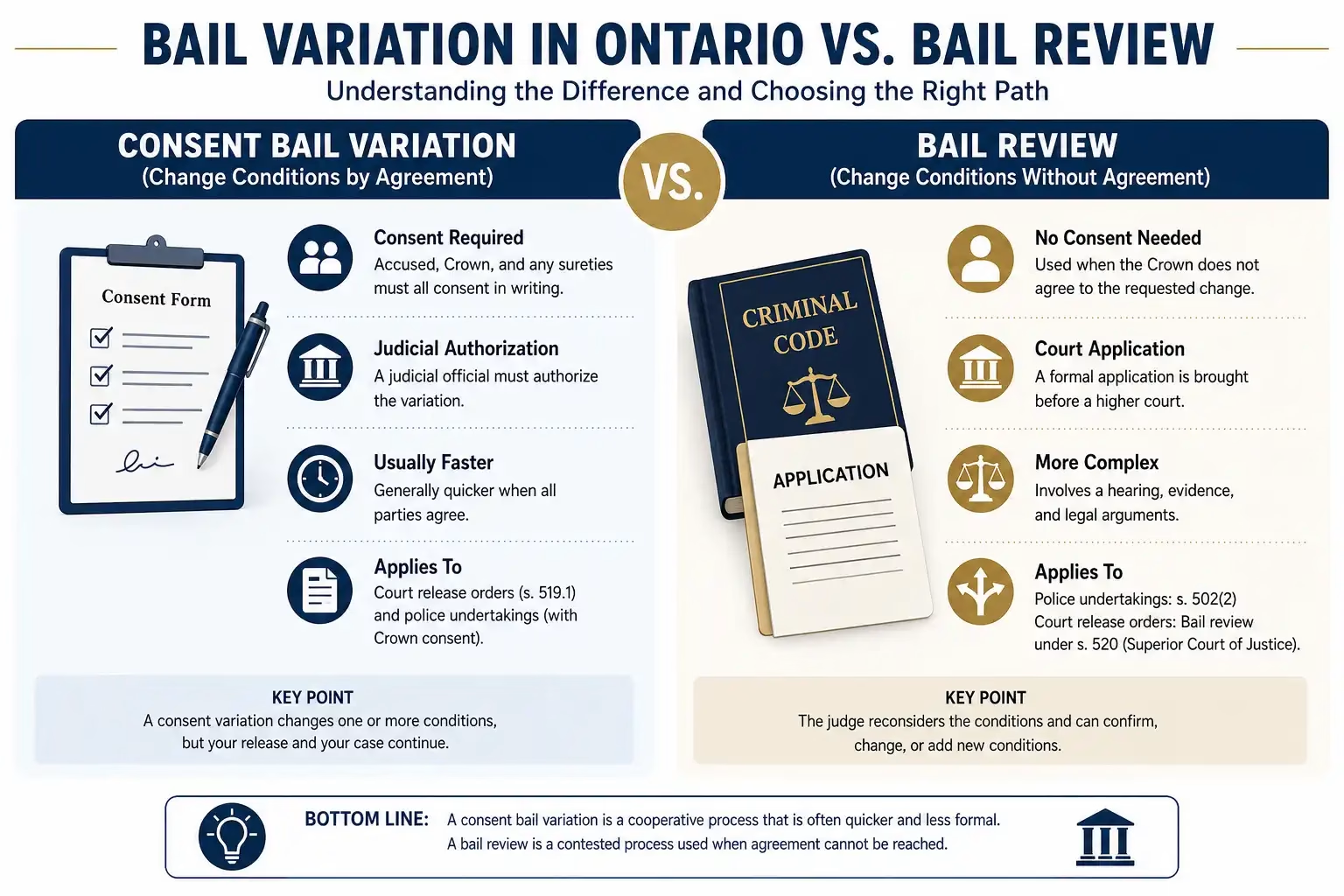
A consent bail variation and a contested bail review are not the same procedure. The correct route depends on the type of release document you have and whether the Crown agrees with the requested change.
| Situation | Usual route | Consent needed? | Key point |
|---|---|---|---|
| Court-issued release order and everyone agrees | Consent variation under Criminal Code s. 519.1 | Accused, prosecutor, and any sureties must consent in writing | A judicial official must authorize the change |
| Police undertaking and Crown agrees | Consent variation of police undertaking | Crown consent is required | Follow the existing undertaking until the change takes effect |
| Police undertaking and Crown does not agree | Application under Criminal Code s. 502(2) | No consent agreement | The accused may ask the Ontario Court of Justice to replace the undertaking with a release order |
| Court-issued release order and Crown does not agree | Bail review under Criminal Code s. 520 | No consent agreement | The application is brought in the Superior Court of Justice |
The federal Criminal Code section 519.1 says a section 515 release order may be varied with the written consent of the accused, prosecutor, and any sureties. The Ontario Court of Justice also publishes a detailed consent variation procedure for release orders and police undertakings.
The practical lesson is simple: before starting a bail variation in Ontario, identify exactly what document you are trying to change. A police undertaking and a court-issued release order can look similar to someone unfamiliar with the process, but the route for changing them can be different.
If you were released directly by police, Kisel Law’s undertaking in Ontario guide can help you understand how that document differs from bail.
7 Steps for a Consent Bail Variation in Ontario
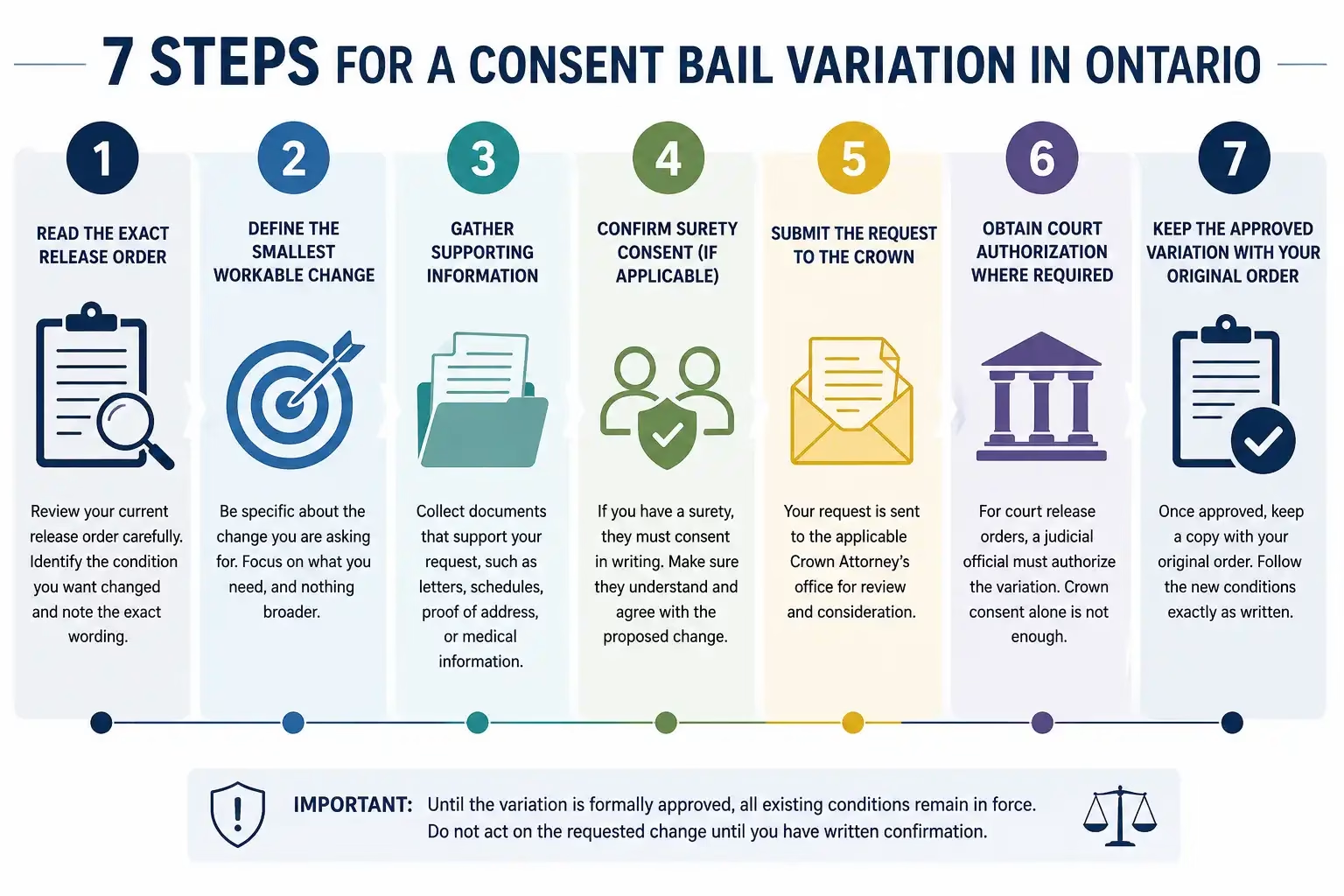
A consent process can be more straightforward than a contested application, but it still requires care. These seven steps show the usual structure.
1. Read the exact release order
Start with the document itself. Identify the condition you want changed and copy its wording accurately. Do not rely on memory or on what someone told you the condition means.
A bail variation in Ontario should target the actual term in the order. If several conditions interact, review them together so that changing one does not create confusion with another.
2. Define the smallest workable change
A focused request is usually easier to assess. If the problem is a work schedule, ask for the adjustment needed for work. If the problem is a medical appointment outside a geographic boundary, identify the appointment and the travel required.
Avoid asking for unrelated conditions to be removed simply because a variation is being requested. A bail variation in Ontario should solve the real problem without creating unnecessary new issues.
3. Gather information supporting the request
Documents can make the reason for the change clearer. Depending on the request, that might include an employment letter, school timetable, lease, treatment schedule, medical appointment confirmation, travel details, or proof of a new residence.
The goal is not to overwhelm the Crown with paperwork. It is to show why the proposed change is concrete and realistic.
4. Confirm whether a surety must consent
If your release order includes a surety, the surety may need to consent in writing to a bail variation in Ontario. This makes sense because changing a curfew, residence, supervision arrangement, or contact condition can affect the surety’s responsibilities.
Do not assume the surety will agree after the fact. Discuss the proposed change carefully and make sure the new plan is something the surety can actually supervise.
5. Submit the request to the Crown
For a consent variation, the proposed change is sent to the applicable Crown Attorney’s office. The Ontario Court of Justice procedure requires the application to identify the change requested and the reason for it.
The Crown may agree, disagree, or seek clarification. A well-prepared bail variation in Ontario request should make it easy to see what is changing, why it is needed, and how the revised condition will remain workable.
6. Obtain court authorization where required
Crown consent alone does not make a court-issued release-order variation effective. Under the Ontario Court of Justice process, the consent form is sent for consideration by a judicial official.
Do not treat an email saying the Crown agrees as the final step. A bail variation in Ontario involving a court release order takes effect only after the required judicial authorization is completed.
7. Keep the approved variation with your original order
Once the variation is granted, keep a copy with the original release order. Read the new wording carefully and make sure your surety understands it where applicable.
Police officers will not know the practical history behind your request. If a question arises, having the current written documents available can help show exactly which conditions apply.
How long does a bail variation in Ontario take?
There is no single guaranteed timeline. Timing can depend on the courthouse, Crown review, whether the request is complete, whether a surety must sign, and whether the matter can proceed on consent.
If a change is time-sensitive, raise it early. Do not wait until the night before a work shift, trip, appointment, or move and assume the process will be completed immediately.
What If the Crown Does Not Consent to a Bail Variation in Ontario?
A Crown refusal does not necessarily mean there is no further legal route, but it can change the procedure significantly.
For a police undertaking, the Ontario Court of Justice explains that an accused may apply under section 502(2) of the Criminal Code if the Crown does not consent. For a court-issued release order, a contested change may require a bail review in the Superior Court of Justice under section 520.
A bail review is more than simply resubmitting the same request to another decision-maker. The legal issues, evidence, procedure, and notice requirements can be more complex. This is one reason legal advice can be especially useful when a consent bail variation in Ontario is refused.
Common Bail Variation in Ontario Mistakes to Avoid
The most serious mistake is acting before approval. A requested change is not an approved change.
Another mistake is making direct or indirect contact with a prohibited person while trying to negotiate a no-contact variation. Even well-intentioned messages through friends, relatives, or social media can create problems if the existing condition prohibits that communication.
A third mistake is asking for changes that are broader than the reason given. If a new job requires one curfew adjustment, a request to remove every reporting, residence, and contact condition may be harder to justify.
A fourth mistake is ignoring the surety. If the surety is part of the release plan, changing the plan without their informed participation can undermine the request.
A fifth mistake is confusing a police undertaking with a court release order. The paperwork determines the process, so identify the document before filing anything.
Most of these problems are preventable. A careful bail variation in Ontario starts with the current order, a specific reason for the change, and a realistic alternative that can still be followed.
Speak With Kisel Law About a Bail Variation in Ontario
A bail variation in Ontario can become necessary when release conditions clash with work, housing, parenting, medical needs, travel, or other real-life changes. The solution is not to ignore the condition. It is to use the proper legal process to ask for a change before acting.
Kisel Law assists clients with bail hearings, release conditions, surety issues, breach allegations, and other criminal-defence matters in Toronto and across the GTA. You can learn more through the firm’s Toronto criminal lawyer page or review its broader criminal defence services.
If your conditions are becoming difficult to follow, gather your release documents and the information supporting the requested change. Then contact Kisel Law to discuss whether a consent variation, an undertaking application, or a bail review may fit your situation.