


Shoplifting charges in Ontario often begin with a moment of panic: a store employee stops you at the exit, police arrive, and you leave with paperwork and a court date. Many people in that position have never been in trouble before and assume the matter is minor, or assume their life is over. Neither is quite right.
This guide explains how shoplifting charges in Ontario are laid, what the Criminal Code says about penalties, how diversion and discharges work, and what can appear on a background check. Kisel Law defends people facing fraud and theft charges in Toronto and across the GTA. This article provides general legal information and is not legal advice for a specific case.
How Shoplifting Charges in Ontario Are Laid
There is no separate offence called “shoplifting” in the Criminal Code. Taking merchandise from a store without paying is charged as theft, and the value of the property decides which category applies.
Most shoplifting charges in Ontario involve goods worth well under $5,000, so they are laid as “theft under $5,000.” Where the value is higher, the charge is theft over $5,000. Police may also add related charges, such as possession of stolen property, depending on the facts.
Can store security detain you for shoplifting?
Yes, in limited circumstances. Under section 494 of the Criminal Code, the owner of property, or a person the owner authorizes, may arrest someone they find committing a criminal offence on or in relation to that property.
The same section requires anyone who is not a police officer to hand the arrested person over to police right away. What security staff saw, how they made the stop and what they recorded can all become important evidence later.
What happens after police arrive?
In many shoplifting cases, police release the person at the scene or at the station with a document setting a court date and, sometimes, a date for fingerprinting. Our guides to an appearance notice in Ontario and criminal fingerprinting in Ontario explain those documents and why the dates on them matter.
It is generally wise to say as little as possible to store staff and police about what happened until you have spoken with a lawyer. Explanations given in the moment are often incomplete and can be used as evidence.
Penalties for Shoplifting Charges in Ontario
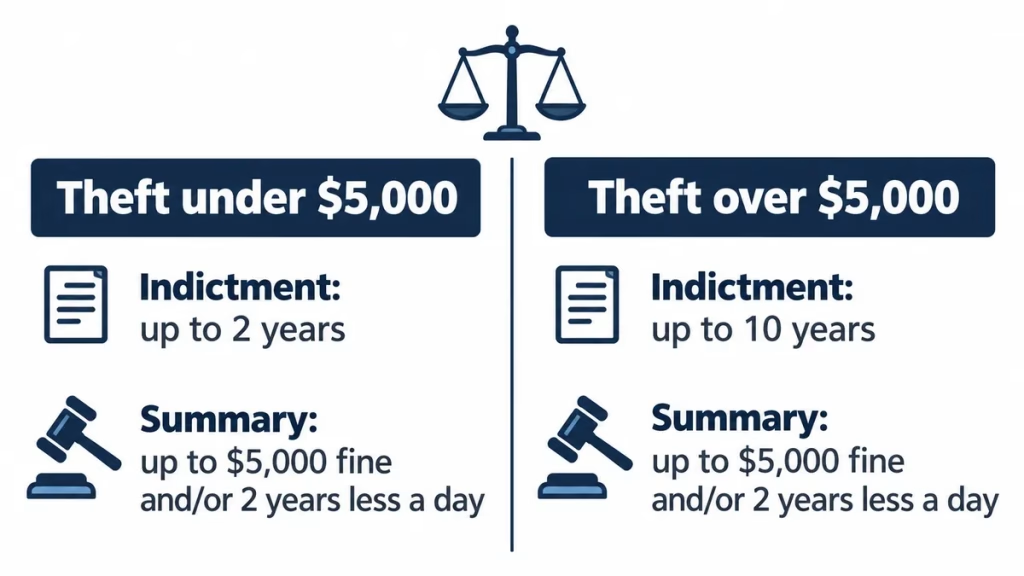
The maximum penalties come from section 334 of the Criminal Code. Both categories of theft are “hybrid” offences, meaning the Crown can proceed by summary conviction (the less serious route) or by indictment.
| Charge | Crown proceeds by indictment | Crown proceeds summarily |
|---|---|---|
| Theft under $5,000 | Up to 2 years in prison | Up to a $5,000 fine, up to 2 years less a day, or both |
| Theft over $5,000 | Up to 10 years in prison | Up to a $5,000 fine, up to 2 years less a day, or both |
These are maximums, not typical sentences. For a first-time shoplifting charge in Ontario involving low-value goods, the realistic range of outcomes is usually far below these limits, but the result always depends on the facts, the person’s history and how the case is handled.
Is shoplifting a criminal offence in Canada?
Yes. Because shoplifting is prosecuted as theft under the Criminal Code, a conviction creates a criminal record. That is why the way shoplifting charges in Ontario are resolved matters so much, even when the dollar amount is small.
A criminal record can affect employment, volunteer work, travel and, for people who are not Canadian citizens, immigration status. Anyone in that last group should get legal advice before making any decision about the case.
Diversion for Shoplifting Charges in Ontario
Diversion is one of the most common topics people search for after being charged, and for many first-time shoplifting charges in Ontario it is the outcome people hope for. It allows a person to complete a program or task outside the regular court process, after which the Crown withdraws or stays the charge.
Can you get diversion for shoplifting in Ontario?
Often, yes, but only if the Crown offers it. Ontario’s Crown Prosecution Manual directive on community justice programs for adults allows prosecutors to withdraw or stay charges once an accused completes a diversion program, and theft is not on its list of excluded offences.
The directive also sets conditions. The accused must be willing to take responsibility for the conduct behind the charge, and prosecutors only consider community-based sanctions where there is a reasonable prospect of conviction. Legal Aid Ontario notes that the Crown looks at factors such as the person’s criminal record and the seriousness of the charge.
Typical diversion tasks include community service, a charitable donation, counselling or a letter of apology. The Crown’s position is often noted on the screening form provided early in the case, which our article on the Crown screening form in Ontario explains.
Does diversion mean no criminal record?
When a charge is withdrawn, there is no conviction and no criminal record from that charge. Legal Aid Ontario explains that a withdrawn charge means you will not have a criminal record if you did not have one before.
A stayed charge is different. It puts the prosecution on hold, and the Crown can in some situations restart it. A lawyer can confirm which outcome is being offered before you agree to anything.
Discharges and Other Outcomes for Shoplifting Charges in Ontario
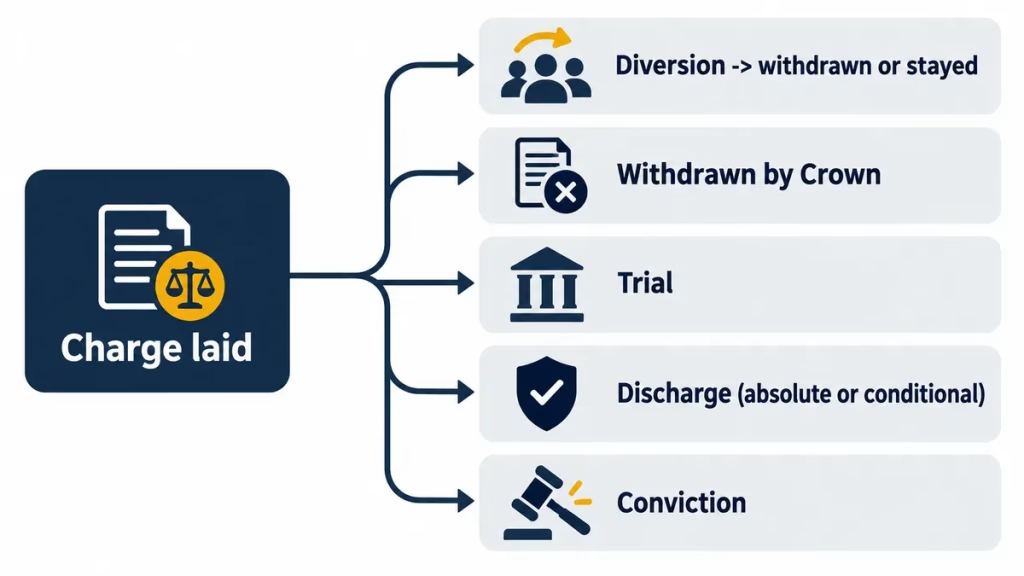
If diversion is not available, shoplifting charges in Ontario can still end in several ways:
- Withdrawal by the Crown, for example where the evidence does not support a reasonable prospect of conviction.
- A trial, where the Crown must prove the charge beyond a reasonable doubt.
- A discharge after a guilty plea or finding of guilt.
- A conviction with a sentence such as a fine or probation.
A discharge is available for theft because it is not an offence with a minimum penalty or a 14-year maximum. With a discharge, the court finds the person guilty but does not enter a conviction. Our guide to a conditional discharge in Ontario covers how probation conditions work and what happens if they are breached.
Will a shoplifting charge show up on a background check?
It depends on how the shoplifting charges in Ontario were resolved and the type of check. Ontario’s guidance on police record checks explains the three levels of check and what each one can disclose.
- Withdrawn charges are non-conviction information. They are not disclosed on a criminal record check or a criminal record and judicial matters check, and appear on a vulnerable sector check only in limited circumstances.
- An absolute discharge can appear on a criminal record and judicial matters check for one year.
- A conditional discharge can appear on that check for three years.
- A conviction appears on a criminal record check until a record suspension is granted.
Fingerprint records and police databases raise separate questions. If you have an older theft conviction, Kisel Law also assists with record suspensions and waivers.
Preparing for Your First Court Date
The first appearance on shoplifting charges in Ontario is usually short, and no one decides guilt or innocence that day. It is, however, often the point where the Crown provides initial disclosure and indicates its position. Legal Aid Ontario notes that diversion is usually offered by the Crown at the first court appearance.
Our article on the first court appearance in Ontario walks through what happens in the courtroom. Before that date, it helps to:
- Gather your release papers and confirm the court date, courthouse and fingerprinting date.
- Keep any receipts, bank records or proof of purchase connected to the items involved.
- Write down what happened while it is fresh, and share it only with your lawyer.
- Note any immigration, employment or licensing issues that a lawyer should know about.
- Ask for disclosure, which in shoplifting cases may include store video and security staff notes.
Preparing this way puts you in a better position to understand whether diversion, a withdrawal or another resolution is realistic before any decision is made.
Mistakes to Avoid With Shoplifting Charges in Ontario
A few early decisions can shape how shoplifting charges in Ontario turn out:
- Missing the fingerprinting date or first court date. Both can lead to additional charges.
- Assuming the case will “go away” on its own. Diversion has to be offered and completed; it does not happen automatically.
- Pleading guilty at the first appearance without knowing whether diversion or a withdrawal was realistic.
- Talking to the store or posting about the incident. Statements can become evidence.
- Ignoring immigration or professional licensing consequences until after the case is resolved.
- Breaching release conditions, such as a condition not to attend a particular store.
If the case involved force or threats against staff, the situation changes quickly. Police may lay a robbery charge, which is a much more serious offence and is excluded from the community justice programs described above.
Speak With Kisel Law About Shoplifting Charges in Ontario
Shoplifting charges in Ontario are common, but the outcome is not a formality. Whether the case ends in diversion, a withdrawal, a discharge or a trial depends on the evidence, your background and the steps you take before the first court date.
Kisel Law represents people facing shoplifting charges in Ontario courts across Toronto and the GTA. Bring your release papers and any documents from the store, and contact Kisel Law to book a confidential consultation about your options.